


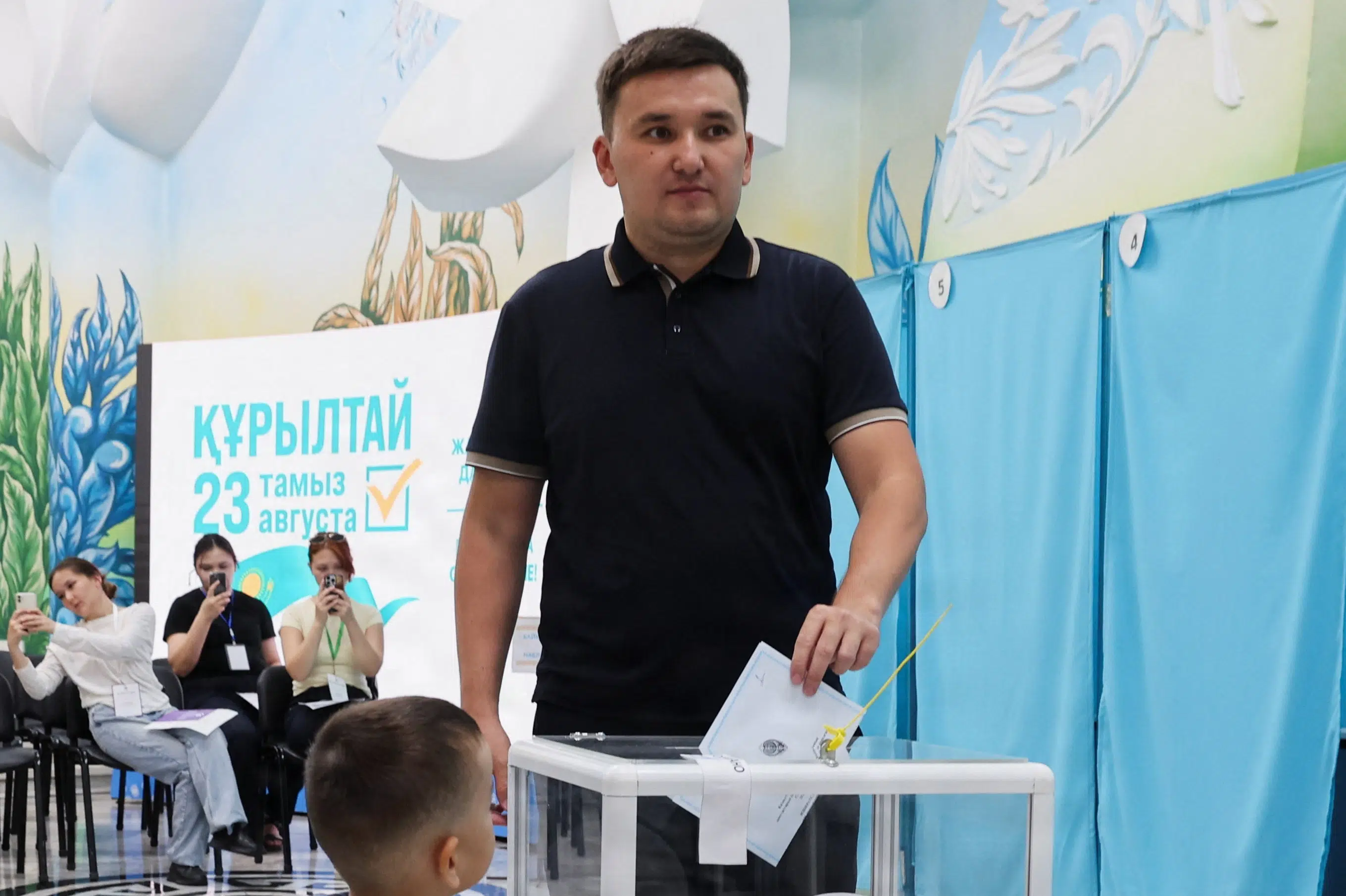
Kazakhstan Elections Expected to Grant President More Power Amidst Reforms
Translated from Danish, summarized and contextualized by DistantNews.
At a glance
News
From a news agency
New plan
- Kazakhstan is holding parliamentary elections following constitutional changes that abolish the upper house, transitioning to a unicameral system.
- The reforms aim to empower the parliament, but critics argue they will consolidate presidential power under Kassym-Jomart Tokayev.
- Seven parties, all largely loyal to Tokayev, are approved to run, with genuine opposition parties banned.
Kazakhstan is heading to the polls Sunday to elect a new parliament, following constitutional amendments that have abolished the upper house, ushering in a unicameral system. These changes were adopted in March with the stated intention of giving the parliament greater influence over political decisions. Historically, the parliament has played a subordinate role, with power concentrated in the hands of the president, Kassym-Jomart Tokayev. However, critics contend that these reforms will paradoxically solidify the president's authority rather than disperse it. Tokayev, who came to power in 2019, pledged to liberalize the country's political system and build a "just Kazakhstan" after widespread protests in 2022, which resulted in 238 deaths amid rising living costs. Seven parties have been cleared to contest Sunday's election, but all are considered loyal to Tokayev to varying degrees, while genuine opposition parties remain banned. The Adilet party, which supports President Tokayev's agenda, is widely expected to secure the majority of the 145 seats in parliament. The constitutional changes also included resetting the term limits for the incumbent president, allowing Tokayev to seek re-election in 2029 if he chooses, though he has previously stated he has no plans to do so. Furthermore, the president will gain the authority to appoint Supreme Court judges and nominate candidates for various other public offices. The 73-year-old president has sought to distance himself from his predecessor, Nursultan Nazarbayev, who ruled for three decades after the Soviet Union's collapse.
DistantNews Editorial
Originally published by Berlingske in Danish. Translated, summarized, and contextualized by our editorial team with added local perspective. Read our editorial standards.
More Stories

From Our Blog

What Gets Lost (and Found) When News Is Translated

The Critical Role of Diaspora Media in Global News

What Travellers Should Know About Countries with Restricted Press

A Digital Nomad's Guide to Following Local News

How the Same Story Looks Different in Different Countries
