


Kazakhstan Releases First Tiger Into Wild in More Than 70 Years
Summarized and contextualized by DistantNews.
At a glance
News
Official statement
Outcome reported
- Kazakhstan has released an Amur tiger named Umit into the wild, marking the first such reintroduction in over 70 years.
- The tiger was released in the Ile-Balkhash State Nature Reserve as part of a decade-long program to restore the species and its ecosystem.
- This initiative involved extensive preparation, including habitat restoration and increasing prey populations, with cooperation from Russian scientists and international partners.
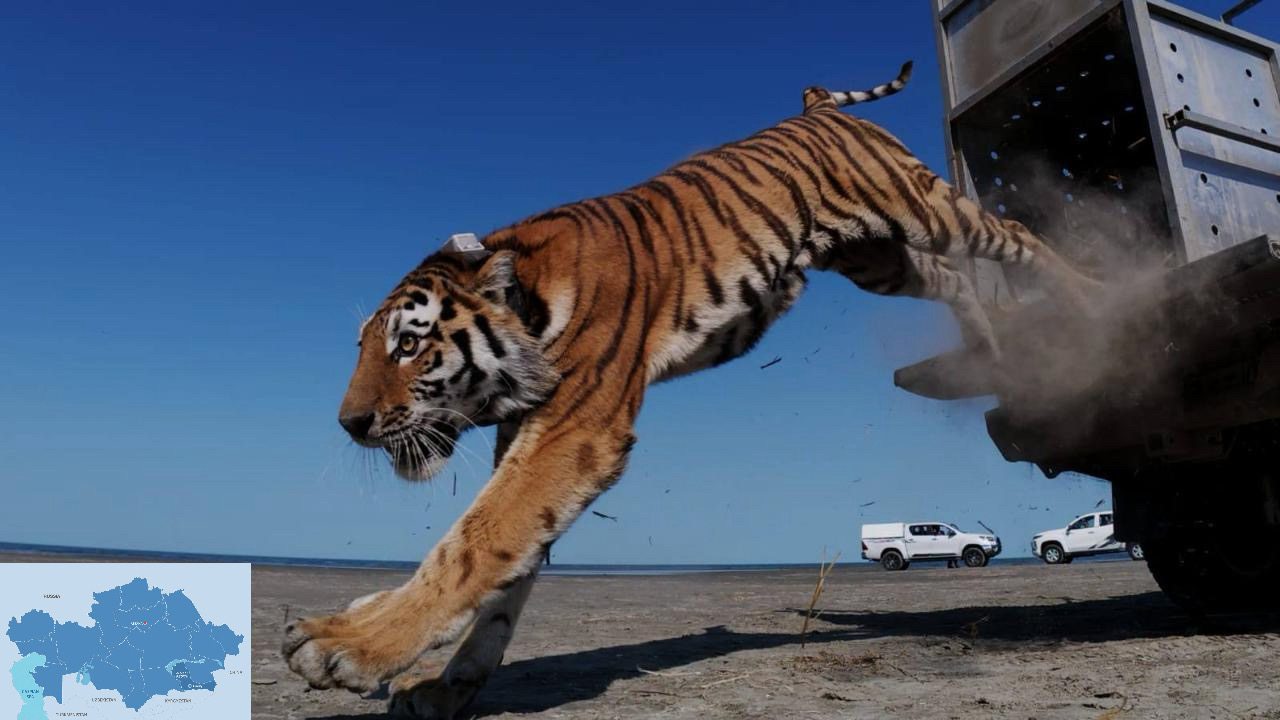
Kazakhstan has achieved a historic milestone by releasing a tiger into the wild for the first time in more than seven decades. This event signifies a crucial step in a ten-year endeavor to reintroduce the predator to its native habitat in the southern Lake Balkhash region and revitalize the surrounding ecosystem.
Today, we witnessed a truly historic event. For the first time since the tiger disappeared from Kazakhstan more than 70 years ago, the first tiger has been released into its historical range. This is the result of many years of work by the state, our Russian colleagues, scientists and international partners.
An adult female Amur tiger, christened Umit – meaning "hope" in Kazakh – was released on July 31 into the Ile-Balkhash State Nature Reserve in southeastern Kazakhstan. Fitted with a satellite tracking collar, Umit is now navigating an area once roamed by the extinct Caspian tiger. This release marks the initial practical phase of Kazakhstan's ambitious tiger reintroduction program.
"Today, we witnessed a truly historic event," stated Minister of Ecology and Natural Resources Yerlan Nyssanbayev at the ceremony. "For the first time since the tiger disappeared from Kazakhstan more than 70 years ago, the first tiger has been released into its historical range. This is the result of many years of work by the state, our Russian colleagues, scientists and international partners."
A great deal of work lies ahead to monitor the tigers and establish a sustainable population, but today we have taken the first and very important step.
Nyssanbayev cautioned that this is merely the beginning of a lengthy process. "A great deal of work lies ahead to monitor the tigers and establish a sustainable population, but today we have taken the first and very important step," he added. The reintroduction program required over a decade of preparation, including the establishment of the Ile-Balkhash State Nature Reserve in 2018, enhanced territorial protection, and efforts to boost populations of wild boar and Bukhara deer, which serve as the tiger's natural prey.
Awareness of the immediate threat of extinction, followed by enormous conservation efforts, made it possible to save the Amur tiger. Nearly 80 years later, animals from the Khabarovsk region are now helping restore the tiger population in Kazakhstan. This historical parallel underscores the depth and significance of cooperation between Russia and Kazakhstan.
DistantNews Editorial
Originally published by The Astana Times. Summarized and contextualized by our editorial team with added local perspective. Read our editorial standards.
More Stories


From Our Blog

What Gets Lost (and Found) When News Is Translated

The Critical Role of Diaspora Media in Global News

What Travellers Should Know About Countries with Restricted Press

A Digital Nomad's Guide to Following Local News

How the Same Story Looks Different in Different Countries
