


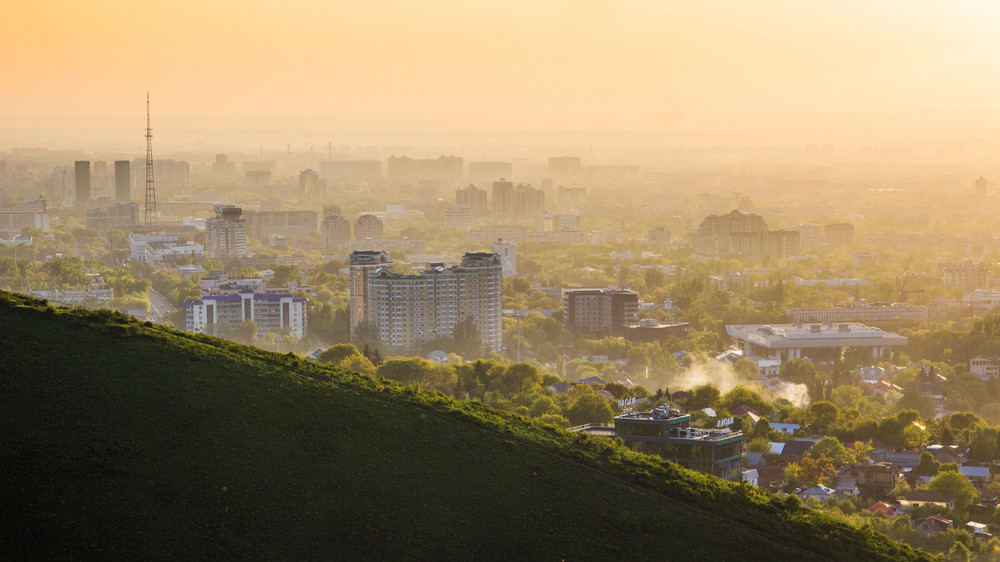
Kazhydromet warns residents of Almaty and three other cities
Summarized and contextualized by DistantNews.
At a glance
News
Official statement
New plan
- Kazhydromet has issued an air quality warning for Almaty and Taldykorgan for June 22, and for Temirtau and Karaganda overnight.
- Adverse meteorological conditions, including calm winds and temperature inversions, are expected to cause pollutant accumulation.
- The forecast includes specific weather details for Almaty, Karaganda, and Taldykorgan, with temperatures ranging significantly between day and night.
Kazhydromet, Kazakhstan's national weather service, has issued a warning regarding air quality for several major cities. Residents of Almaty and Taldykorgan are advised of adverse conditions expected on June 22, while Temirtau and Karaganda face similar alerts overnight.
The warning pertains to "adverse meteorological conditions," a term used to describe a combination of short-term weather factors that hinder the dispersion of pollutants. These conditions typically include calm winds, light breezes, fog, and temperature inversions, which collectively facilitate the buildup of harmful substances in the lower atmosphere.
On June 22, adverse weather conditions are expected in Almaty and Taldykorgan, as well as overnight in Temirtau and Karaganda.
Specific forecasts have been provided for the affected cities. Almaty is expected to experience variable cloudiness with no precipitation and southwesterly winds. Temperatures will range from 20-22°C at night to highs of 31-33°C during the day. Karaganda will also see variable cloudiness and no precipitation, with northeasterly winds increasing from 2-7 m/s at night to 6-11 m/s during the day. Daytime highs are predicted to reach 31-33°C, with extreme heat up to 38°C in some areas. Taldykorgan anticipates variable cloudiness and no precipitation, with northeasterly winds and extreme daytime highs of 33-35°C.
Adverse meteorological conditions referring to air pollution are a combination of short-term weather factors (calm winds, light breezes, fog, and temperature inversions) that facilitate the accumulation of harmful pollutants in the surface layer of the atmosphere.
DistantNews Editorial
Originally published by Tengrinews. Summarized and contextualized by our editorial team with added local perspective. Read our editorial standards.
More Stories

From Our Blog

What Gets Lost (and Found) When News Is Translated

The Critical Role of Diaspora Media in Global News

What Travellers Should Know About Countries with Restricted Press

A Digital Nomad's Guide to Following Local News

How the Same Story Looks Different in Different Countries
