


Kenya police ban march on protest anniversary
Summarized and contextualized by DistantNews.
At a glance
News
Sources not specified
Ongoing story
- Kenyan police banned a planned march in Nairobi to commemorate "Saba Saba Day," an annual day of protest.
- The march, traditionally held on July 7 to mark the 1990 demand for multi-party democracy, has recently focused on protests against President William Ruto's government.
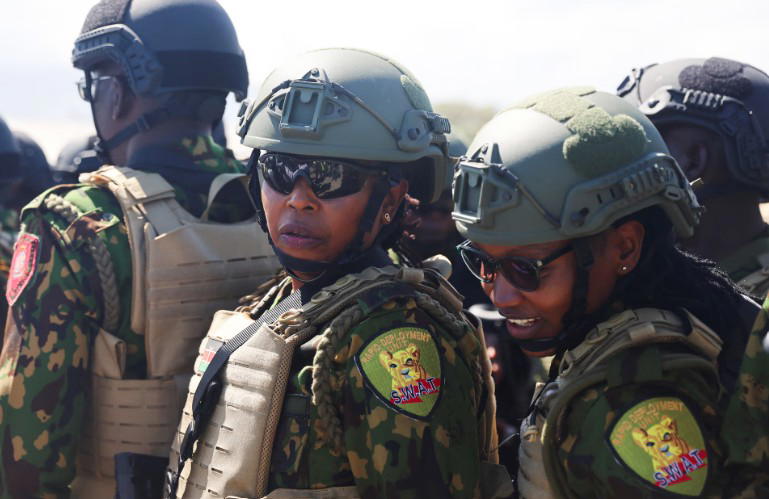
- Heavy police deployments have disrupted traffic and prevented gatherings, with authorities warning of legal action against any unlawful acts.
Kenyan police have banned a planned march in Nairobi intended to mark the annual "Saba Saba Day," a day of protest traditionally observed on July 7. The date commemorates the 1990 uprising demanding a return to multi-party democracy after years of autocratic rule under then-president Daniel arap Moi. In recent years, the "Saba Saba" protests have broadened to include widespread dissent against President William Ruto's administration, with demonstrators citing accusations of corruption, economic mismanagement, and police violence.
Any unlawful acts shall be met with the full force of the law.
This year, authorities have implemented extensive security measures, including heavy police deployments, to preemptively block even small gatherings. A group known as the Economic Justice Movement had notified police of their intention to hold a peaceful procession in Nairobi, sharing their plans on social media. However, police denied receiving any official notice and declared any procession illegal, warning of increased checkpoints throughout the city. "Any unlawful acts shall be met with the full force of the law," a police statement declared.
extrajudicial killings, enforced disappearances, arbitrary arrests, and police brutality, but also an escalating economic crisis… and declining opportunities for millions of young people and families.
The Economic Justice Movement stated their aim was to highlight "extrajudicial killings, enforced disappearances, arbitrary arrests, and police brutality, but also an escalating economic crisis… and declining opportunities for millions of young people and families." Despite the police presence, protests are expected to draw smaller crowds than in previous years. Many citizens reportedly fear police violence, especially after figures from a police watchdog indicated at least 127 people were killed during protests in June-July 2024 and a similar period in 2025. "There's a general sense of exhaustion," Wanjira Wanjiru, an organizer with the local rights group Mathare Social Justice Centre, told AFP.
There’s a general sense of exhaustion.
DistantNews Editorial
Originally published by Vanguard. Summarized and contextualized by our editorial team with added local perspective. Read our editorial standards.
More Stories


From Our Blog

How the Same Story Looks Different in Different Countries

What Gets Lost (and Found) When News Is Translated

The Critical Role of Diaspora Media in Global News

What Travellers Should Know About Countries with Restricted Press

A Digital Nomad's Guide to Following Local News
