


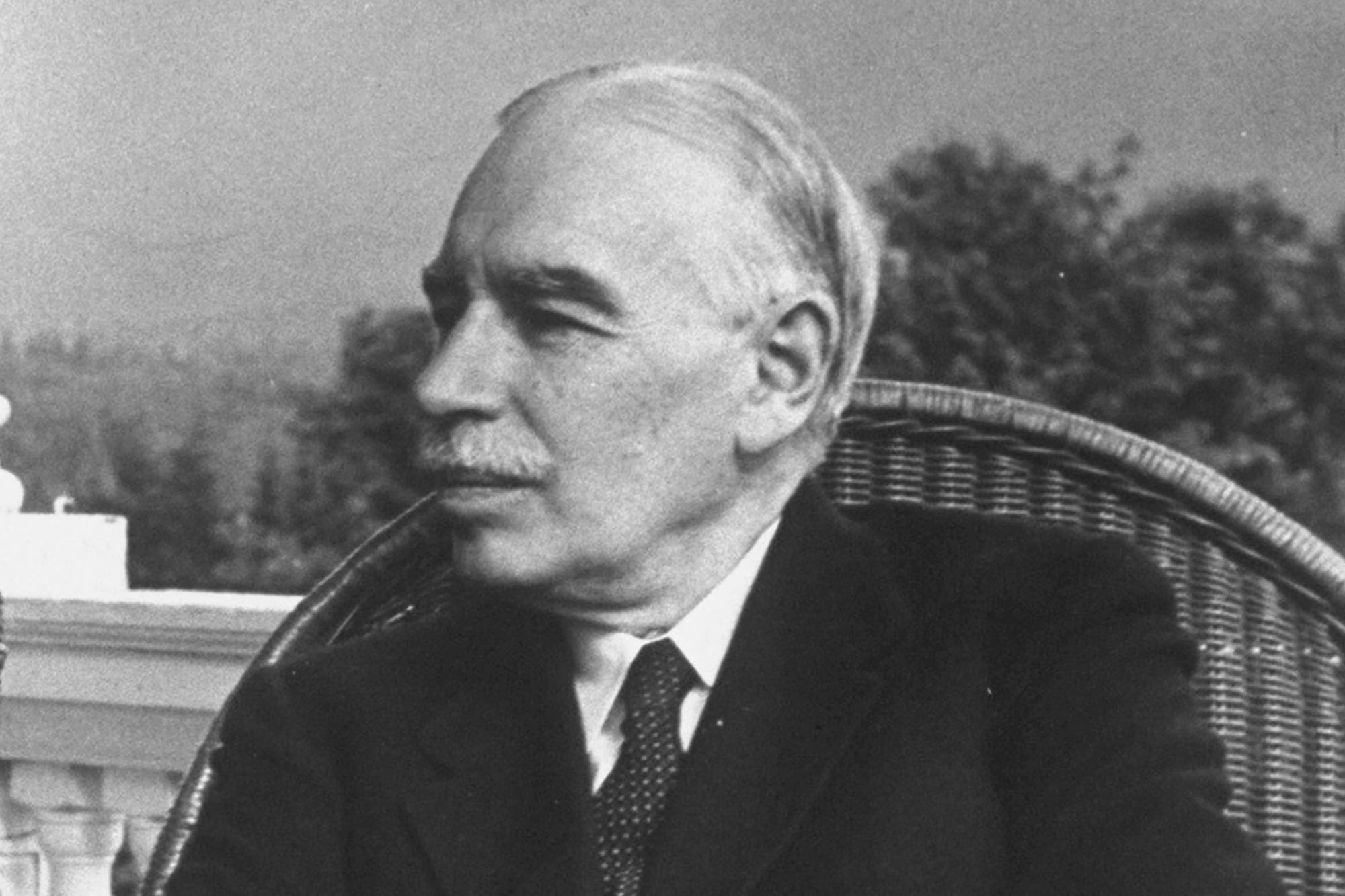
Keynes Died 80 Years Ago, But Is He Truly Gone?
Translated from Spanish, summarized and contextualized by DistantNews.
TLDR
- John Maynard Keynes, a highly influential economist, died 80 years ago on April 21, 1946.
- Despite never holding a ministerial position, Keynes significantly impacted public life and economic policy, particularly after World War II.
- His ideas, though not widely adopted during his lifetime, profoundly shaped post-war economic thought and institutions like the IMF.
Eighty years have passed since the death of John Maynard Keynes, a figure whose economic theories continue to resonate and provoke debate. While he passed away on April 21, 1946, his intellectual legacy remains remarkably alive, prompting us to question whether such a monumental thinker can ever truly be considered 'dead.' Keynes was never a formal minister of the British economy, yet his influence on public life and economic decision-making spanned half a century.
Keynes's famous assertion, "in the long run, we are all dead," uttered in 1923, encapsulates his pragmatic, action-oriented approach. This perspective was crucial as he engaged with the complex economic challenges of his time. His involvement in the Versailles Peace Conference, his participation in the 1920s debate on exchange rates, his negotiation of the crucial Lend-Lease agreements with the United States during World War II, and his role in the founding of the International Monetary Fund (IMF) underscore his practical engagement with global affairs.
However, Keynes's immediate impact during his lifetime was perhaps less pronounced than his posthumous influence. His efforts at Versailles to mitigate the harsh reparations imposed on Germany were unsuccessful. He also lost a significant debate with Reginald McKenna, promoted by Winston Churchill, regarding Britain's return to the gold standard. Furthermore, his economic prescriptions found little traction in the concrete policies of the 1930s, including Franklin D. Roosevelt's New Deal.
The true era of "Keynesianism" dawned in the aftermath of World War II, flourishing until the late 1960s. It was during this period that his theories on government intervention to manage aggregate demand, stabilize economies, and combat unemployment became the dominant paradigm in macroeconomic policy. His foundational role in establishing the IMF, despite his own health issues that limited his ability to travel by air, highlights his commitment to shaping a more stable post-war international economic order. Even though he may not have possessed extensive formal economic theory training by today's standards, his editorship of the prestigious 'Economic Journal' placed him at the center of economic discourse, shaping and being shaped by the intellectual currents of his time.
in the long run we are all dead
DistantNews Editorial
Originally published by La Nación in Spanish. Translated, summarized, and contextualized by our editorial team with added local perspective. Read our editorial standards.
More Stories



From Our Blog

What Gets Lost (and Found) When News Is Translated

The Critical Role of Diaspora Media in Global News

What Travellers Should Know About Countries with Restricted Press

A Digital Nomad's Guide to Following Local News

How the Same Story Looks Different in Different Countries
