


Khamenei's funeral begins 4 months after death, drawing China, Russia, and Middle East figures
Translated from Korean, summarized and contextualized by DistantNews.
At a glance
News
Sources not specified
New plan
- Iran is holding state funeral rites for Ayatollah Ali Khamenei, who died approximately four months ago from U.S. and Israeli airstrikes.
- The six-day mourning period aims to showcase the stability of the succession system and national unity.
- Over 50 international delegations, including representatives from Russia and China, are attending the ceremonies.
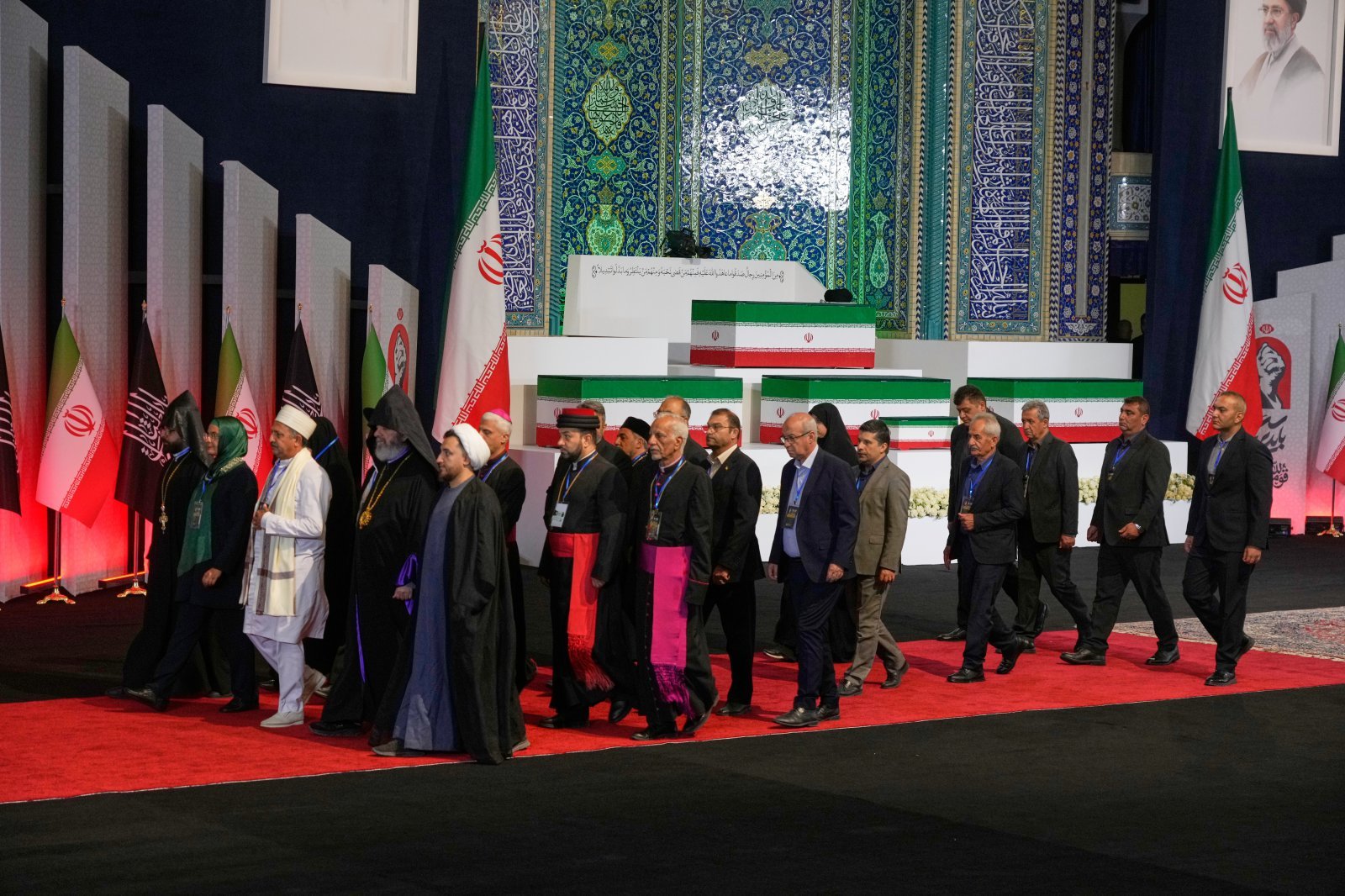
Iran has commenced state funeral ceremonies for Ayatollah Ali Khamenei, the former Supreme Leader, approximately four months after his death in U.S. and Israeli airstrikes. The government is utilizing the six-day mourning period to project an image of stability within the succession framework and to emphasize national unity both domestically and internationally.
Official Iranian media released images showing high-ranking government officials, foreign delegations, religious leaders, and militia members paying their respects at Khamenei's coffin. Some mourners were seen praying and shedding tears. The New York Times reported that they were granted access to cover the funeral under government-approved events, accompanied by official interpreters and guides.
Khamenei's coffin was draped in the Iranian flag, adorned with his black turban symbolizing his lineage as a descendant of Prophet Muhammad, and a black-and-white checkered scarf representing the Iranian Basij militia. The funeral services began at Tehran's Grand Mosalla, a venue where Khamenei frequently delivered major speeches. His body will be displayed publicly on July 4th for general mourning, followed by a large procession in Tehran on July 6th. His remains are scheduled to be interred in his hometown of Mashhad, Iran, after a pilgrimage through Iraq's Shia holy sites.
Tehran's streets are decorated with black banners and large portraits of Khamenei. Some displays feature images of his son and successor, Ayatollah Mojtaba Khamenei, symbolically highlighting the new leadership. The funeral was postponed for four months following Khamenei's death due to security concerns and the potential for further attacks, according to the government.
Khamenei, who served as Supreme Leader for over 37 years, faced significant domestic criticism for suppressing dissidents, economic hardship, and corruption. While the government is focused on honoring him as a national hero, reports indicate some Iranians are dissatisfied with the substantial costs of the funeral amid economic difficulties. The attendance of over 50 foreign delegations, including high-profile figures from Russia and China, underscores the event's geopolitical significance, drawing attention to the dynamics of the Middle East.
The city is devastated. You have to go to the central park to have a chance to get a phone signal. And outside, drones are everywhere. We were afraid to go out. But after my mother died, I was even more afraid to stay alone.
DistantNews Editorial
Originally published by Dong-A Ilbo in Korean. Translated, summarized, and contextualized by our editorial team with added local perspective. Read our editorial standards.
More Stories



From Our Blog

What Gets Lost (and Found) When News Is Translated

The Critical Role of Diaspora Media in Global News

What Travellers Should Know About Countries with Restricted Press

A Digital Nomad's Guide to Following Local News

How the Same Story Looks Different in Different Countries
