

Kim Jong Un meets China's Wang Huning, reaffirms 'strategic pillar' of North Korea-China treaty
Translated from Korean, summarized and contextualized by DistantNews.
At a glance
News
Named sources
New plan
- North Korean leader Kim Jong Un met with Wang Huning, a senior official from China, in Pyongyang.
- The meeting marked the 65th anniversary of the treaty on friendship, cooperation, and mutual assistance between North Korea and China.
- Both leaders reaffirmed their commitment to strengthening the strategic alliance and traditional friendly relations between their countries.
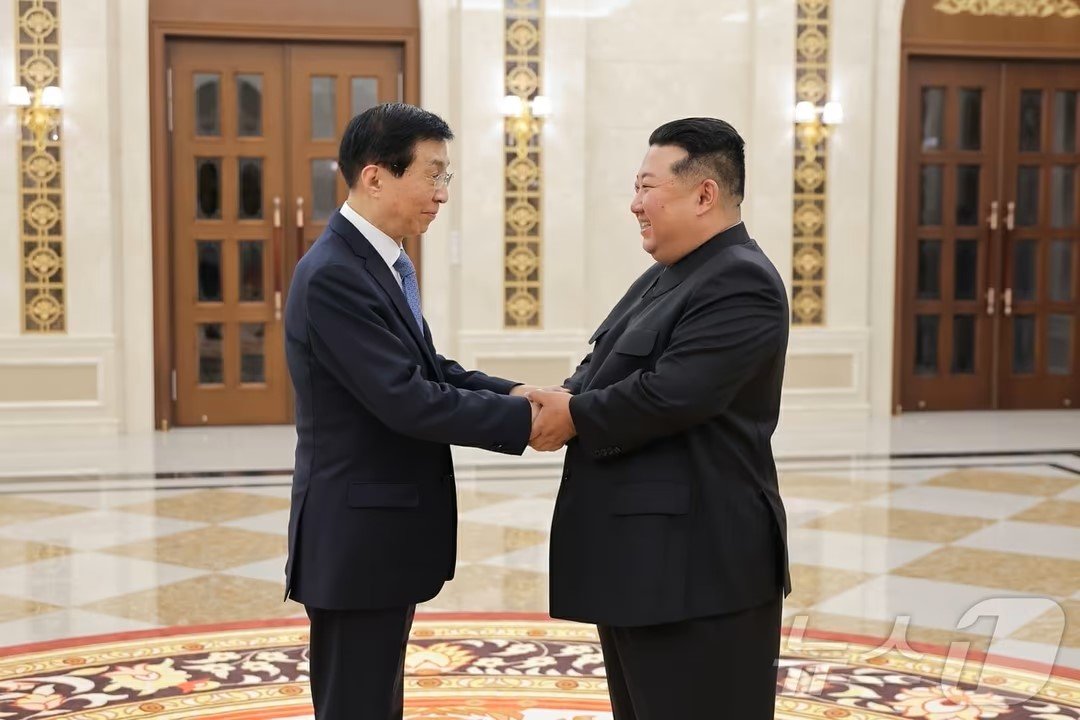
North Korean leader Kim Jong Un met with Wang Huning, chairman of the Chinese People's Political Consultative Conference, in Pyongyang on July 16. The meeting, which celebrated the 65th anniversary of the treaty on friendship, cooperation, and mutual assistance between North Korea and China, aimed to strengthen the strategic alliance between the two nations. Kim Jong Un emphasized the treaty's role in defining the strategic nature and direction of bilateral relations, stating that developing the traditional friendly cooperative relationship with socialism at its core is the Workers' Party of Korea's unwavering policy. He also pledged continued support for China's socialist endeavors under Xi Jinping's leadership. Wang Huning reciprocated by expressing commitment to fully implement the consensus reached by the top leaders, enhance political mutual trust and solidarity, and expand cooperation. During their visit, the Chinese delegation visited symbolic sites of North Korea-China relations, including the Kumsusan Palace of the Sun, where Kim Il Sung and Kim Jong Il lie in state. Wang Huning inscribed in the guestbook, "China-North Korea friendship will be passed down through generations." A banquet celebrating the anniversary was attended by North Korean Premier Kim Tok Hun and Wang Huning, who both highlighted the treaty as a crucial legal foundation for bilateral relations and pledged mutual support for their socialist causes.
The treaty defines the strategic nature and direction of relations between the two countries.
DistantNews Editorial
Originally published by Dong-A Ilbo in Korean. Translated, summarized, and contextualized by our editorial team with added local perspective. Read our editorial standards.
More Stories



From Our Blog

What Gets Lost (and Found) When News Is Translated

The Critical Role of Diaspora Media in Global News

What Travellers Should Know About Countries with Restricted Press

A Digital Nomad's Guide to Following Local News

How the Same Story Looks Different in Different Countries
