


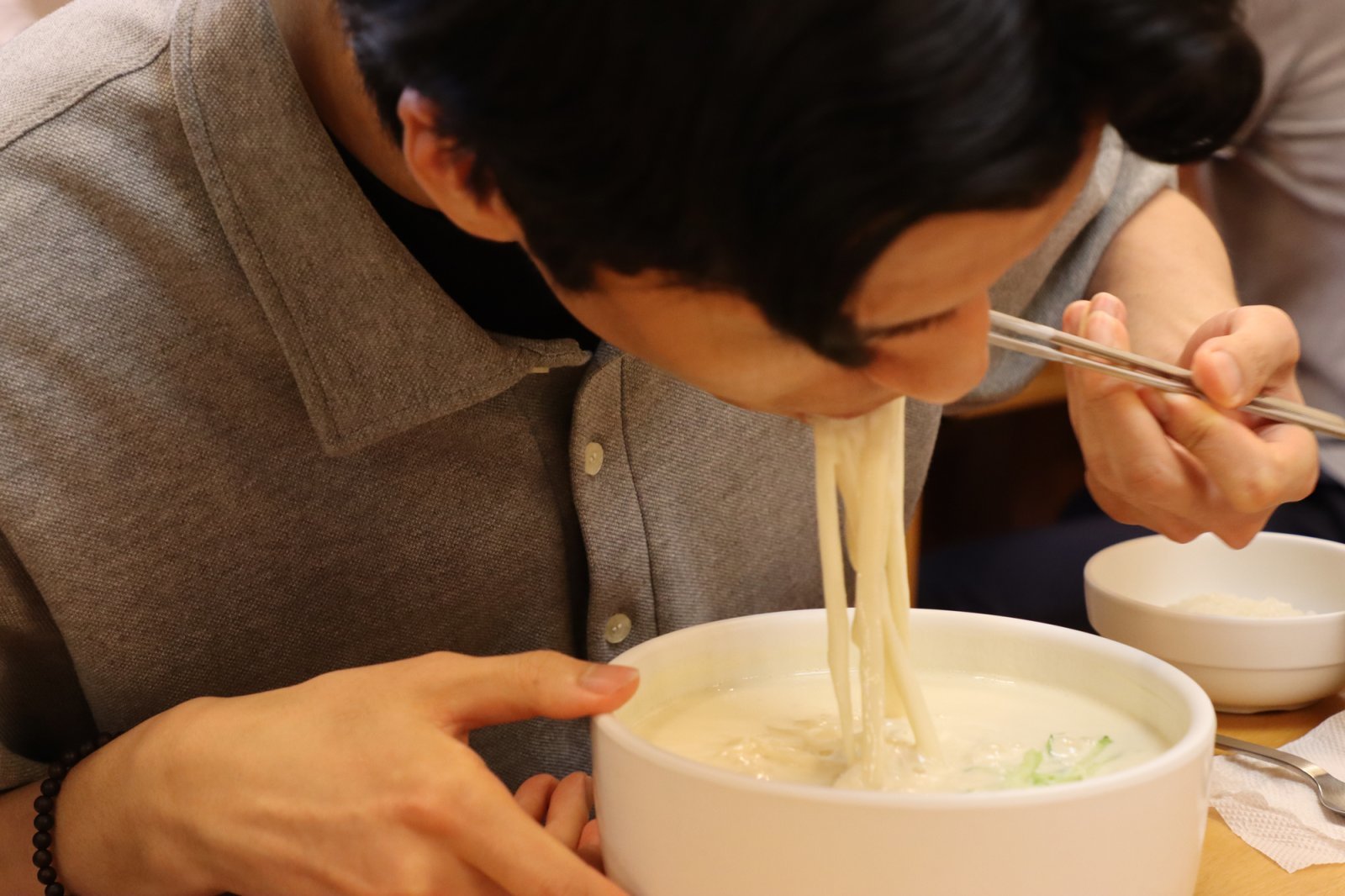
Kongguksu: A healthy Korean summer staple, but mind the sugar and salt
Translated from Korean, summarized and contextualized by DistantNews.
At a glance
In-depth
Sources not specified
Context piece
- Kongguksu, a cold soybean noodle soup, is a popular summer dish in Korea, valued for its nutritional benefits and cooling properties.
- The dish can be prepared with either salt or sugar, but excessive consumption of either can lead to health issues like high blood pressure or blood sugar spikes.
- Health experts advise moderation, suggesting additions like cucumber or nuts to enhance nutritional value and flavor, and cautioning individuals with certain health conditions against overconsumption.
As temperatures soar, the cold and savory Kongguksu, a noodle soup made with blended soybeans, emerges as a quintessential Korean summer delicacy. Beyond its refreshing taste, the dish is lauded for its rich nutritional profile and health benefits, making it a favored choice for combating the heat and replenishing energy.
The primary ingredient, soybeans, are celebrated as "beef from the field" for their high-quality plant-based protein. Kongguksu also provides essential minerals like calcium, iron, and magnesium, along with beneficial compounds such as isoflavones and lecithin. These components aid in recovery from summer fatigue and boost overall nutrition. Traditional Korean medicine also recognizes soybeans as a food that benefits the body and strengthens energy, particularly helpful in replenishing bodily fluids lost through sweat during summer.
In summer, energy and bodily fluids are consumed due to heat and sweat, so it is important to have a diet that replenishes nutrients without burdening digestion.
A long-standing debate among Kongguksu enthusiasts revolves around seasoning: should it be prepared with salt or sugar? Adding salt enhances the natural nutty flavor of the soybeans and helps replenish sodium lost through perspiration. However, most Koreans already consume sodium in excess, and adding too much salt can lead to elevated blood pressure and swelling. Conversely, sugar can mask the beany taste and make the dish more palatable, especially for children or those with a reduced appetite, providing a quick energy boost. Yet, excessive sugar intake can increase calorie count and cause rapid blood sugar spikes, posing risks for individuals with diabetes, obesity, or metabolic syndrome.
Recent trends have seen variations like "kongmul-kkwabaegi" (soy milk donuts), where fried pastries are dipped into soy milk. While offering a different texture, these high-calorie, high-fat options can also trigger blood sugar spikes. Health experts recommend consuming Kongguksu in moderation, using minimal sugar or salt, and enhancing its nutritional value and flavor with ingredients like cucumbers, sesame seeds, or nuts. Cucumbers, with their high water content, are particularly beneficial for hydration and reducing swelling. For those with sensitive digestive systems or cold extremities, consuming the soup less chilled or in smaller portions is advised.
Kongguksu is a representative summer food with protein and various nutrients, but it is best to consume it in moderation, bringing out the original flavor of the beans, rather than excessively seasoning with sugar or salt.
DistantNews Editorial
Originally published by Dong-A Ilbo in Korean. Translated, summarized, and contextualized by our editorial team with added local perspective. Read our editorial standards.
More Stories



From Our Blog

What Gets Lost (and Found) When News Is Translated

The Critical Role of Diaspora Media in Global News

What Travellers Should Know About Countries with Restricted Press

A Digital Nomad's Guide to Following Local News

How the Same Story Looks Different in Different Countries
