


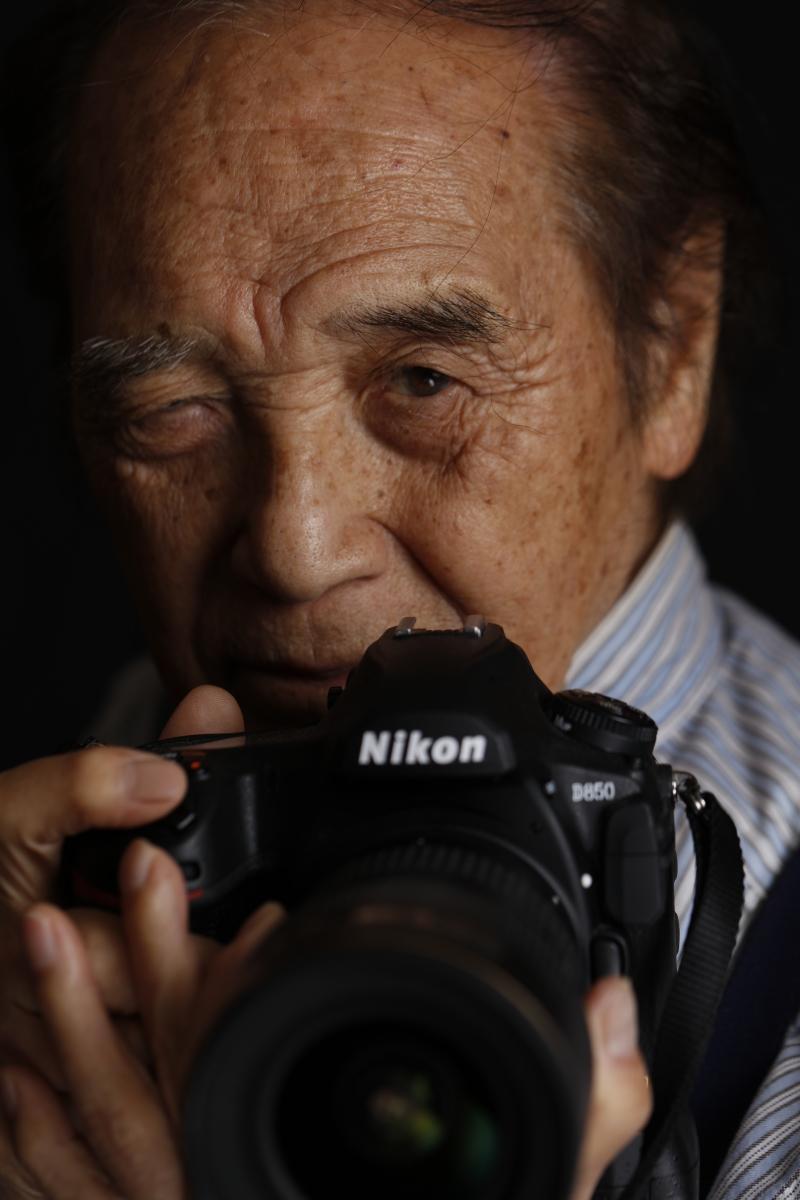
‘Korean Blood, Sweat and Tears’: Japanese Photojournalism Master Captures Six Decades of Korea
Translated from Korean and summarized by DistantNews. Read the original for the full story.
At a glance
In-depth
Named sources
New plan
- Japanese photojournalist Shisei Kuwabara, 90, has photographed Korea more than 100 times since his first visit in 1964, producing about 100,000 images.
- His work recorded major moments in South Korea’s modern history, including protests against the 1965 Japan-Korea treaty and the 1988 Seoul Olympics.
- The documentary film “The Face of Photography,” which explores his career, opens on the 2nd.
At 90, Japanese photojournalist Shisei Kuwabara still climbs onto sofas to take a picture. After a recent interview in Seoul, he pulled out his camera, straightened his bent frame and stepped up without hesitation to preserve the moment in an image.
The blood, sweat and tears of Korean people are embedded in these photographs.
That instinct has shaped more than six decades of work in Korea. Kuwabara first arrived in 1964 as a correspondent, after making his name with photographs documenting the suffering caused by Minamata disease in Japan. Over the following 62 years, he returned to Korea more than 100 times and took roughly 100,000 photographs.
His presence was not always welcomed. He often heard insults such as “son of a bitch” and “Jap,” along with the question of why a Japanese photographer was documenting people living in poverty. Yet he continued to follow the country’s upheavals and its people. His memories include the 1965 protests against the Japan-Korea treaty and the 1988 Seoul Olympics.
The suffering and sorrow imposed on ordinary people held the soul of a photojournalist and would not let go.
Kuwabara said Korean photographs contain “the blood, sweat and tears of Korean people.” He added that “the suffering and sorrow imposed on ordinary people held the soul of a photojournalist and would not let go.” One image that stayed with him shows a South Korean soldier meeting his mother after a ceremony before deployment to Vietnam at Yeouido airfield in 1965. Kuwabara remembered the soldier’s name and spent years trying to learn whether he returned alive, but never found out.
I used to describe my life as ‘absolute loneliness in a foreign land’ and ‘endless hardship.’
He still visits the graves of women from U.S. military camp towns whom he photographed and checks on families affected by Minamata disease. His wife, Choi Hwa-ja, a Korean interpreter who met Kuwabara during a 1969 assignment, described their life together as marked by “absolute loneliness in a foreign land” and “endless hardship.” Still, she said seeing their lives conclude in a film made her feel the difficult, lonely path may have been worthwhile.
Seeing it conclude in a film at the final stage of life makes me think that, although it was difficult and lonely, perhaps it was worth doing.
About this summary
Originally published by Dong-A Ilbo in Korean. Translated, summarized, and contextualized automatically by DistantNews, with a note on how the source frames the story. Not individually reviewed before publishing. How this works.
More Stories


From Our Blog

What Gets Lost (and Found) When News Is Translated

The Critical Role of Diaspora Media in Global News

What Travellers Should Know About Countries with Restricted Press

A Digital Nomad's Guide to Following Local News

How the Same Story Looks Different in Different Countries
