


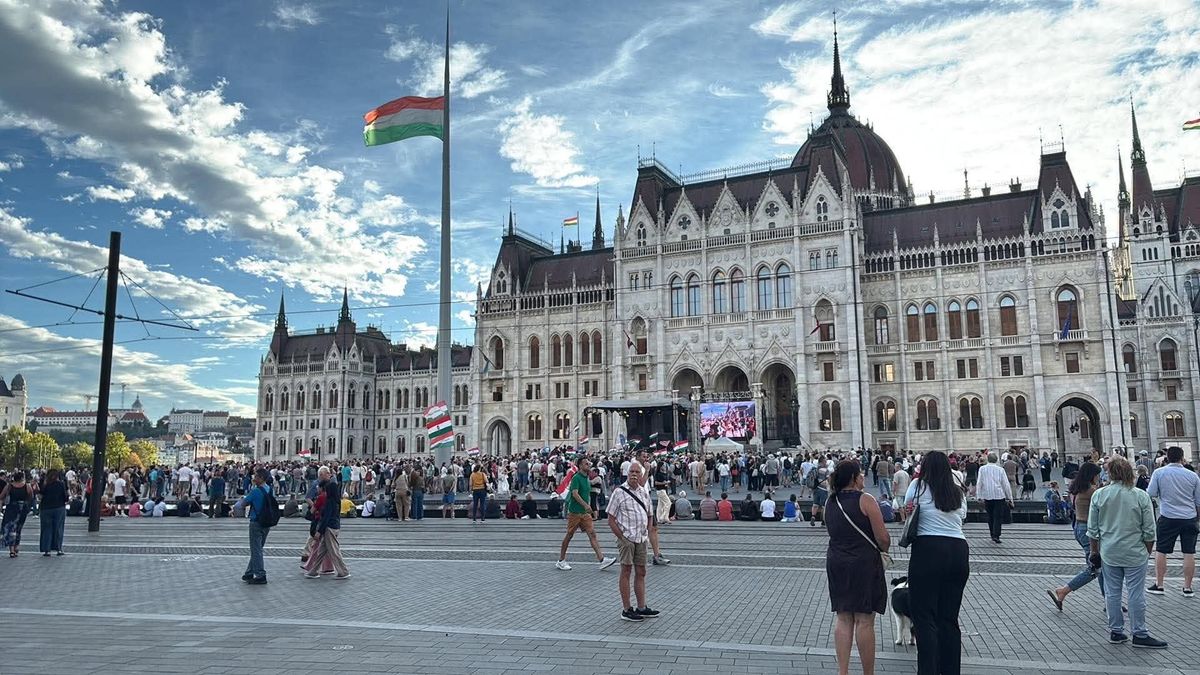

Kötcse Turns From Nostalgia to the Future at Its 25th Civic Picnic
Translated from Hungarian and summarized by DistantNews. Read the original for the full story.
At a glance
Interview
Named sources
New plan
- The Kötcse gathering will use the slogan “Time is truthful and decides what is not,” which organizer Ádám Kavecsánszki said reflects the belief that time reveals truth and exposes false greatness.
- Viktor Orbán will again deliver the main speech at the event, which the organizers say will focus on current and future challenges.
- Kavecsánszki defended the record of 16 years of government and criticized the Tisza Party’s effort to erase the past.
The 25th Kötcse civic picnic could have been an occasion for nostalgia. Instead, its organizers say the event will focus on the challenges of the present and the future, with Fidesz leader Viktor Orbán again scheduled to deliver the main speech.
The gathering’s slogan is “Time is truthful and decides what is not.” Ádám Kavecsánszki, director general of the Foundation for a Civic Hungary, said the phrase reflects the way time brings truth to the surface. It exposes lies, false greatness and undeserved respect, he said, while genuine achievement endures and temporary political constructions eventually reveal what they are.
Time is truthful and decides what is not.
Kavecsánszki used Péter Magyar as an example. In his account, Magyar spent much of the past 16 years as a supporter and beneficiary of the Orbán era. Kavecsánszki recalled that at annual state-of-the-nation speeches, organizers had to make sure Magyar received a seat in the first row, specifically in the very first row.
Time has a peculiar quality: it brings truth to the surface. It exposes lies, false greatness and undeserved respect.
He also argued that Magyar embodied many of the features that can now fairly be described as the faults and weaknesses of the system of national cooperation. For that reason, Kavecsánszki said he considered the Tisza Party’s current political creed unfair because it essentially calls for erasing the past.
Kavecsánszki acknowledged that the government had made mistakes and shown weaknesses, but said the country-building carried out in 16 years could not simply be removed from history. He described Kötcse as a constant and reliable point for the civic camp, with a symbolic location and a historic spirit. He pointed to figures who have attended over the past quarter-century, including Ferenc Mádl, Sándor Csoóri, Imre Makovecz, István Nemeskürty, Anna Jókai, Imre Kerényi and Gyula Tellér.
What is genuine achievement remains; what is merely a temporary political construction sooner or later reveals what it is.
About this summary
Originally published by Magyar Nemzet in Hungarian. Translated, summarized, and contextualized automatically by DistantNews, with a note on how the source frames the story. Not individually reviewed before publishing. How this works.
More Stories
From Our Blog

Countries Without a Free Press: The 2026 List and What It Means for Readers

What Press Freedom Means for the News You Read

News in Translation: What Gets Lost, and How We Keep the Framing

Diaspora Media: How Communities Follow News From Home

Traveling Where the Press Is Not Free: How to Read the News There
