

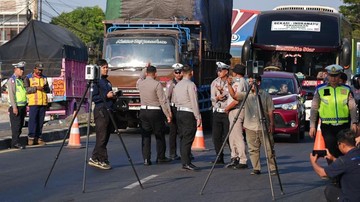

KPK has not closed the door on supervising the case of former Junior Attorney General Febrie
Translated from Indonesian, summarized and contextualized by DistantNews.
At a glance
News
Named sources
Context piece
- The Corruption Eradication Commission (KPK) has not closed the door on supervising the case of former Junior Attorney General for Special Crimes, Febrie Ardiansyah.
- KPK believes it can supervise the case based on Law Number 19 of 2019, which allows coordination and supervision of corruption cases.
- KPK has a history of coordinating with law enforcement agencies facing challenges or needing support in corruption investigations.
Indonesia's Corruption Eradication Commission (KPK) has indicated it may still supervise the case involving former Junior Attorney General for Special Crimes, Febrie Ardiansyah. The case has already been transferred from the National Police (Polri) to the Attorney General's Office (Kejagung).
KPK spokesperson Budi Prasetyo stated on Tuesday (July 14, 2026) that the commission maintains the possibility of coordinating and supervising the handling of Febrie's case, citing Law Number 19 of 2019 concerning the KPK as the legal basis for this authority. This law empowers the KPK to coordinate with other anti-corruption agencies and supervise law enforcement officials handling corruption cases.
There is indeed a possibility for the KPK, along with other law enforcement apparatuses, to coordinate or supervise the handling of a case.
Prasetyo explained that the KPK's authority stems from Article 6 of the aforementioned law, which outlines the commission's primary duties and functions. This includes coordinating with relevant agencies and supervising law enforcement in corruption investigations. He noted that the KPK frequently engages in such coordination, providing assistance or expertise when other agencies encounter difficulties or require support, such as expert testimony during investigations.
The KPK's willingness to supervise the case underscores its commitment to combating corruption and ensuring accountability within the justice system. This stance suggests a potential for inter-agency collaboration to thoroughly investigate and address any alleged misconduct, reinforcing the legal framework designed to uphold integrity in law enforcement.
In the context of coordination and supervision, we have often done this. A number of cases, both at the central and regional levels, have been coordinated by us when law enforcement apparatuses face obstacles or require support from the KPK, for example, to present experts to provide various views and analyses during the investigation process.
DistantNews Editorial
Originally published by Republika in Indonesian. Translated, summarized, and contextualized by our editorial team with added local perspective. Read our editorial standards.
More Stories


From Our Blog

What Gets Lost (and Found) When News Is Translated

The Critical Role of Diaspora Media in Global News

What Travellers Should Know About Countries with Restricted Press

A Digital Nomad's Guide to Following Local News

How the Same Story Looks Different in Different Countries
