



Kremlin Says It Does Not Rule Out Restart of Peace Talks with Ukraine and US
Summarized by DistantNews. Read the original for the full story.
At a glance
News
Named sources
Ongoing story
- Iran says it will announce a restricted zone in the Gulf and approve maps for a new shipping corridor through the Strait of Hormuz, while tensions with the United States disrupt tanker traffic and lift oil prices.
- Iranian officials say US sanctions and an oil blockade are worsening economic pressures, as Tehran threatens stronger responses to attacks and reports repeated strikes on Kharg Island.
- The developments come after a June ceasefire unraveled and renewed US-Iranian strikes raised concerns about the security of a route that carried about one-fifth of global oil supplies before the conflict.
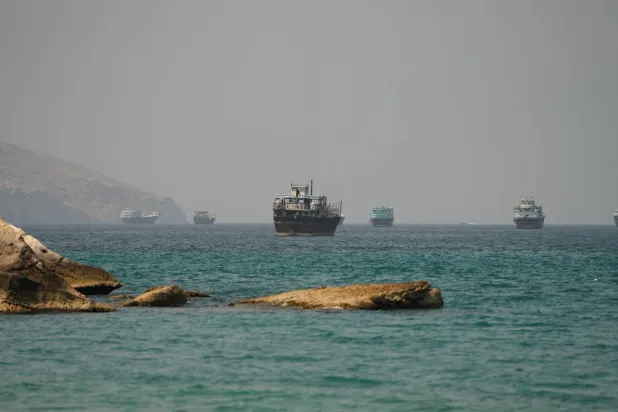
Iran plans to announce a new restricted zone in the Gulf within days and publish maps for an alternative shipping corridor through the Strait of Hormuz, as renewed strikes have sharply reduced tanker traffic and pushed oil prices higher.
The maps of a new international corridor which lies in Iranian and Omani waters and in which Iran will have management have been agreed and should be signed in the coming days.
Mohsen Rezaei, secretary of Iran’s Supreme National Security Council, said the zone would begin where the US blockade of Iran starts and extend into Gulf waters. Ships entering it would be placed on a sanctions list, he said in an interview with state television. Rezaei added that Iran and Oman had agreed on an international corridor through their waters, with Iran overseeing its management. "The maps of a new international corridor which lies in Iranian and Omani waters and in which Iran will have management have been agreed and should be signed in the coming days," he said.
Iran has linked the reopening of the strait to an end to US military pressure. "We will only commit to the Strait of Hormuz being open when they (the Americans) stop the sabotage, threats and attacks on Iran," Rezaei said. The waterway, a key energy route, has largely closed to tanker traffic since the conflict began. Shipping data showed an average of 10 commodity ships crossed it each day over the past 10 days, the lowest level since May. Brent crude rose 0.8% to above $97 a barrel on Monday, extending the previous week’s gains.
We will only commit to the Strait of Hormuz being open when they (the Americans) stop the sabotage, threats and attacks on Iran.
The confrontation follows US-Israeli strikes on Iran six months ago and a preliminary ceasefire agreement reached in June that later unraveled. After a pause in military action through much of August, strikes resumed. US Central Command said US forces hit three Iranian oil tankers on Saturday, including one near Kharg Island, Iran’s main oil export hub, after attacks by Iran’s Revolutionary Guard Corps on US warships.
From now on, any attack against Iran’s interests and security will receive a faster, heavier and more painful response.
Iranian officials also described mounting economic strain. Parliament Speaker Mohammad Baqer Qalibaf said any attack on Iran’s interests would receive a faster and heavier response, while identifying currency swings, inflation, unemployment and market management as major domestic challenges. Economy Minister Ali Madanizadeh said Iran would answer US economic pressure with reforms and rejected the idea that sanctions would change the country’s course. Iran says Kharg Island suffered 550 attacks in previous months, while the country had exported 90% of its crude through the hub before the war.
I have to clarify one point: The responsibility of reforming Iran’s economy is with its government and people, not with the US Treasury.
About this summary
Originally published by Asharq Al-Awsat. Summarized and contextualized automatically by DistantNews, with a note on how the source frames the story. Not individually reviewed before publishing. How this works.
More Stories



From Our Blog

News in Translation: What Gets Lost, and How We Keep the Framing

Diaspora Media: How Communities Follow News From Home

Traveling Where the Press Is Not Free: How to Read the News There

The Digital Nomad's Guide to Local News

The Same Story, Different Countries: How Coverage Changes at the Border
