

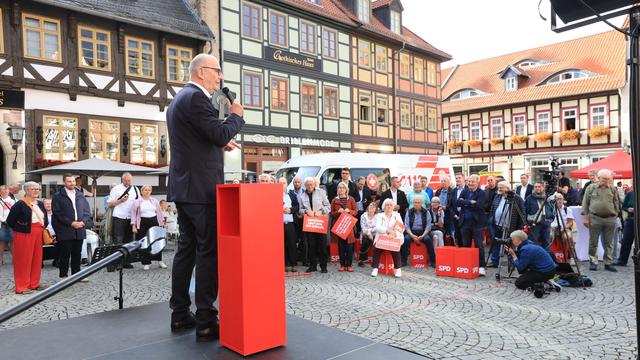

Kubicki Links FDP Leadership to Party Polls, Promises Reform
Translated from German and summarized by DistantNews. Read the original for the full story.
At a glance
News
Sources not specified
New plan
- Wolfgang Kubicki, the designated FDP leader, stated he would step down if the party remains below 5% in polls after one year.
- He plans to present a concrete reform program for the party by September.
- Kubicki aims to help the FDP regain relevance and public attention, emphasizing a team effort for the party's future.
Wolfgang Kubicki, poised to become the new leader of Germany's Free Democrats (FDP), has set a clear benchmark for his tenure: he will consider his role a failure if the party consistently polls below the crucial 5% threshold after one year. "Yes. Then I can no longer help my party," Kubicki stated in a podcast, indicating he would draw personal consequences.
Yes. Then I can no longer help my party.
Kubicki, 74, stressed that the FDP must be perceived as a relevant political force again. He acknowledged this goal cannot be achieved by him alone but requires a strong, cohesive team, which he intends to build. While not seeing himself as the party's future, he aims to contribute to giving the FDP a renewed perspective.
Following his expected election as party chairman, Kubicki announced plans to unveil a concrete reform program by September. He insisted the program must move beyond generalities, offering "very specific ideas that can then also be debated." The FDP is seeking a path out of its current crisis at its federal party congress in Berlin, where Kubicki is running to succeed Christian Dürr, who is stepping down after significant losses in state elections.
This goal cannot be achieved by him alone but requires a strong, cohesive team, which he intends to build.
Leveraging his high public recognition, Kubicki believes he can help the FDP attract more public attention. His candidacy is also seen as a move to revitalize the party, which has struggled to maintain its political standing. The FDP's leadership change and reform efforts are aimed at re-establishing its influence in German politics.
He insisted the program must move beyond generalities, offering 'very specific ideas that can then also be debated.'
About this summary
Originally published by Die Zeit in German. Translated, summarized, and contextualized automatically by DistantNews, with a note on how the source frames the story. Not individually reviewed before publishing. How this works.
More Stories

From Our Blog

News in Translation: What Gets Lost, and How We Keep the Framing

The Same Story, Different Countries: How Coverage Changes at the Border

Diaspora Media: How Communities Abroad Follow Home

Traveling Where the Press Is Not Free: How to Read the News There

The Digital Nomad's Guide to Local News
