


Kurski Crossed Absurdity's Line in PiS Feud, Analyst Says
Translated from Polish, summarized and contextualized by DistantNews.
At a glance
Analysis
Named sources
Context piece
- A new political formation led by Mateusz Morawiecki is polling at 7.4%, while the ruling PiS party shows a decline, indicating a potential shift in the right-wing electorate.
- A fierce conflict between PiS and former Prime Minister Morawiecki is escalating, with Jacek Kurski's public statements criticized for crossing the line of political discourse.
- The fragmentation of the right-wing political scene suggests an end to stable parliamentary majorities in Poland, potentially leading to weaker future governments and more complex coalition negotiations.
A new political force led by Mateusz Morawiecki has emerged with 7.4% support, a start that analyst Michał Szułdrzyński deems not a success but a foundation to build upon. The initial phase shows a clear division within the former PiS electorate, and the coming months will reveal if Morawiecki can expand his support beyond these ranks.
On the beginning, 7.4% is not a success, but it shows that Mateusz Morawiecki has something to build on.
The escalating conflict between PiS and Morawiecki has intensified, with Szułdrzyński describing the campaign against the former prime minister as having crossed the boundaries of political rivalry. He suggests that while both sides aim to rally their voters, the scale of mutual accusations could backfire. Jacek Kurski's recent appearance on Telewizja Republika was specifically cited as a moment where political absurdity was exceeded. Szułdrzyński noted that dredging up old accusations against Morawiecki also reflects poorly on Jarosław Kaczyński, who had entrusted him with key state and party roles for years.
I have the impression that this level of animosity is getting out of control.
Szułdrzyński believes this political split marks a new era for the right in Poland, signaling the end of Jarosław Kaczyński's hegemonic control over the movement. This shift necessitates building future coalitions on more equal footing. The fragmentation of the political landscape could also lead to an end of the stable parliamentary majorities Poland has seen for two decades. Future governments, regardless of their composition, are likely to be significantly weaker due to the anticipated difficult coalition negotiations.
And I have the impression that Jacek Kurski crossed those boundaries of absurdity.
Regarding the ideological direction of the right, Szułdrzyński observes that despite growing conservative sentiment, most Poles remain moderate. He uses the analogy that "politicians are masters at heating water, but you can't drink boiling water" to illustrate the current situation, suggesting that radicalization among politicians does not necessarily reflect the broader public mood.
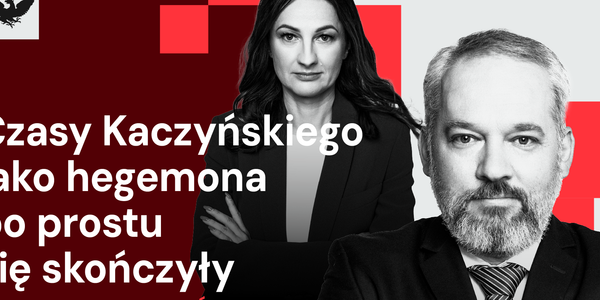
This shows that the times when there was one right-wing and Jarosław Kaczyński was its hegemon have simply ended.
DistantNews Editorial
Originally published by Rzeczpospolita in Polish. Translated, summarized, and contextualized by our editorial team with added local perspective. Read our editorial standards.
More Stories
From Our Blog

What Gets Lost (and Found) When News Is Translated

The Critical Role of Diaspora Media in Global News

What Travellers Should Know About Countries with Restricted Press

A Digital Nomad's Guide to Following Local News

How the Same Story Looks Different in Different Countries
