


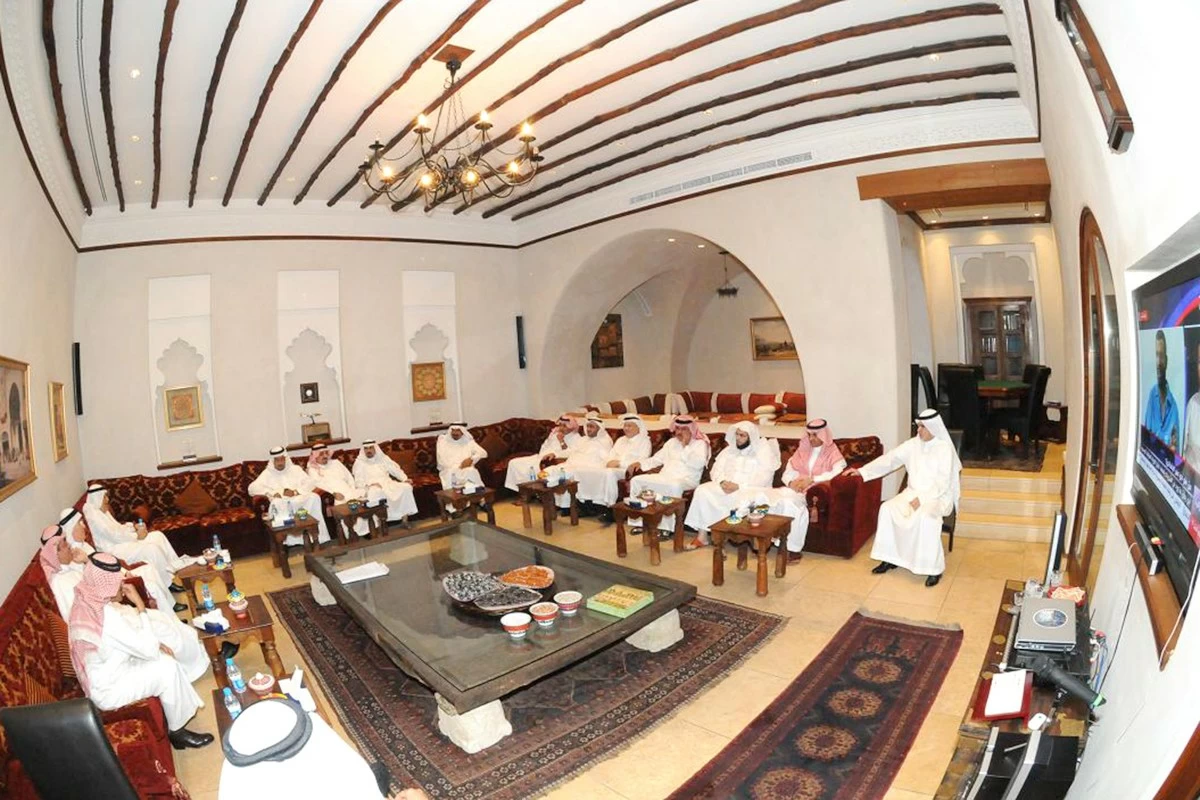
Kuwait's diwaniyas recognized as UNESCO Intangible Cultural Heritage
Translated from English, summarized and contextualized by DistantNews.
At a glance
In-depth
Named sources
Outcome reported
- Kuwait's traditional social gathering places, known as diwaniyas, have been inscribed on the UNESCO Representative List of the Intangible Cultural Heritage of Humanity for 2025.
- The UNESCO listing recognizes the diwaniya's role in preserving dialogue, social cohesion, national identity, and values like hospitality and tolerance.
- Historically, diwaniyas have served as platforms for intellectual, cultural, and political discussions, and have even been origins for educational initiatives and civil society institutions in Kuwait.
Kuwait's cherished diwaniyas, a cornerstone of its social and cultural fabric, have received international acclaim with their inscription on the UNESCO Representative List of the Intangible Cultural Heritage of Humanity in 2025. This recognition highlights the vital role these traditional gathering places play in fostering dialogue, strengthening social cohesion, and preserving Kuwaiti national identity.
The UNESCO inscription represents a national and cultural achievement reflecting Kuwait’s commitment to safeguarding its living heritage and cultural identity.
Traditionally, diwaniyas function as informal meeting spots where Kuwaitis convene to discuss a wide array of social, cultural, and public affairs. Over time, they have evolved into dynamic platforms for intellectual, cultural, political, and economic discourse. Crucially, they serve as conduits for transmitting core Kuwaiti values such as hospitality, tolerance, and community engagement across generations.
He said the recognition confirms the diwaniya’s importance as a cultural and social practice that promotes dialogue, tolerance, and the exchange of knowledge and values across generations.
Mohammad bin Redha, Assistant Secretary-General for Antiquities and Museums at the National Council for Culture, Arts and Letters, described the UNESCO inscription as a significant national and cultural achievement. He emphasized that it underscores Kuwait's dedication to safeguarding its living heritage and cultural identity. Bin Redha noted that the recognition will bolster efforts to enhance the diwaniya's cultural, educational, and media influence through research, youth programs, and public events, thereby elevating Kuwait's international cultural profile.
The diwaniya has been closely associated with Kuwait’s history and development, becoming an integral part of the country’s cultural heritage and national identity.
Fahad Al-Abduljalil, President of the Kuwait Heritage Society, underscored the diwaniya's deep connection to Kuwait's history and development, calling it an integral part of the nation's cultural heritage. He pointed to historical examples, such as the founding of Al-Mubarakiya School, Kuwait's first formal school, in 1911, which originated from a diwaniya. Similarly, the diwaniya of the Shuaib family on Failaka Island hosted the island's first school. Professor Ayed Ateeq Al-Juraid added that many reformist, educational, and cultural projects, including the idea for the Shura Council and the establishment of Kuwait's first literary club, were conceived in various diwaniyas, demonstrating their enduring legacy as incubators of progress and civic participation.
Many of Kuwait’s reform, educational, and cultural projects originated in diwaniyas, including initiatives related to education, civic participation, and cultural development.
DistantNews Editorial
Originally published by Arab Times in English. Translated, summarized, and contextualized by our editorial team with added local perspective. Read our editorial standards.
More Stories



From Our Blog

What Gets Lost (and Found) When News Is Translated

The Critical Role of Diaspora Media in Global News

What Travellers Should Know About Countries with Restricted Press

A Digital Nomad's Guide to Following Local News

How the Same Story Looks Different in Different Countries
