


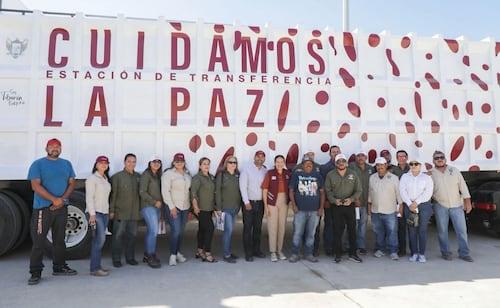
La Paz, BCS, to debut unique waste transfer station
Translated from Spanish, summarized and contextualized by DistantNews.
At a glance
News
Sources not specified
New plan
- La Paz, Baja California Sur, is launching a new waste transfer station this June.
- The facility is the first of its kind in northwestern Mexico and aims to modernize waste management.
- It will consolidate waste for more efficient transport to the landfill, reducing costs and environmental impact.
La Paz, Baja California Sur, is set to inaugurate a unique waste transfer station this June, marking a significant advancement in waste management for northwestern Mexico. This new infrastructure will serve as a crucial logistical hub. Garbage collection trucks will unload waste at the station, where it will be compacted and then transported in larger gondolas to the landfill. Each gondola can carry the equivalent of five trucks, leading to substantial reductions in travel time, fuel consumption, and vehicle wear. Residents will benefit from improved collection frequency, more efficient routes, less heavy vehicle traffic, and decreased air pollution. Mayor Milena Quiroga stated the project was inspired by a similar waste management model implemented in Mexico City under Claudia Sheinbaum. She emphasized that La Paz is adapting this successful approach to its specific needs and growth. The station includes a weighing scale, maneuvering yard, unloading hopper, compaction and transfer system, gondola loading area, and administrative spaces. This initiative not only optimizes waste collection but also prepares La Paz for future population and tourism growth, promoting sustainable waste management and encouraging waste separation, recovery, and recycling.
What we saw in Mexico City confirmed that a city can better manage its waste if it has planning, technology, and environmental vision. Today we are bringing that experience to La Paz, adapted to our needs and our growth.
DistantNews Editorial
Originally published by El Universal in Spanish. Translated, summarized, and contextualized by our editorial team with added local perspective. Read our editorial standards.
More Stories



From Our Blog

What Press Freedom Means for the News You Read

What Gets Lost (and Found) When News Is Translated

The Critical Role of Diaspora Media in Global News

What Travellers Should Know About Countries with Restricted Press

A Digital Nomad's Guide to Following Local News
