

Lake Mead hits historic low water level as Colorado River struggles
Summarized and contextualized by DistantNews.
At a glance
News
From a news agency
Context piece
- Lake Mead, the U.S.'s largest reservoir, has reached its lowest water level in nearly 90 years.
- The crisis stems from overuse, drought, and rising temperatures affecting the Colorado River system.
- Federal officials are implementing water cutbacks for Arizona, California, and Nevada after states failed to agree on long-term solutions.
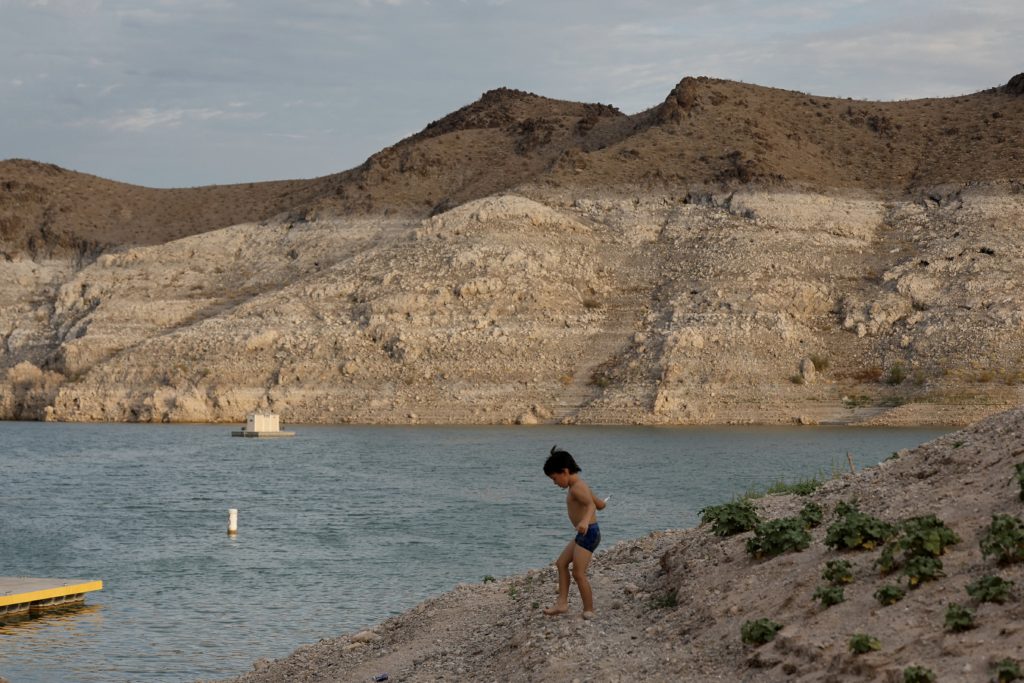
Lake Mead, the nation's largest reservoir, has plunged to its lowest point in approximately 90 years, highlighting the severe crisis gripping the Colorado River system. Water levels at the reservoir, which straddles the Arizona-Nevada border, fell to 1,040.4 feet above sea level on Friday, surpassing the previous record low set in July 2022.
This alarming decline occurs despite a winter that produced the region's most significant snowpack on record. The melting snow typically feeds the Colorado River, a vital water source for over 40 million people, agriculture, industries, and hydropower producers across seven U.S. states, tribal nations, and Mexico.
Federal officials recently intervened with a short-term proposal after the seven states reliant on the river, California, Colorado, Arizona, Nevada, New Mexico, Wyoming, and Utah, could not reach a consensus on managing the dwindling resource. The proposal mandates water usage cuts for California, Nevada, and Arizona.
Decades of overuse, compounded by persistent drought and escalating temperatures, have severely depleted both Lake Mead and Lake Powell, the second-largest reservoir in the system. Together, these two reservoirs hold the lowest amount of Colorado River water seen in nearly seven decades. In a move to protect hydropower generation, federal officials will withhold cooler water from Lake Powell, a decision aimed at safeguarding a threatened native fish species.
DistantNews Editorial
Originally published by PBS NewsHour. Summarized and contextualized by our editorial team with added local perspective. Read our editorial standards.
More Stories


From Our Blog

How the Same Story Looks Different in Different Countries

What Gets Lost (and Found) When News Is Translated

The Critical Role of Diaspora Media in Global News

What Travellers Should Know About Countries with Restricted Press

A Digital Nomad's Guide to Following Local News
