


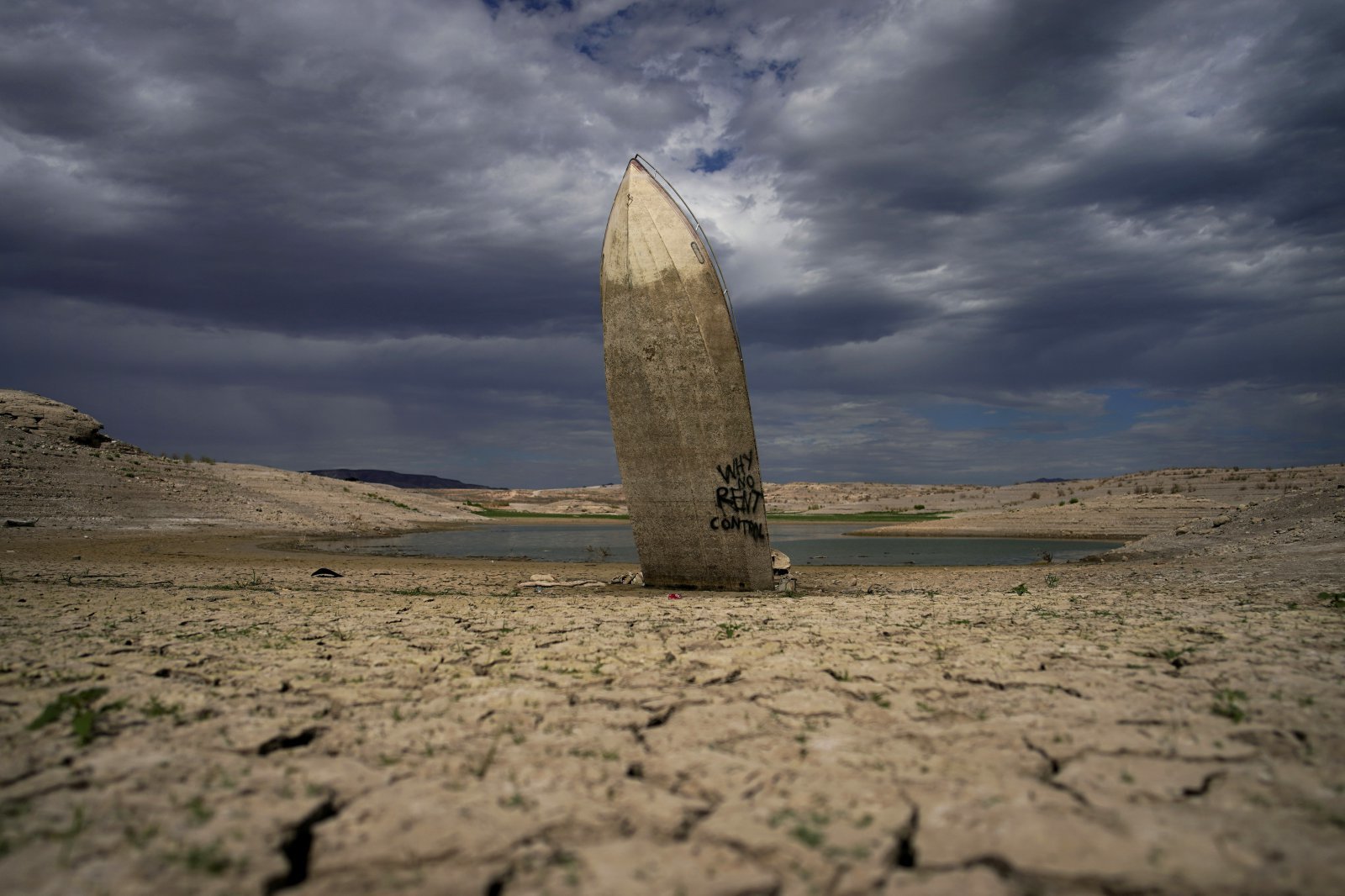
Lake Mead hits record low, intensifying Colorado River water crisis
Translated from Korean, summarized and contextualized by DistantNews.
At a glance
News
Sources not specified
Context piece
- Lake Mead, a crucial reservoir for the Colorado River basin, has recorded its lowest water level since its creation 90 years ago.
- The declining water levels are exacerbating a water shortage crisis affecting over 20 million people who rely on the Colorado River for water and power.
- Years of overuse, climate change, and reduced snowfall have depleted the river's water supply, leading to significant impacts on agriculture, power generation, and daily life in the southwestern United States.
Lake Mead, a vital reservoir in the U.S. Southwest, has hit an all-time low water level, intensifying concerns over the deepening crisis facing the Colorado River basin. As of July 7, the lake's surface stood at 1,040.5 feet (approximately 317.1 meters), marking the lowest point since the reservoir was formed 90 years ago following the construction of the Hoover Dam.
This historic low underscores the severe water shortage impacting over 20 million people who depend on the Colorado River for drinking water, agricultural irrigation, and electricity generation. Lake Mead, along with Lake Powell, serves as a critical storage system for the river. Recent reports indicate that the combined storage of both lakes has reached a record low, with Lake Powell also projected to reach its lowest level within weeks.
Experts attribute the crisis to a combination of factors, including decades of excessive water usage, the ongoing effects of climate change, and diminished snowfall in the region. These elements have led to a continuous depletion of water reserves. The shrinking of Lake Mead is visibly evident, with waterline marks clearly visible on the exposed rock faces. The reduction in water levels has also begun to impact the tourism industry in the area.
States that rely heavily on the Colorado River, including California, Nevada, and Arizona, are facing significant water usage reductions. Negotiations among the seven basin states, California, Nevada, Arizona, Utah, Wyoming, New Mexico, and Colorado, regarding the allocation of dwindling water resources have been ongoing for years without a consensus. The U.S. Bureau of Reclamation has released a plan for the next decade of Colorado River operations, with further guidelines expected soon, potentially requiring downstream states to cut water usage by approximately 20%.
The Colorado River has been overused for a long time, and combined with a 25-year drought, it has continued to deplete water reserves.
DistantNews Editorial
Originally published by Dong-A Ilbo in Korean. Translated, summarized, and contextualized by our editorial team with added local perspective. Read our editorial standards.
More Stories



From Our Blog

What Gets Lost (and Found) When News Is Translated

The Critical Role of Diaspora Media in Global News

What Travellers Should Know About Countries with Restricted Press

A Digital Nomad's Guide to Following Local News

How the Same Story Looks Different in Different Countries
