


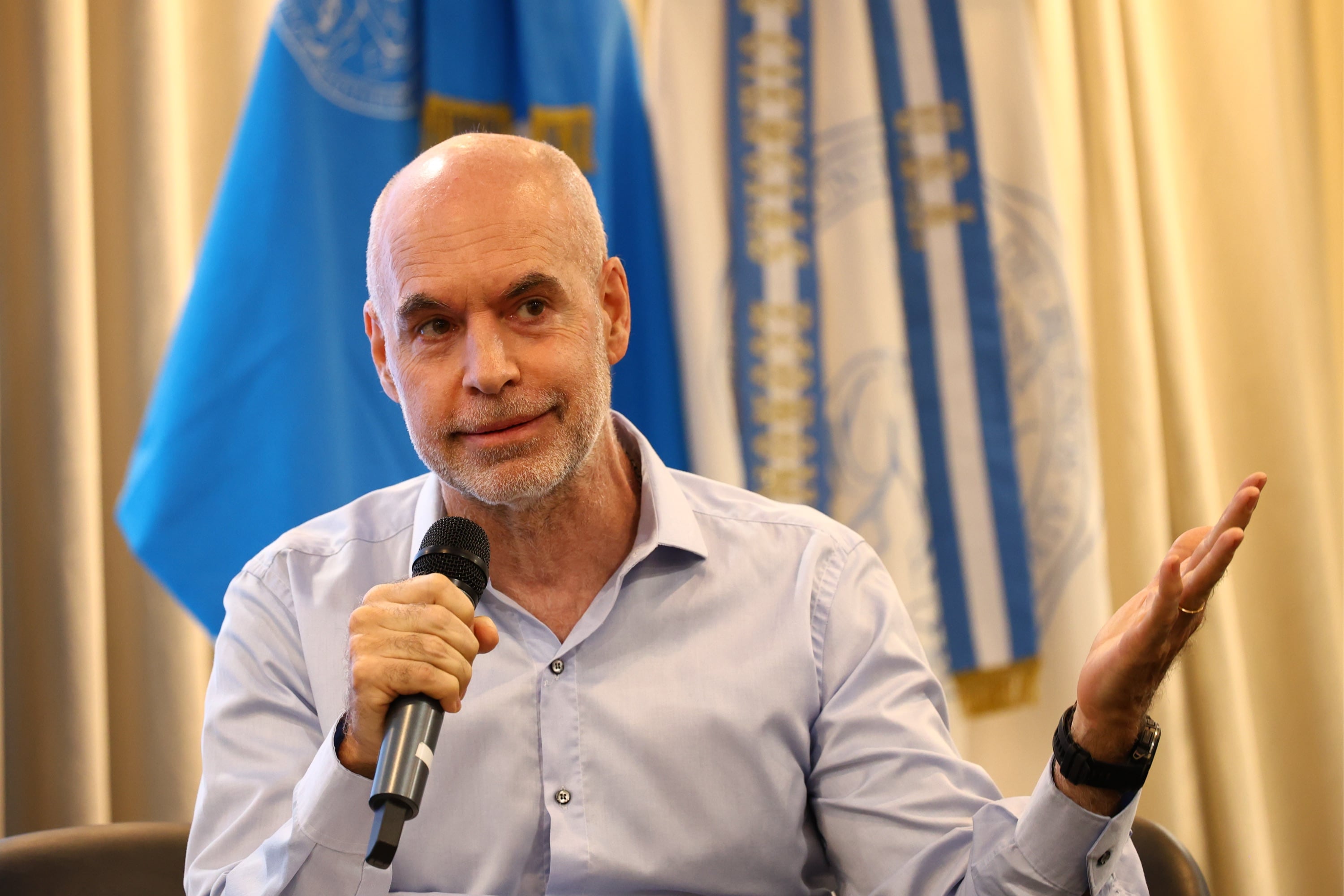
Larreta Compared Argentina to Iran, North Korea, Venezuela, and Cuba Over Freedom of Expression
Translated from Spanish, summarized and contextualized by DistantNews.
TLDR
- Former Buenos Aires Mayor Horacio Rodríguez Larreta criticized Argentina's current administration for barring accredited journalists from the presidential palace (Casa Rosada).
- Larreta compared Argentina to countries like Iran, North Korea, Venezuela, and Cuba regarding freedom of expression.
- The government cited national security concerns and an investigation into alleged Russian infiltration and illegal espionage as reasons for the ban, which has drawn strong condemnation from journalistic organizations.
La Nación, a prominent Argentine newspaper, reports on former Buenos Aires Mayor Horacio Rodríguez Larreta's sharp criticism of the Javier Milei administration's decision to restrict press access to the presidential palace. The article frames Larreta's statement as a significant political commentary, directly comparing Argentina's current environment to authoritarian states like Iran, North Korea, Venezuela, and Cuba concerning freedom of expression.
The report details the government's justification for the ban, citing national security, a probe into alleged Russian infiltration, and a criminal complaint against two journalists for alleged illegal espionage. This explanation is presented alongside the strong backlash from journalistic associations, such as ADEPA and FOPEA, who have labeled the measure as 'gravely institutional' and 'hasty.' The article emphasizes that even during de facto governments, the press room at Casa Rosada remained accessible, highlighting the unprecedented nature of this restriction.
Países en los que se restringe a la prensa: Irán, Corea del Norte, Cuba, Venezuela y Argentina
From an Argentine perspective, this event is highly significant, touching upon core democratic principles and the historical role of the press in the country. Larreta's comparison, while politically charged, resonates with concerns about potential authoritarian tendencies. The government's justification, framed around national security, is presented as a counterpoint to the press's concerns about censorship and the erosion of democratic freedoms.
This coverage reflects La Nación's role as a critical observer of political developments. The newspaper provides the administration's rationale but gives significant weight to the opposition's critique and the condemnation from press freedom advocates. The article underscores the tension between the government's stated security objectives and the fundamental right to a free press, a debate that is central to Argentina's political discourse.
la decisión de quitar las huellas dactilares a los periodistas acreditados de Casa Rosada se tomó de manera preventiva ante la denuncia de Casa Militar por espionaje ilegal
DistantNews Editorial
Originally published by La Nación in Spanish. Translated, summarized, and contextualized by our editorial team with added local perspective. Read our editorial standards.
More Stories


From Our Blog

What Gets Lost (and Found) When News Is Translated

The Critical Role of Diaspora Media in Global News

What Travellers Should Know About Countries with Restricted Press

A Digital Nomad's Guide to Following Local News

How the Same Story Looks Different in Different Countries
