


Latin America's Space Race Dilemma: Opportunities and the Peril of Arriving Late
Translated from Spanish, summarized and contextualized by DistantNews.
TLDR
- Latin America faces the challenge of finding its place in the global space race, currently dominated by major powers like the US and China.
- The region has opportunities in satellite applications and specialized capabilities, leveraging its geographical advantages.
- There's a risk of repeating historical patterns of dependency and inequality if the region doesn't actively engage in shaping the future of space exploration and utilization.
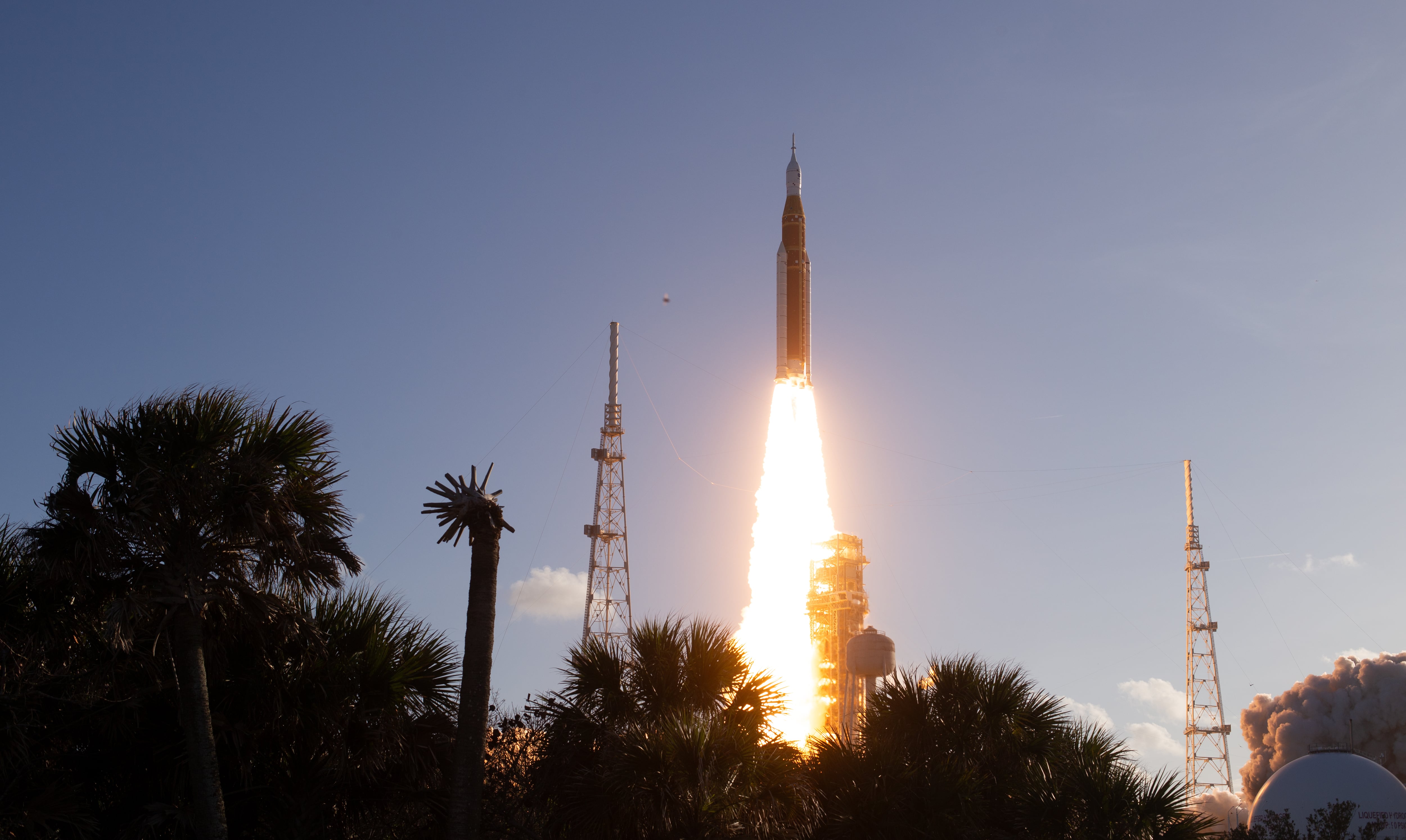
As the global space economy booms, projected to reach $1.8 trillion by 2035, Latin America stands at a critical juncture. While Argentina's participation in the Artemis II mission with its microsatellite, Atenea, signifies a growing regional capability, the broader challenge remains: how to carve out a meaningful and equitable space in an arena increasingly defined by geopolitical competition and burgeoning private enterprise.
The potential benefits for Latin America are immense. Space technologies offer powerful tools to address pressing terrestrial issues, from disaster mitigation and climate change adaptation to enhancing connectivity and improving supply chain efficiency. Leveraging its unique geographical position, particularly equatorial regions ideal for satellite launches, the continent can develop specialized capabilities and foster international cooperation. However, this potential is threatened by the specter of a new 'space colonialism,' where established powers and private entities dictate the terms, potentially exacerbating existing inequalities.
It occupies a peripheral place, but not an irrelevant one.
Historically, Latin America has been a consumer of space technology rather than a producer. While not leading the charge in technological development or resource exploitation, the region possesses "real opportunities for insertion" in areas like satellite applications and capacity building, as noted by CONICET researcher Luis Castillo Argañaraz. The key lies in proactive engagement. The region must move beyond a peripheral role and actively participate in defining the rules of the game, ensuring that the development of space does not mirror the extractive and unequal patterns of the past. Failure to do so risks leaving Latin America behind in a domain that will shape the next global order.
It has real opportunities for insertion in areas such as satellite applications, international cooperation, and the development of specific capabilities.
DistantNews Editorial
Originally published by La Nación in Spanish. Translated, summarized, and contextualized by our editorial team with added local perspective. Read our editorial standards.
More Stories



From Our Blog

What Gets Lost (and Found) When News Is Translated

The Critical Role of Diaspora Media in Global News

What Travellers Should Know About Countries with Restricted Press

A Digital Nomad's Guide to Following Local News

How the Same Story Looks Different in Different Countries
