

Latvia's First Hospital-Based Simulation Center Opens in Riga
Translated from Latvian, summarized and contextualized by DistantNews.
At a glance
News
Named sources
New plan
- Riga Eastern Clinical University Hospital has opened Latvia's first Simulation Center, located within a hospital environment.
- The center aims to enhance practical skills for medical and care staff, enabling them to train for complex clinical situations and learn new treatment methods.
- Health Minister Hosams Abu Meri highlighted the center as a bold step towards modern professional development, emphasizing its contribution to patient safety and treatment quality.
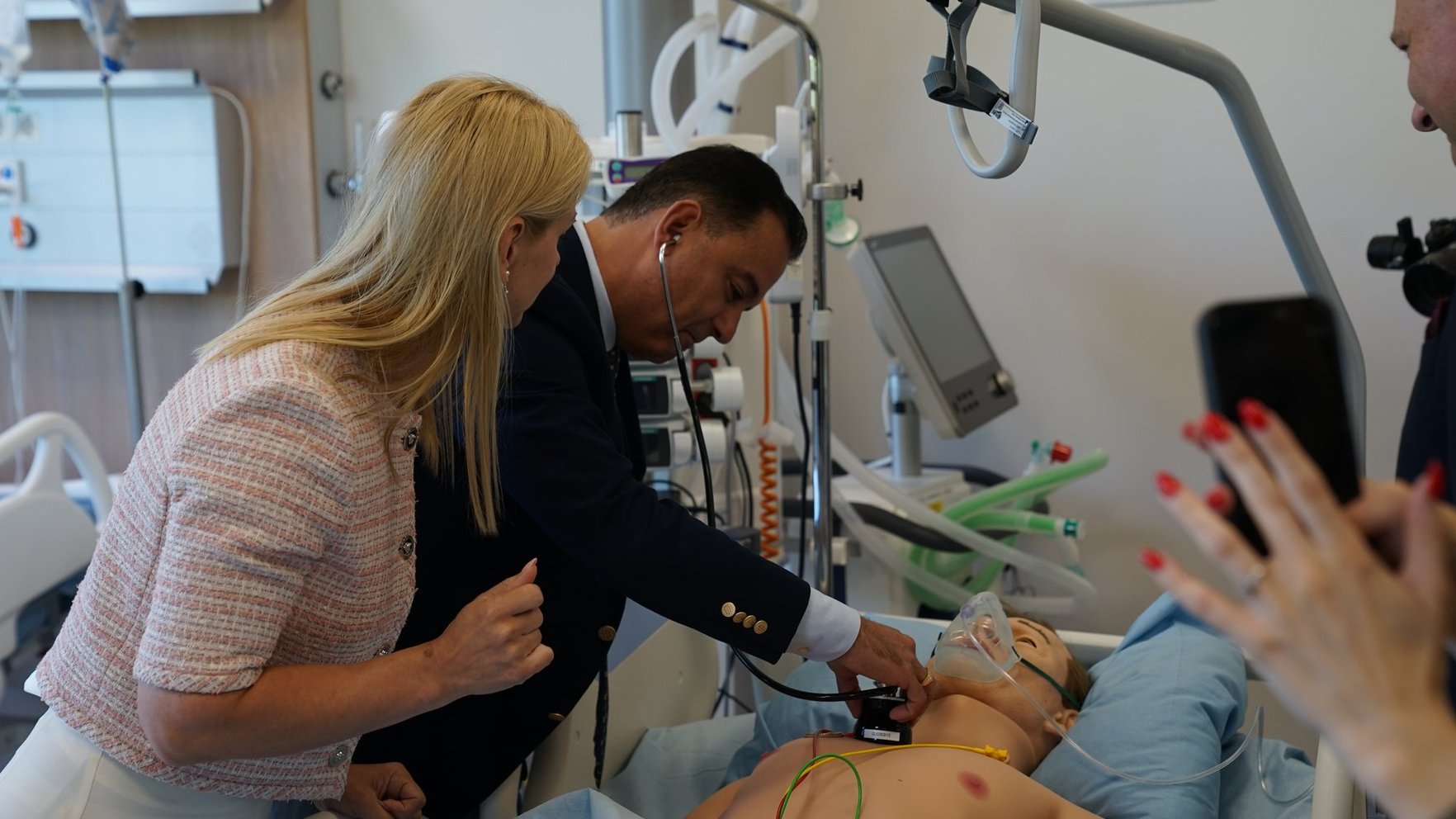
Riga Eastern Clinical University Hospital (Austrumu slimnīca) has unveiled Latvia's first Simulation Center, established directly within a hospital setting. The center, inaugurated on Wednesday, July 29, is designed to provide a realistic training environment for healthcare professionals.
According to the hospital, the center will allow medical and care staff to hone their practical skills, practice responding to complex clinical scenarios, and learn new treatment methods without risk to patients. This hands-on training is expected to lead to safer, higher-quality, and more effective patient care. Healthcare professionals can practice in a safe, stress-free environment, analyze their actions, and improve teamwork.
During the opening ceremony, Health Minister Hosams Abu Meri emphasized the role of Latvia's clinical university hospitals as hubs for healthcare knowledge, education, science, and innovation. He described the Simulation Center's establishment as a "bold and ambitious step" towards a modern professional development environment, expanding the hospital's capacity for high-quality continuing education and the adoption of the latest medical technologies.
This is a center where healthcare professionals can improve practical skills in a safe environment, train teamwork, and prepare for complex clinical situations. Such investments are investments in patient safety and treatment quality – they help healthcare professionals provide even better care and achieve better health outcomes for patients.
The center is equipped with simulation mannequins and technology capable of modeling complex clinical situations and various patient health changes. These mannequins are connected to a computer system, allowing instructors to alter vital signs, skin color, and other parameters in real-time to simulate diverse medical conditions. Following each simulation, participants engage in a structured analysis with instructors to review their actions, communication, and decision-making processes.
Specially trained instructors, including experienced staff from Austrumu slimnīca, will lead the simulations. The hospital stressed that in complex medical situations, the preparedness and coordinated actions of specialists are crucial. The center embodies the university hospital's commitment to continuous learning, recognizing that patient outcomes are significantly influenced by the team's collective performance.
The university hospital's strength is not in the conviction that we know everything, but in the readiness to continuously learn. The patient often does not see the surgery or procedure, they experience the entire team's work, so...
DistantNews Editorial
Originally published by Delfi Latvia in Latvian. Translated, summarized, and contextualized by our editorial team with added local perspective. Read our editorial standards.
More Stories

From Our Blog

What Gets Lost (and Found) When News Is Translated

The Critical Role of Diaspora Media in Global News

What Travellers Should Know About Countries with Restricted Press

A Digital Nomad's Guide to Following Local News

How the Same Story Looks Different in Different Countries
