


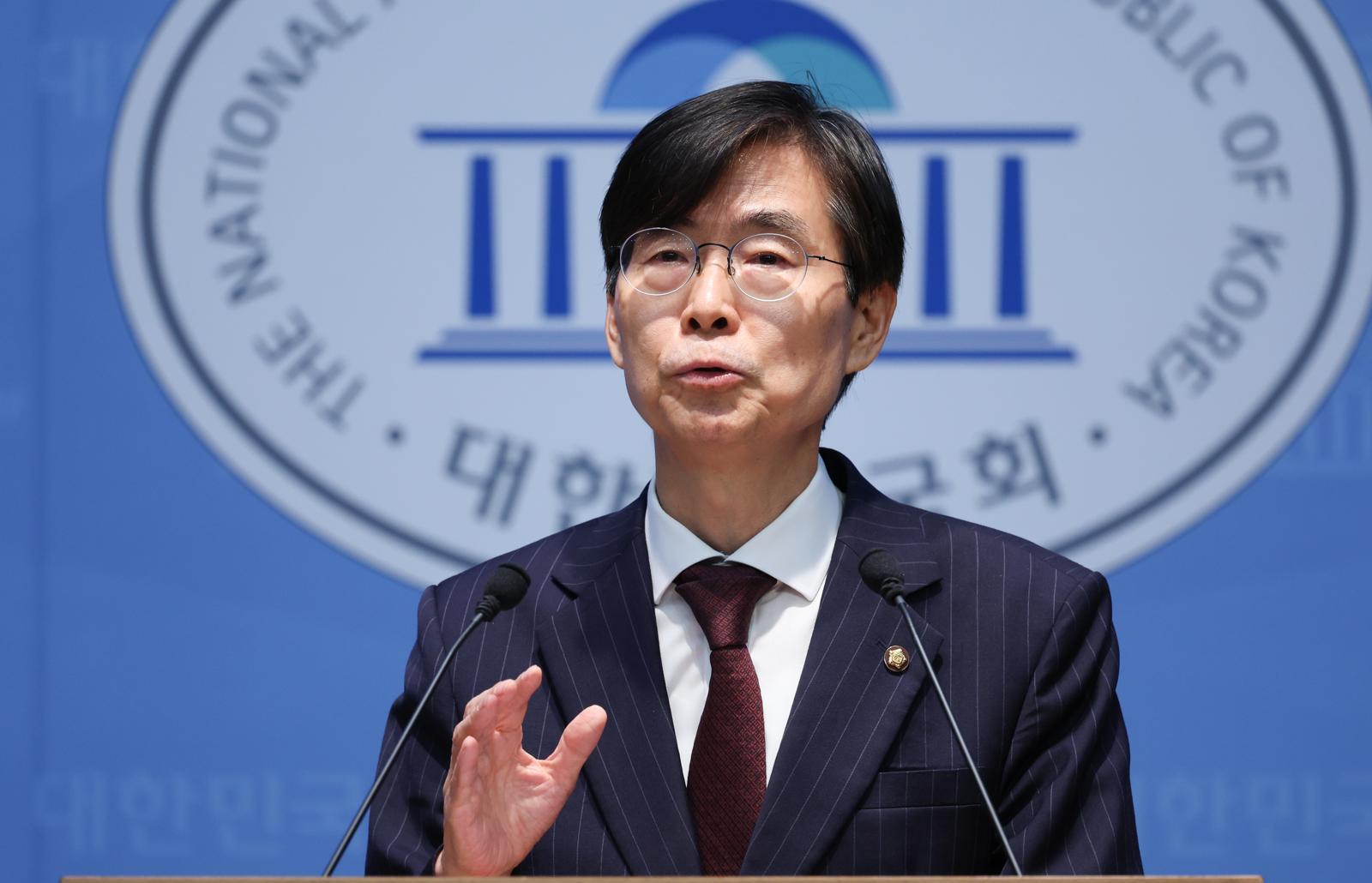
Lawmaker demands ethics chief's resignation, calls party leader 'disgrace'
Translated from Korean, summarized and contextualized by DistantNews.
At a glance
News
Named sources
Context piece
- Six-term lawmaker Cho Kyeong-tae of the People Power Party called for the resignation of Ethics Committee Chairman Yoon Min-woo.
- Cho criticized the party's disciplinary process, citing a lack of fairness and the committee's reduced size.
- He also demanded the expulsion of party leader Jang Dong-hyuk, calling his position a disgrace.
Cho Kyeong-tae, a six-term lawmaker from the People Power Party, has demanded the resignation of Ethics Committee Chairman Yoon Min-woo, citing a loss of fairness in the party's disciplinary procedures. Cho also called for the dissolution of the Ethics Committee.
"The fact that someone who advocates for election fraud and defends a rebellion leader is acting as the leader of the main opposition party is a disgrace to the People Power Party," Cho stated at a press conference. He also called for the expulsion of party leader Jang Dong-hyuk.
The fact that someone who advocates for election fraud and defends a rebellion leader is acting as the leader of the main opposition party is a disgrace to the People Power Party.
Cho argued that the Ethics Committee lacked procedural legitimacy from the start. He pointed out that the committee, initially composed of seven members, was reduced to five due to successive resignations. The decision to initiate disciplinary action against him was made with only three members present, he noted.
Furthermore, Cho raised concerns about allegations made by Vice Chairman Woo Jong-hwan and committee member Hwang Kyung-sung, who claimed Yoon Min-woo leaked information about disciplinary cases to outsiders. "If the person in charge of judging shares disciplinary information and decisions with outsiders and discusses the direction of the case, it can no longer be considered a fair trial," Cho said, questioning the public's trust in such a process.
If the person in charge of judging shares disciplinary information and decisions with outsiders and discusses the direction of the case, it can no longer be considered a fair trial.
DistantNews Editorial
Originally published by Dong-A Ilbo in Korean. Translated, summarized, and contextualized by our editorial team with added local perspective. Read our editorial standards.
More Stories

From Our Blog

What Gets Lost (and Found) When News Is Translated

The Critical Role of Diaspora Media in Global News

What Travellers Should Know About Countries with Restricted Press

A Digital Nomad's Guide to Following Local News

How the Same Story Looks Different in Different Countries
