


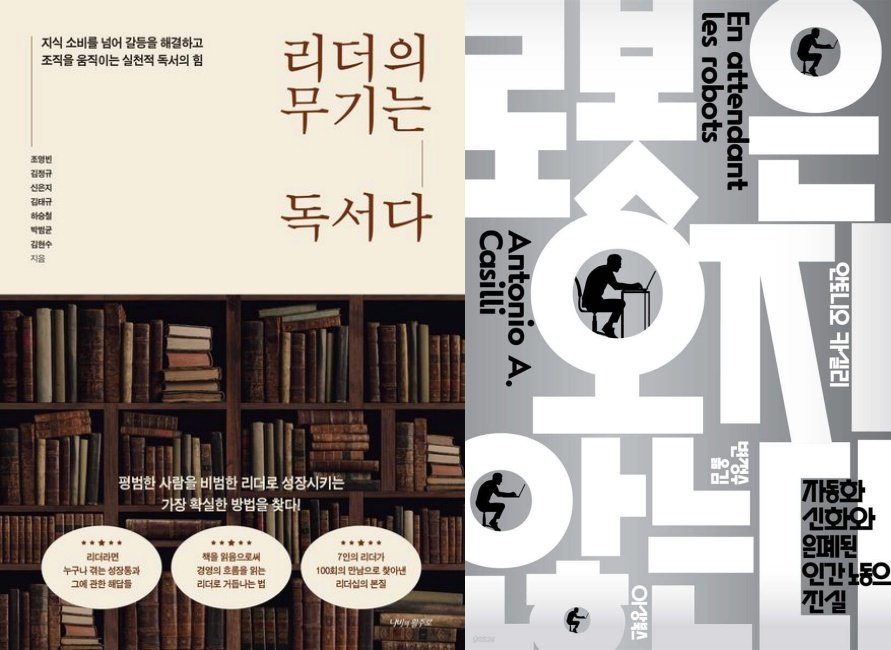
Leaders Share Insights from 100 Books in New Leadership Guide
Translated from Korean, summarized and contextualized by DistantNews.
At a glance
In-depth
Sources not specified
New plan
- A new leadership book, "The Leader's Weapon is Reading," compiles insights from seven leaders who read over 100 books and held more than 100 discussions over four years.
- The book emphasizes seven leadership virtues, authenticity, empathy, communication, strategic thinking, continuous growth, teamwork, and execution, arguing that reading is the most powerful tool for developing them.
- One contributor, lawyer Kim Jung-gyu, shares experiences using non-violent communication and the power of questions in legal consultations, highlighting how empathy and listening improve client trust and satisfaction.
Seven leaders have distilled four years of intensive reading and discussion into a new book, "The Leader's Weapon is Reading," offering practical insights for effective leadership. The volume brings together the collective wisdom gained from engaging with over 100 books and participating in more than 100 debates, aiming to provide a comprehensive guide for navigating complex management and organizational challenges.
The leader was not a speaker…
The book posits that seven key leadership virtues, authenticity, empathy, communication, strategic thinking, continuous growth, teamwork, and execution, form a virtuous cycle when developed in tandem. The authors strongly advocate for reading as the most potent instrument for cultivating these essential qualities, presenting it not merely as a self-improvement exercise but as a foundational practice for real-world leadership.
Lawyer Kim Jung-gyu, who contributed the section on "Empathy and Listening," draws upon his 15 years of experience handling thousands of cases. He stresses that understanding people is paramount in leadership, a principle he applied by shifting from efficiency-focused consultations to a more empathetic approach. This change, he notes, significantly boosted client trust and satisfaction, leading to an increase in referrals.
The leader's weapon is reading.
Kim shares how incorporating "non-violent communication" and "the power of questions" in his legal practice transformed his interactions. He found that truly listening to clients' stories, rather than solely focusing on legalities, built stronger relationships. He extends this principle beyond legal consultations, suggesting its applicability to small business consulting and general organizational management.
Seeing people before the case is the starting point of leadership.
The book also introduces practical tools, such as the "re-questioning" technique for building client relationships and a 30-day practice challenge. Kim emphasizes the lasting impact of emotional connection, stating, "People remember how you made them feel more than what you said." He concludes that "listening is the first step to changing relationships."
People remember how you made them feel more than what you said.
DistantNews Editorial
Originally published by Dong-A Ilbo in Korean. Translated, summarized, and contextualized by our editorial team with added local perspective. Read our editorial standards.
More Stories



From Our Blog

What Gets Lost (and Found) When News Is Translated

The Critical Role of Diaspora Media in Global News

What Travellers Should Know About Countries with Restricted Press

A Digital Nomad's Guide to Following Local News

How the Same Story Looks Different in Different Countries
