


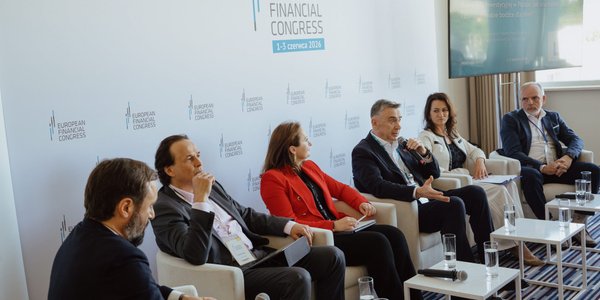
Leasing Fuels Investment, But Polish Firms Hesitate Due to Risk Aversion
Translated from Polish, summarized and contextualized by DistantNews.
At a glance
News
Named sources
Context piece
- Leasing is a crucial financing tool for Polish SMEs, with over half relying on it for investments, according to the Polish Leasing Association.
- Despite leasing's significant contribution, Polish small business owners are cautious about investing, often preferring to use their own funds.
- Experts suggest that building confidence in investment and utilizing available financing, alongside clear project preparation, is key to stimulating business growth.
Leasing plays a vital role in financing investments for Polish small and medium-sized enterprises (SMEs), with over half of these firms considering it essential support for their projects. The Polish Leasing Association highlights that without this financing option, a significant portion of entrepreneurs would scale back or postpone their investment plans.
Monika Constant, president of the Polish Leasing Association, noted that leasing is an "underappreciated engine" of the Polish economy, with over 70% of its clients being micro, small, and medium-sized firms. In 2025, leasing financed nearly 120 billion PLN in investments, and the sector anticipates continued double-digit growth. However, a major hurdle to increased investment is the cautious nature of Polish small business owners, according to Andrzej Krzemiński, president of Pekao Leasing.
Data from the National Bank of Poland indicates a low propensity for investment among businesses, with optimism levels also subdued. Approximately 70% of SME investments are financed through retained earnings, rising to 85% for R&D and innovation. Krzemiński stressed the need to build confidence among entrepreneurs, assuring them that they don't need to deplete all their savings for development.
While funds from the KPO and national sources total 300-400 billion PLN, their impact on smaller firms' investment decisions is slow. Tomasz Bogus, president of PKO Leasing, observed that financing primarily supports replacement investments, such as updating machinery or vehicles, rather than fundamental business model changes. Barriers include risk aversion, regulatory uncertainty, and energy costs, which can destabilize small firms more than large corporations.
Dominika Żelazek of Orlen Kolej emphasized that the quality of project preparation is paramount for investment decisions. A project is viable only when it addresses operational needs, risks, and financing simultaneously. Precise requirement definition and dialogue with suppliers directly influence financing availability and risk levels.
DistantNews Editorial
Originally published by Rzeczpospolita in Polish. Translated, summarized, and contextualized by our editorial team with added local perspective. Read our editorial standards.
More Stories


From Our Blog

What Gets Lost (and Found) When News Is Translated

The Critical Role of Diaspora Media in Global News

What Travellers Should Know About Countries with Restricted Press

A Digital Nomad's Guide to Following Local News

How the Same Story Looks Different in Different Countries
