


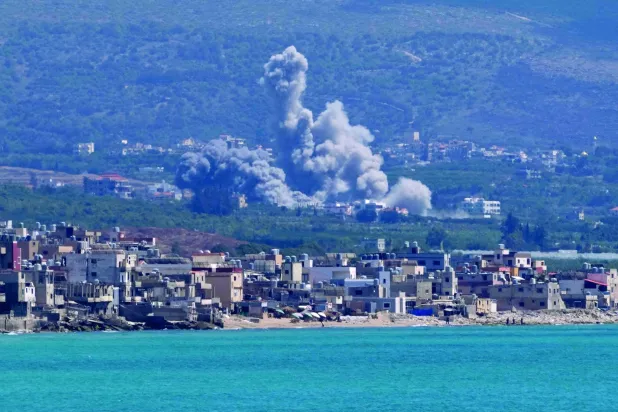
Lebanon Enters Conflict Management Phase as End Remains Elusive
Summarized and contextualized by DistantNews.
At a glance
News
Named sources
Ongoing story
- Lebanon is entering a phase of conflict management rather than resolution, with ongoing negotiations for a ceasefire and the future of southern Lebanon.
- The current situation, marked by unprecedented destruction and a more forceful international approach, differs significantly from the aftermath of the 2006 war.
- Key issues blocking a stable settlement include the withdrawal of Israeli forces, reconstruction, the return of displaced people, and critically, the handling of Hezbollah's weapons.
Lebanon finds itself navigating a complex phase of conflict management, as negotiations for a lasting ceasefire and the future of its southern region continue without a clear end in sight. The central question remains whether the country is heading towards a repeat of the post-2006 war scenario or entering an entirely new chapter. Nearly two decades after UN Resolution 1701 aimed to regulate the confrontation between Israel and Hezbollah, the current conditions present a starkly different picture.
Talk of ending the conflict in Lebanon can only be achieved through a set of basic goals: ending the war definitively, withdrawing Israeli forces from occupied Lebanese territory, returning prisoners, launching reconstruction and securing the safe and sustainable return of displaced people to their areas.
The scale of destruction in southern Lebanon is described as unprecedented, and the international community appears to be taking a more assertive stance on the path forward. University professor and lawyer Ali Mourad emphasizes that the reality on the ground necessitates a new assessment of the war and the south's future. He states that the south remains occupied, devastated on a scale never seen before, and trapped in a prolonged displacement crisis.
Mourad outlines the basic goals required to end the conflict: a definitive end to the war, the withdrawal of Israeli forces from occupied Lebanese territory, the return of prisoners, reconstruction efforts, and the secure return of displaced populations. However, a significant obstacle is what he perceives as "Iran's attempt to take hold of the Lebanese file," which could prolong conflict management rather than achieve a final settlement and keep the roots of tension alive.
Iran’s attempt to take hold of the Lebanese file.
A critical sticking point, according to Mourad, is the unresolved issue of Hezbollah's weapons. He argues that without a clear and decisive handling of this matter, Lebanon cannot move beyond the current situation, which is fundamentally different from the post-2006 phase. The destruction in the south and the current military realities make comparisons to the past unrealistic. He stresses that sustainable political solutions addressing the root causes of the crisis are essential, rather than merely managing the conflict or containing tensions.
The south today is destroyed on an unprecedented scale, while the battlefield and military realities clearly show that the existing equations are difficult to overturn in the foreseeable future.
Retired Maj. Gen. Hisham Jaber, head of the Middle East Center for Studies, concurs that the current situation in southern Lebanon "differs radically" from the period following the July 2006 war. The focus has shifted from managing the aftermath to grappling with a deeply entrenched and destructive conflict that demands more than just a cessation of hostilities.
The situation in southern Lebanon differs radically from the phase that followed the July 2006 war.
DistantNews Editorial
Originally published by Asharq Al-Awsat. Summarized and contextualized by our editorial team with added local perspective. Read our editorial standards.
More Stories

From Our Blog

What Gets Lost (and Found) When News Is Translated

The Critical Role of Diaspora Media in Global News

What Travellers Should Know About Countries with Restricted Press

A Digital Nomad's Guide to Following Local News

How the Same Story Looks Different in Different Countries
