


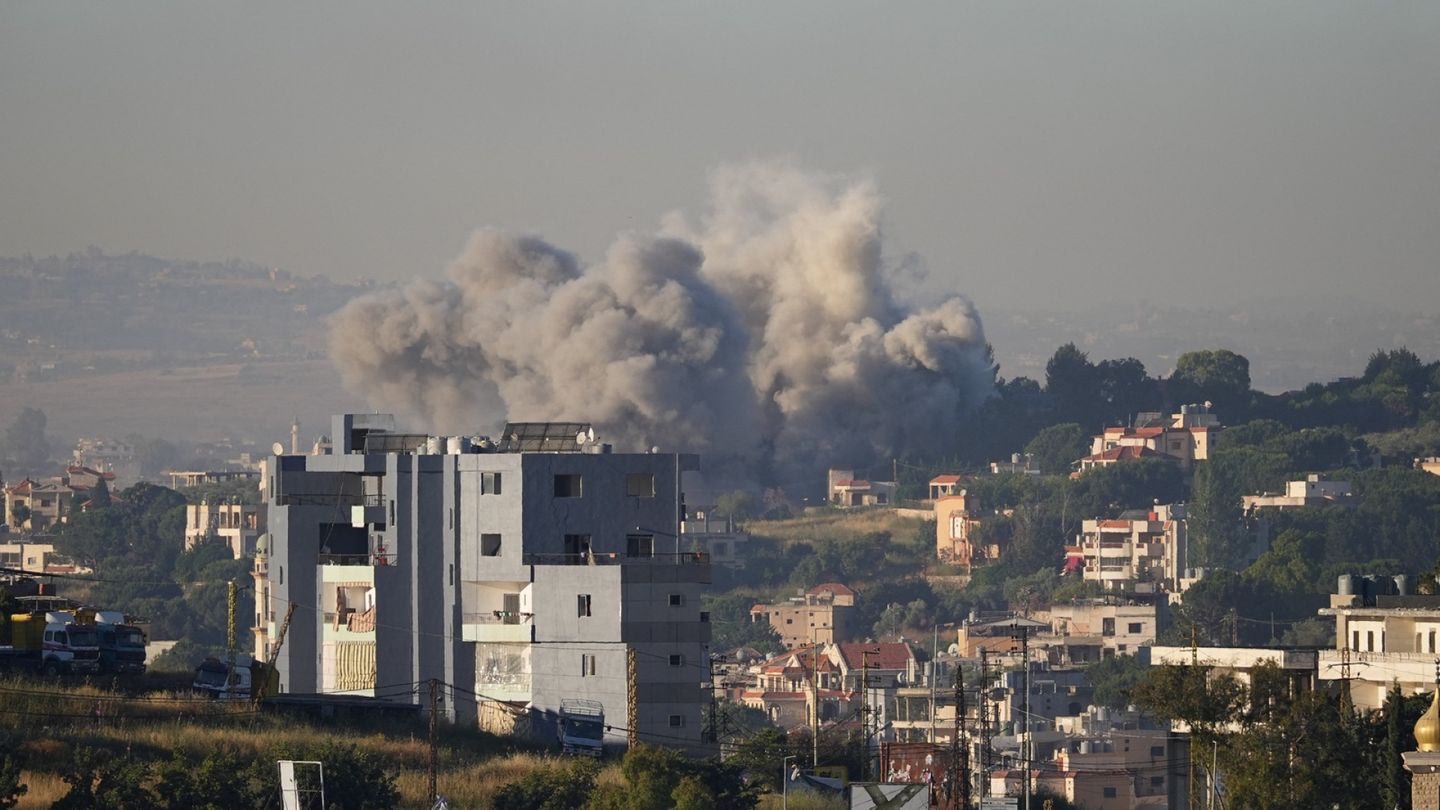
Lebanon: Hezbollah rejects ceasefire, asserting its independent stance against Israel
Translated from Finnish, summarized and contextualized by DistantNews.
At a glance
News
Named sources
Ongoing story
- Hezbollah has refused a ceasefire with Israel, with its leader stating it would mean "surrender."
- Israel had previously agreed to a ceasefire with Lebanon through U.S. mediation.
- The group, considered one of the world's most powerful non-state armed forces, operates with significant autonomy in Lebanon.
Hezbollah has rejected a ceasefire agreement with Israel, signaling that any such accord would be viewed as a capitulation. Naim Qassem, the leader of the Iranian-backed militant group, stated that agreeing to a ceasefire would equate to "surrender, defeat, and the enemy achieving its goals."
This refusal comes despite Israel reaching an agreement on implementing a ceasefire with Lebanon, brokered by the United States. Hezbollah, however, does not take directives from the Lebanese government, operating as a powerful entity within the country, particularly in Shiite-populated areas of southern Lebanon, southern Beirut, and the Bekaa Valley.
The group is widely regarded as the world's most potent non-state armed force. Efforts to establish a ceasefire in Lebanon are closely linked to the broader conflict between the United States and Iran, and Iran's stance on the Strait of Hormuz. Iran has indicated that the cessation of Israeli military actions in Lebanon is a prerequisite for continuing its own peace negotiations with the U.S.
Recent escalations began in early March when Hezbollah launched rocket attacks into Israel, a response to an attack by the U.S. and Israel on Iran. Both Hezbollah and Israel continued their exchanges of fire into Friday night. In the Tyros port city, Israeli bombings resulted in seven fatalities, according to rescue workers. Israel has also expanded its ground operations north of the Litani River, with the military warning of strikes on three villages.
agreeing would mean surrender, defeat, and the enemy achieving its goals.
DistantNews Editorial
Originally published by Helsingin Sanomat in Finnish. Translated, summarized, and contextualized by our editorial team with added local perspective. Read our editorial standards.
More Stories



From Our Blog

What Gets Lost (and Found) When News Is Translated

The Critical Role of Diaspora Media in Global News

What Travellers Should Know About Countries with Restricted Press

A Digital Nomad's Guide to Following Local News

How the Same Story Looks Different in Different Countries
