


Lebanon, Israel and US Sign Trilateral Framework Pact
Summarized and contextualized by DistantNews.
At a glance
News
From a news agency
New plan
- Lebanon, Israel, and the US signed a trilateral framework agreement aiming for peace between the two adversaries.
- The deal includes a pilot program for Lebanese soldiers to control two Israeli-occupied areas and a process for disarming Hezbollah.
- Key figures from all three nations expressed optimism, viewing the agreement as a crucial first step towards lasting peace and security, though significant challenges remain.
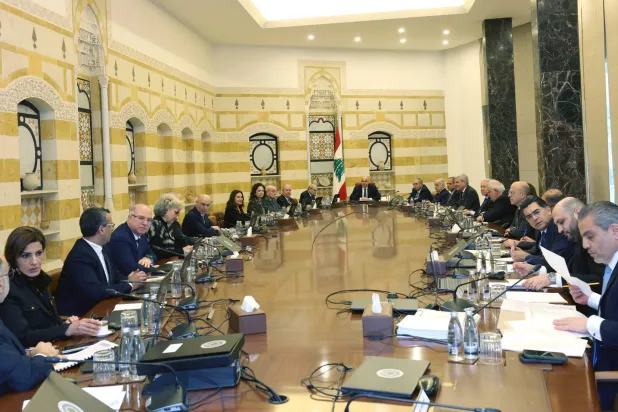
Lebanon, Israel, and the United States have signed a trilateral framework agreement, marking a significant diplomatic effort to establish peace between the long-standing Middle East adversaries. The accord, finalized after five rounds of talks in Washington, D.C., is designed to pave the way for a formal peace deal.
begins to put in place a framework for lasting peace and security. It's the beginning of the beginning. There's a lot of work ahead.
Central to the agreement is a pilot initiative where Lebanese soldiers will assume control of two areas currently occupied by Israel. Additionally, the framework outlines a process aimed at disarming Hezbollah, a key point of contention and a major obstacle to regional stability. US Secretary of State Marco Rubio hailed the deal as "the beginning of the beginning," emphasizing that while substantial work lies ahead, it establishes a framework for lasting peace and security.
is a first step on the road to restoring Lebanese sovereignty and territorial integrity, securing a permanent and final cessation of hostilities (and) enabling our people to go back to their land.
Lebanon's ambassador to Washington, Nada Hamadeh Moawad, stated that the accord represents a vital first step toward restoring Lebanese sovereignty and territorial integrity. She expressed hope that it will lead to a permanent cessation of hostilities, enabling displaced Lebanese citizens to return to their land. Israel's US envoy, Yechiel Leiter, framed the agreement as a victory, asserting that "Iran is out, Hezbollah is out, and the road to peace between Israel and Lebanon is in."
Iran is out, Hezbollah is out, and the road to peace between Israel and Lebanon is in.
Despite the optimism, significant differences persist. Hezbollah, a powerful political and military force in Lebanon, has maintained its demand for Israel's complete and unconditional withdrawal from all Lebanese territory. Israeli Prime Minister Benjamin Netanyahu, however, indicated that Israel would not withdraw until Hezbollah relinquishes its weapons. The agreement itself acknowledges these complexities, stating the intent to "conclusively end the conflict, address its underlying causes, and to therewith formally conclude any state of war between them." It also establishes a mechanism for the Lebanese Armed Forces to regain control over all Lebanese territory, contingent upon the "verified disarmament of non-state armed groups," particularly Hezbollah, which would then allow for the Israeli army's redeployment.
Israel has no option but to withdraw completely from every inch of our Lebanese land, and that its forces must leave unconditionally.
DistantNews Editorial
Originally published by Asharq Al-Awsat. Summarized and contextualized by our editorial team with added local perspective. Read our editorial standards.
More Stories


From Our Blog

What Gets Lost (and Found) When News Is Translated

The Critical Role of Diaspora Media in Global News

What Travellers Should Know About Countries with Restricted Press

A Digital Nomad's Guide to Following Local News

How the Same Story Looks Different in Different Countries
