


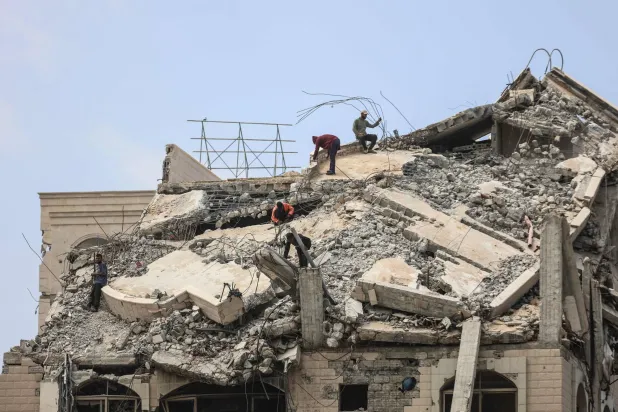
Lebanon, Israel Set for Second Round of US-Hosted Talks
Translated from English, summarized and contextualized by DistantNews.
TLDR
- Lebanese and Israeli representatives are scheduled to hold talks in Washington D.C. on Thursday, hosted by the US State Department.
- This marks the second round of ambassador-level discussions, following the first direct talks between the two nations in decades on April 14.
- The talks aim to end hostilities and the Israeli occupation of southern Lebanon, though Hezbollah expresses reservations about direct negotiations.
The United States is once again playing a central role in facilitating dialogue between Lebanon and Israel, hosting a second round of ambassador-level talks in Washington. This diplomatic engagement, occurring against a backdrop of ongoing regional tensions, underscores the US commitment to de-escalating conflict and fostering stability in the Middle East.
We will continue to facilitate direct, good-faith discussions between the two governments.
These direct talks, a significant development given the decades-long absence of formal diplomatic relations between Lebanon and Israel, are framed by Lebanese President Joseph Aoun as a crucial step towards ending hostilities and securing the withdrawal of Israeli forces from southern Lebanon. Aoun's assertion that Lebanon will no longer be a pawn in regional conflicts signals a desire for greater national sovereignty and self-determination.
However, the path to peace is complex, with internal divisions within Lebanon posing a challenge. Hezbollah, a powerful political and military force, has voiced skepticism regarding direct negotiations, advocating instead for indirect talks mediated by the US. Hezbollah lawmaker Hassan Fadlallah suggests that regional powers, including Iran, Pakistan, and Saudi Arabia, are working towards a broader diplomatic framework that could provide guarantees for Lebanon.
It is in the interest of Lebanon, the president of the republic and the government to move away from the path of direct negotiation and return to a national understanding about the best option for Lebanon.
Despite these differing perspectives, the ongoing ceasefire provides a fragile window for diplomacy. The US State Department has reiterated its commitment to facilitating these good-faith discussions, recognizing the delicate nature of the negotiations and the potential impact on regional security. The outcome of these talks will be closely watched, as they represent a critical juncture in the long-standing conflict.
We negotiate for ourselves... we are no longer a pawn in anyone's game, nor an arena for anyone's wars, and we never will be again.
DistantNews Editorial
Originally published by Asharq Al-Awsat in English. Translated, summarized, and contextualized by our editorial team with added local perspective. Read our editorial standards.
More Stories
From Our Blog

What Gets Lost (and Found) When News Is Translated

The Critical Role of Diaspora Media in Global News

What Travellers Should Know About Countries with Restricted Press

A Digital Nomad's Guide to Following Local News

How the Same Story Looks Different in Different Countries
