

Lee: Aim for 3% growth, $50,000 income, top 4 trade nation
Translated from Korean, summarized and contextualized by DistantNews.
At a glance
News
Named sources
New plan
- South Korean President Lee Jae-myung aims to raise the nation's potential growth rate to 3% and achieve $50,000 in per capita income.
- He highlighted strong export performance, with semiconductors leading growth, and expressed confidence in entering the top four global trading nations.
- The president urged swift progress on 'mega projects' and emphasized providing opportunities for youth, addressing structural issues, and fostering innovation.
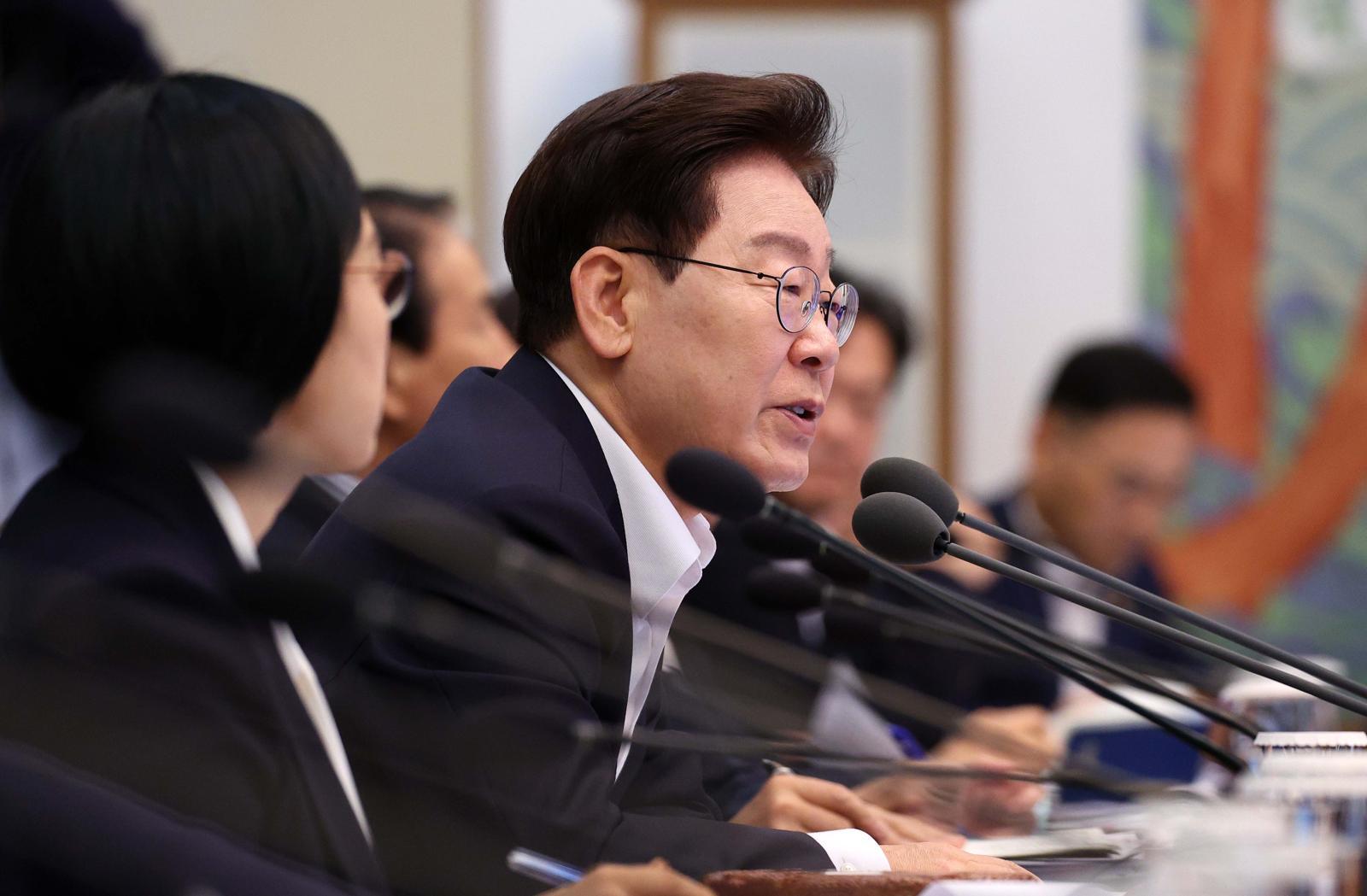
South Korean President Lee Jae-myung is setting ambitious economic targets for the year, aiming to elevate the nation's potential growth rate to 3% and achieve a per capita income of $50,000. Speaking at the 30th State Council meeting, Lee urged national unity to make this year a landmark for an "irreplaceable Republic of Korea."
We must raise the potential growth rate to 3%... and make this year the first year of becoming one of the top four trading nations and achieving $50,000 in per capita income.
Lee pointed to a robust export performance in the first half of the year, nearing $500 billion, with semiconductors driving growth. He noted that exports of other goods also increased by 16% compared to the previous year, making entry into the top four global trading nations a tangible goal.
Exports in the first half of the year have shown explosive growth, nearing $500 billion. With semiconductors leading the growth, exports of other items have also increased by 16% compared to the previous year.
The president also stressed the need for accelerated progress on "three mega projects." He called for seamless collaboration between central and local governments, as well as businesses, emphasizing a proactive approach to expedite all procedures. "Saving one day can gain ten days, or even 100 days later," Lee stated, urging all parties to work with maximum speed.
To realize the three mega projects early, the central government, local governments, and businesses must work together as one body.
Furthermore, Lee highlighted the importance of addressing structural societal issues. He called for the creation of multi-layered growth ladders for young people in areas such as employment, housing, asset building, and skill development. The president also advocated for reducing labor market disparities and accelerating innovation within public finance and regulatory domains. Lee concluded by stating that the nation's future for the next 30 years hinges on the achievements made in the latter half of the year.
We must also focus on resolving structural societal problems. We need to provide multi-layered growth ladders for our youth, who are the future of our community, in terms of jobs, housing, assets, and capacity development.
DistantNews Editorial
Originally published by Dong-A Ilbo in Korean. Translated, summarized, and contextualized by our editorial team with added local perspective. Read our editorial standards.
More Stories



From Our Blog

What Gets Lost (and Found) When News Is Translated

The Critical Role of Diaspora Media in Global News

What Travellers Should Know About Countries with Restricted Press

A Digital Nomad's Guide to Following Local News

How the Same Story Looks Different in Different Countries
