

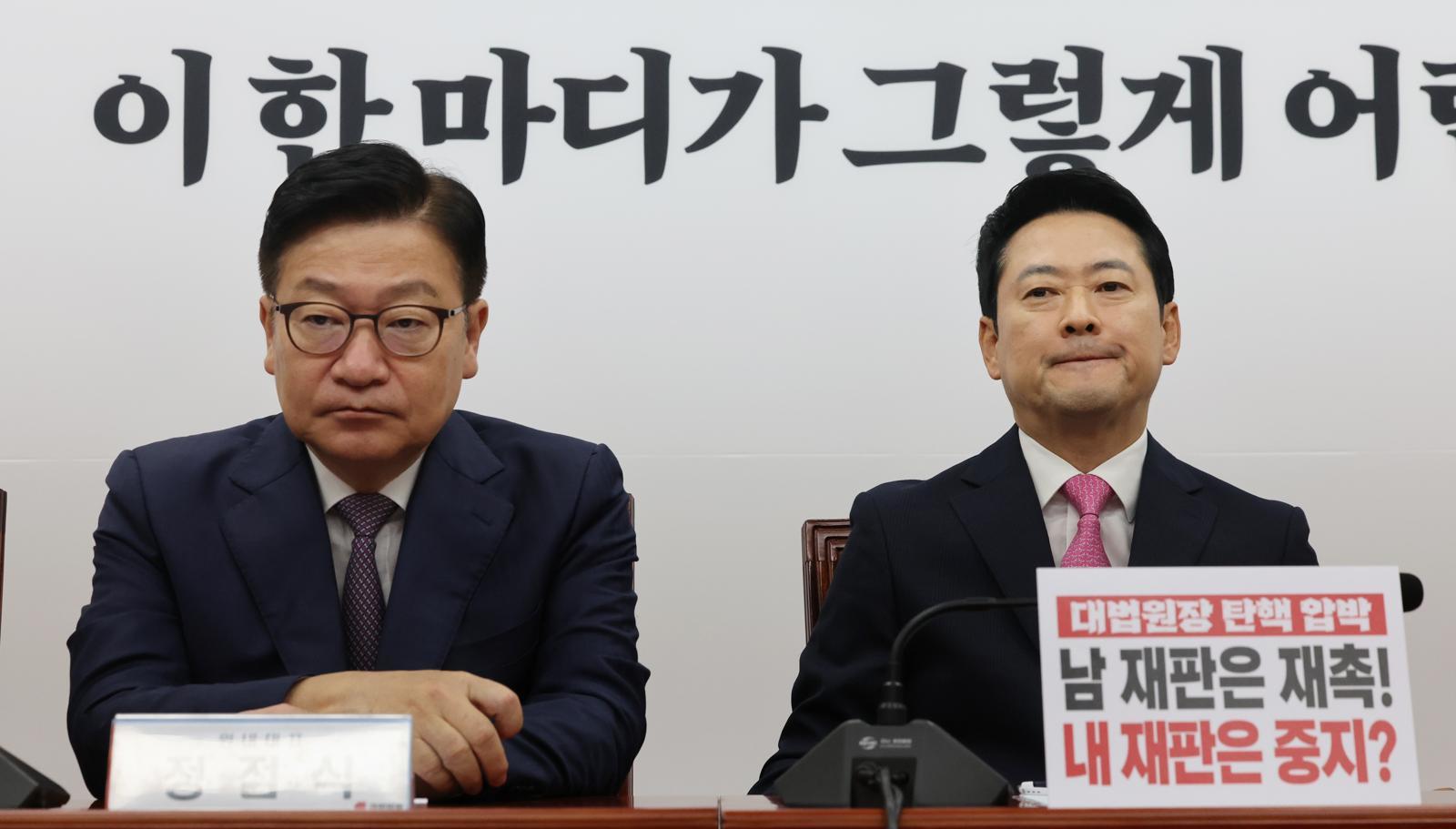

Lee Jae-myung's Message on Noh Acquittal Hints at Personal Grievances with Prosecutors
Translated from Korean, summarized and contextualized by DistantNews.
At a glance
Analysis
Named sources
Context piece
- South Korean President Lee Jae-myung's message of support for a former lawmaker's acquittal suggests he sees himself as a victim of prosecutorial misconduct.
- Analysts interpret his social media post as a veiled claim of being unfairly targeted by prosecutors.
- The move is also seen as a political jab at former Justice Minister Han Dong-hoon.
South Korean President Lee Jae-myung's public message following the acquittal of former lawmaker Noh Woong-rae is being interpreted as a coded assertion of his own victimhood at the hands of prosecutors. Lee expressed sorrow and affection for Noh, a move analysts suggest signals his belief that he, too, has been subjected to "manipulated indictments."
Sorry. I love you.
Political commentator Kim Joon-il explained on Dong-A Ilbo's YouTube channel, "Politics Please," that Lee's primary motivation appears to be drawing a parallel between Noh's experience and his own potential vulnerability to prosecutorial overreach. "The first reason is that Noh is a victim of unreasonable prosecution, and I could be a victim too," Kim stated.
Beyond personal solidarity, the president's statement is also viewed as a strategic political maneuver. Kim suggested a secondary motive: "The second is so-called 'attacking Han Dong-hoon.'" This refers to Han Dong-hoon, who was the Justice Minister at the time of Noh's indictment and is now an independent lawmaker. Lee's comments could be aimed at undermining Han's political standing by associating him with what Lee's supporters deem unfair prosecution tactics.
The first reason is that Noh is a victim of unreasonable prosecution, and I could be a victim too.
The situation highlights the ongoing political tensions and the contentious relationship between the president's party and the prosecution service in South Korea. Lee's carefully worded message taps into a narrative of political persecution, potentially galvanizing his base while challenging his opponents.
The second is so-called 'attacking Han Dong-hoon.'
DistantNews Editorial
Originally published by Dong-A Ilbo in Korean. Translated, summarized, and contextualized by our editorial team with added local perspective. Read our editorial standards.
More Stories


From Our Blog

What Gets Lost (and Found) When News Is Translated

The Critical Role of Diaspora Media in Global News

What Travellers Should Know About Countries with Restricted Press

A Digital Nomad's Guide to Following Local News

How the Same Story Looks Different in Different Countries
