


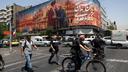
Life in Iran: 'Nobody knows when the crisis will end'
Translated from Croatian, summarized and contextualized by DistantNews.
At a glance
News
Named sources
Ongoing story
- Iranians are experiencing prolonged uncertainty and anxiety due to ongoing security threats and unpredictable diplomatic negotiations, despite a declared truce.
- Many citizens, particularly the young and educated, are considering leaving the country due to the persistent instability.
- The constant shift between optimistic and alarming messages from authorities creates a heavy burden of uncertainty, impacting future planning and mental well-being.
Life in Iran, and specifically in Tehran, is overshadowed by a pervasive sense of uncertainty, with residents unsure when the current crisis will end. Approximately one-third of Iranians are contemplating emigration, a sentiment particularly strong among the younger and highly educated population.
Despite an announced truce between Iran, the United States, and Israel, the population does not feel the conflict has truly ceased. Daily life remains marked by security threats, new attacks, and uncertain diplomatic negotiations. Iranian authorities are sending mixed signals, oscillating between talk of negotiation progress and potential sanctions relief, and warnings of retaliation and threats to critical infrastructure.
This constant fluctuation between hopeful and alarming messages leaves many citizens in a state of perpetual uncertainty. They are caught between the hope for stabilization and the fear of renewed conflict. For many, this prolonged uncertainty has become a heavier burden than the actual events of the war, eroding their ability to plan for the future or make long-term life decisions.
The most important characteristic of this moment is that the end of the war is unknown. When you cannot plan how to endure hardships, it puts immense pressure on you.
A lawyer from Tehran, speaking anonymously, described the greatest burden as the inability to predict when the crisis will end. "The most important characteristic of this moment is that the end of the war is unknown," she told DW. "When you cannot plan how to endure hardships, it puts immense pressure on you." She has lost the will to work or start new projects, finding even daily communication challenging and feeling disconnected from those around her.
This feeling of helplessness is not just an individual problem but strongly influences employment, family formation, and future planning. Combined with economic instability and the constant fear of escalation, the result is a growing sense of exhaustion, apathy, and social stagnation. "We are completely without hope," a resident of Isfahan told DW. "This instability between peace and war has turned our mental state into a game, and we have no clear perspective for our future or for our psychological and financial security."
We are completely without hope. This instability between peace and war has turned our mental state into a game, and we have no clear perspective for our future or for our psychological and financial security.
DistantNews Editorial
Originally published by Večernji List in Croatian. Translated, summarized, and contextualized by our editorial team with added local perspective. Read our editorial standards.
More Stories
From Our Blog

What Gets Lost (and Found) When News Is Translated

The Critical Role of Diaspora Media in Global News

What Travellers Should Know About Countries with Restricted Press

A Digital Nomad's Guide to Following Local News

How the Same Story Looks Different in Different Countries
