


Loan scam texts surge 162%, luring victims via messenger apps
Translated from Korean, summarized and contextualized by DistantNews.
At a glance
News
Official statement
New plan
- Phishing text messages targeting loan scams surged 162% in the second quarter of 2026, according to AhnLab's report.
- These scams lure victims into mobile messenger chats to demand personal information or fees.
- Loan scams constituted 62.68% of all phishing messages analyzed, followed by Telegram impersonation.
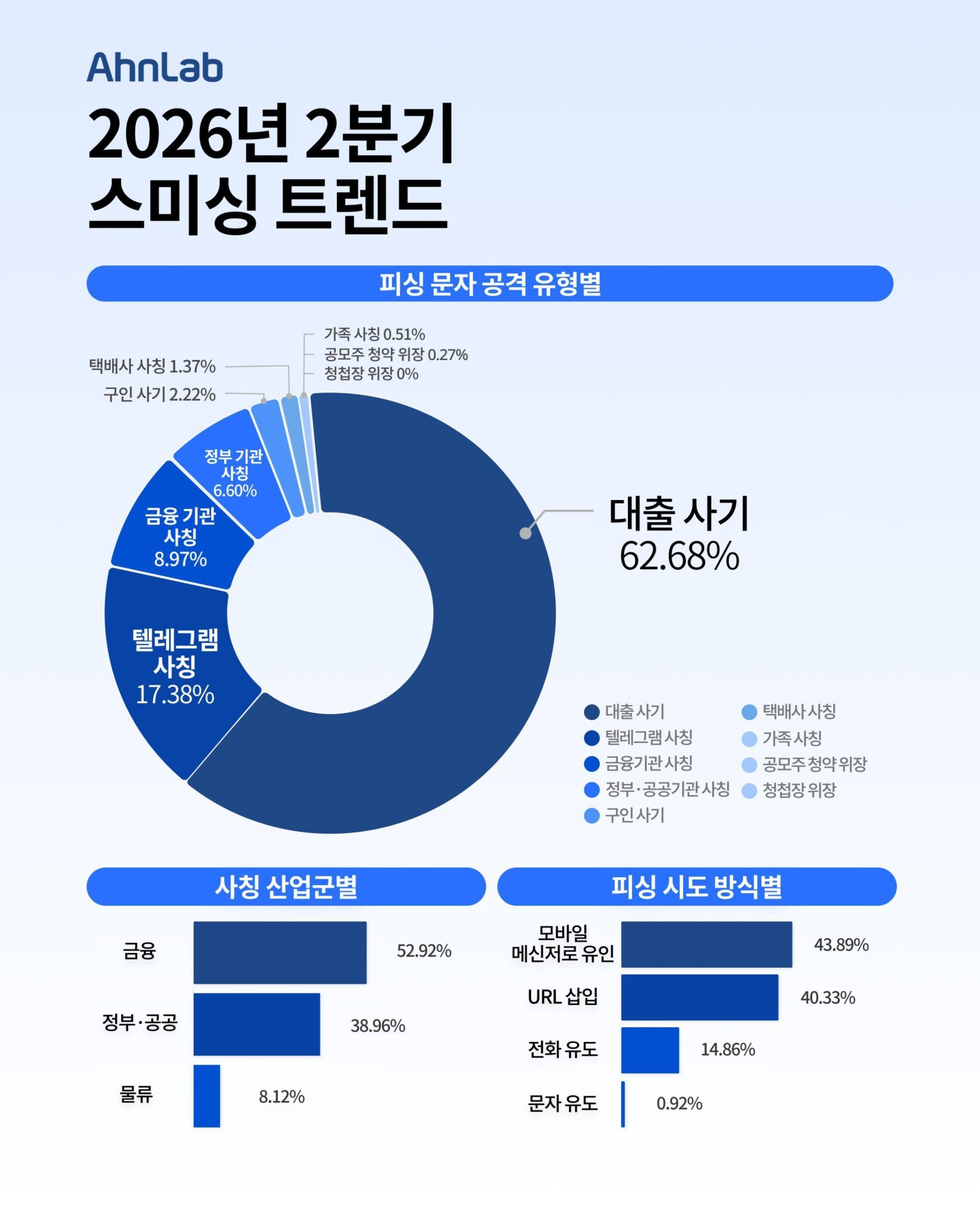
Phishing text messages designed to scam loan applicants have surged dramatically, with a 162% increase in the second quarter of 2026. AhnLab's "2026 2nd Quarter Phishing Text Message Trend Report" revealed that loan scams were the most prevalent type, accounting for 62.68% of all phishing messages analyzed.
Loan scams accounted for 62.68% of all phishing text messages, followed by Telegram impersonation at 17.38%, financial institution impersonation at 8.97%, and government/public institution impersonation at 6.60%.
These fraudulent messages typically use enticing phrases like 'urgent support,' 'low interest,' or 'high limit.' They then provide a messenger ID, drawing victims into one-on-one chat rooms. Once there, scammers pose as loan consultants, demanding personal information or upfront fees under the guise of processing the loan.
Loan scams and Telegram impersonation increased by 162% and 71% respectively compared to the previous quarter.
Following loan scams, Telegram impersonation saw a 71% increase, while family impersonation and wedding invitation scams decreased by 31% and 96% respectively. The report highlights the evolving tactics of cybercriminals, who increasingly use mobile messengers to facilitate their fraudulent activities.
Loan scam messages typically present phrases like 'urgent support,' 'low interest,' and 'high limit,' along with a messenger ID to lure users into one-on-one chat rooms.
DistantNews Editorial
Originally published by Dong-A Ilbo in Korean. Translated, summarized, and contextualized by our editorial team with added local perspective. Read our editorial standards.
More Stories



From Our Blog

What Gets Lost (and Found) When News Is Translated

The Critical Role of Diaspora Media in Global News

What Travellers Should Know About Countries with Restricted Press

A Digital Nomad's Guide to Following Local News

How the Same Story Looks Different in Different Countries
