

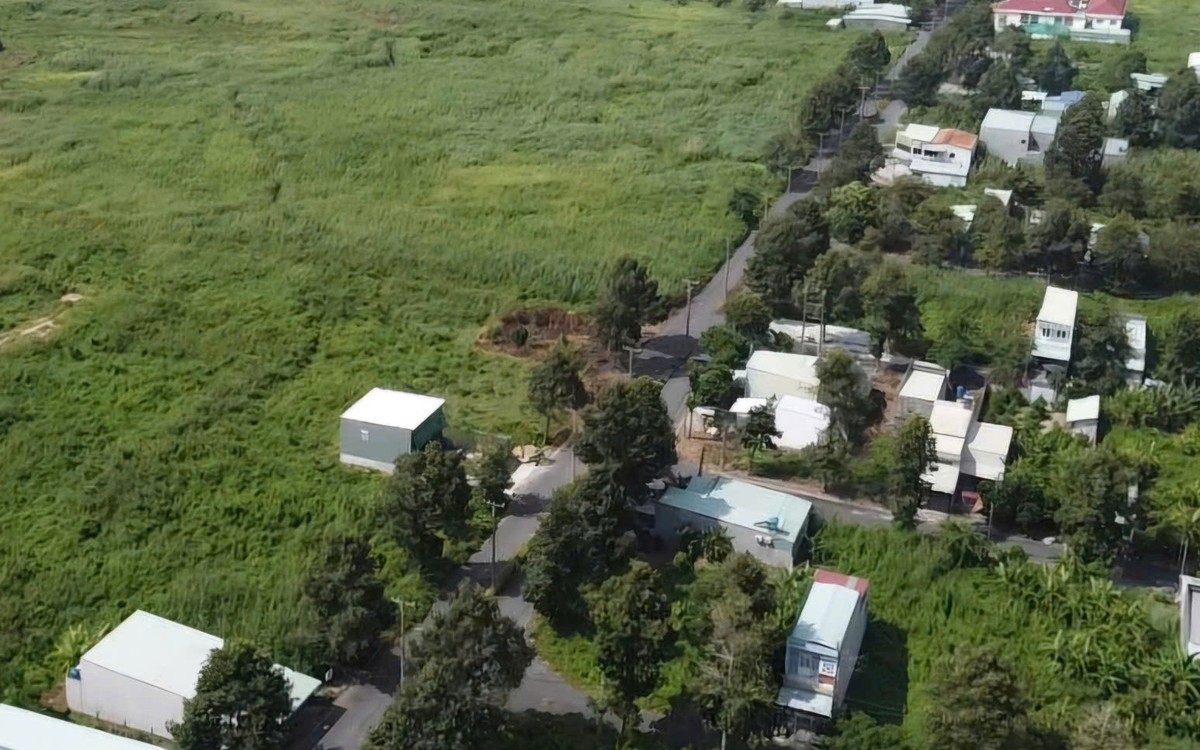

Local authorities manage 80% of Ho Chi Minh City’s roads but receive just over 20% of maintenance funds
Translated from Vietnamese and summarized by DistantNews. Read the original for the full story.
At a glance
News
Named sources
Ongoing story
- Commune-level authorities manage 79.89% of Ho Chi Minh City’s road length but receive about 20.6% of the 2026 road-maintenance budget.
- City departments manage 20.11% of the road length and receive about 79.4% of the proposed maintenance funding.
- The Construction Department said local authorities lack sufficient personnel and expertise, while noting that the roads under city management are generally larger and more expensive to maintain.
Ho Chi Minh City’s local authorities manage nearly 80% of the city’s road length, yet they receive only about one-fifth of the money allocated for road maintenance. The imbalance became a focus of debate at a September 3 session of the city People’s Council on administrative reform and the transfer of management responsibilities.
Deputy Construction Department Director Võ Khánh Hưng said the current division of responsibility follows the Road Law and the city’s Decision 36/2025. The department manages 1,341 roads, just 2.17% of all routes but 20.11% of the city’s total road length. Communes and wards manage 60,591 roads, or 97.83% of all routes and 79.89% of the total length.
For 2026, the budget proposal assigns more than 3.077 trillion Vietnamese dong to units under the Construction Department for traffic maintenance. The 168 wards and communes, excluding the Côn Đảo special administrative zone, would receive more than 798 billion dong. Lawmaker Võ Anh Tuấn said this meant the department’s units would receive about 79.4% of the total, compared with 20.6% for local authorities. “The people managing 80% of the workload have 20% of the money, while those managing less than 20% have more than 79%. How can wards and communes do the job well?” he asked.
Authority must come with resources.
Tuấn argued that the transfer of authority must include personnel, equipment and funding. Hưng acknowledged that many wards and communes lack the organizational structures and technical staff needed to manage roads, prepare maintenance plans, assess work volumes and organize repairs.
Hưng said the funding gap cannot be judged only by road length. Roads managed by the department are mostly major, wider routes with higher maintenance costs, while many local roads are smaller internal streets. He nevertheless acknowledged shortcomings in the allocation. The department said the 2026 budget was prepared during a transition after administrative boundaries were merged, before infrastructure inventories and maintenance needs had been fully assessed. In August 2026, it requested an additional 737.4 billion dong for urgent tasks.
The people managing 80% of the workload have 20% of the money, while those managing less than 20% have more than 79%. How can wards and communes do the job well?
About this summary
Originally published by Thanh Niên in Vietnamese. Translated, summarized, and contextualized automatically by DistantNews, with a note on how the source frames the story. Not individually reviewed before publishing. How this works.
More Stories

From Our Blog

News in Translation: What Gets Lost, and How We Keep the Framing

Diaspora Media: How Communities Abroad Follow Home

Traveling Where the Press Is Not Free: How to Read the News There

The Digital Nomad's Guide to Local News

The Same Story, Different Countries: How Coverage Changes at the Border
