


Local governments take charge of flood relief after criticism of centralised response
Summarized by DistantNews. Read the original for the full story.
At a glance
News
Named sources
Ongoing story
- Authorities formed six-party political coordination committees in flood-hit Rasuwa and Nuwakot to organise relief distribution and emergency response.
- The committees will coordinate aid through local governments, following an all-party decision to place local authorities at the centre of relief and rehabilitation efforts.
- The government’s initial security-led, centralised distribution system drew criticism from local representatives who said it reduced the effectiveness of relief efforts.
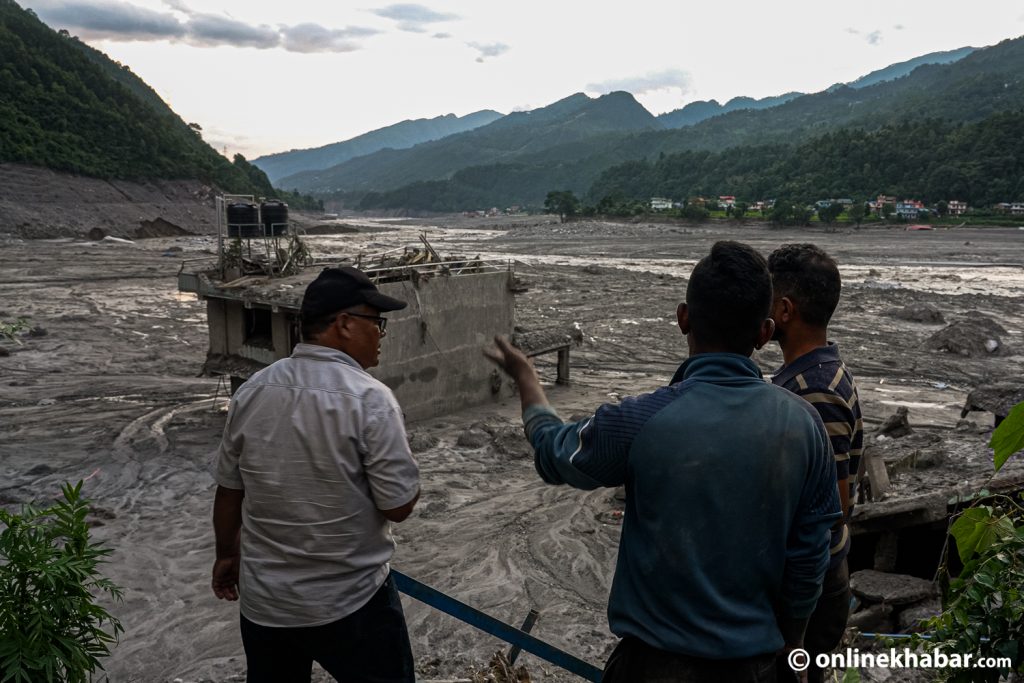
Authorities in Nepal’s flood-hit Rasuwa and Nuwakot districts have created six-party committees to coordinate relief, shifting responsibility toward local governments after criticism of the initial response.
The committees include representatives from the Rastriya Swatantra Party, Nepali Congress, CPN-UML, Nepali Communist Party, Rastriya Prajatantra Party and Shram Sanskriti Party. Shambhu Prasad Regmi, Nuwakot’s chief district officer, said the body would coordinate relief distribution through local governments.
A similar arrangement has been established in neighbouring Rasuwa, one of the districts hardest hit by the August 26 Bhotekoshi floods. The move followed an all-party meeting on August 27 that called for local governments to lead relief and rehabilitation in affected areas. That meeting also agreed to create a central all-party mechanism to improve coordination.
The government began transferring responsibility for relief distribution to local authorities four days after the meeting. It had initially assigned security agencies to distribute aid through a centralised, single-channel system. Local representatives and others criticised that approach, arguing that excluding local governments had made the distribution of relief less effective.
About this summary
Originally published by Kathmandu Post. Summarized and contextualized automatically by DistantNews, with a note on how the source frames the story. Not individually reviewed before publishing. How this works.
More Stories


From Our Blog

What Gets Lost (and Found) When News Is Translated

The Critical Role of Diaspora Media in Global News

What Travellers Should Know About Countries with Restricted Press

A Digital Nomad's Guide to Following Local News

How the Same Story Looks Different in Different Countries
