


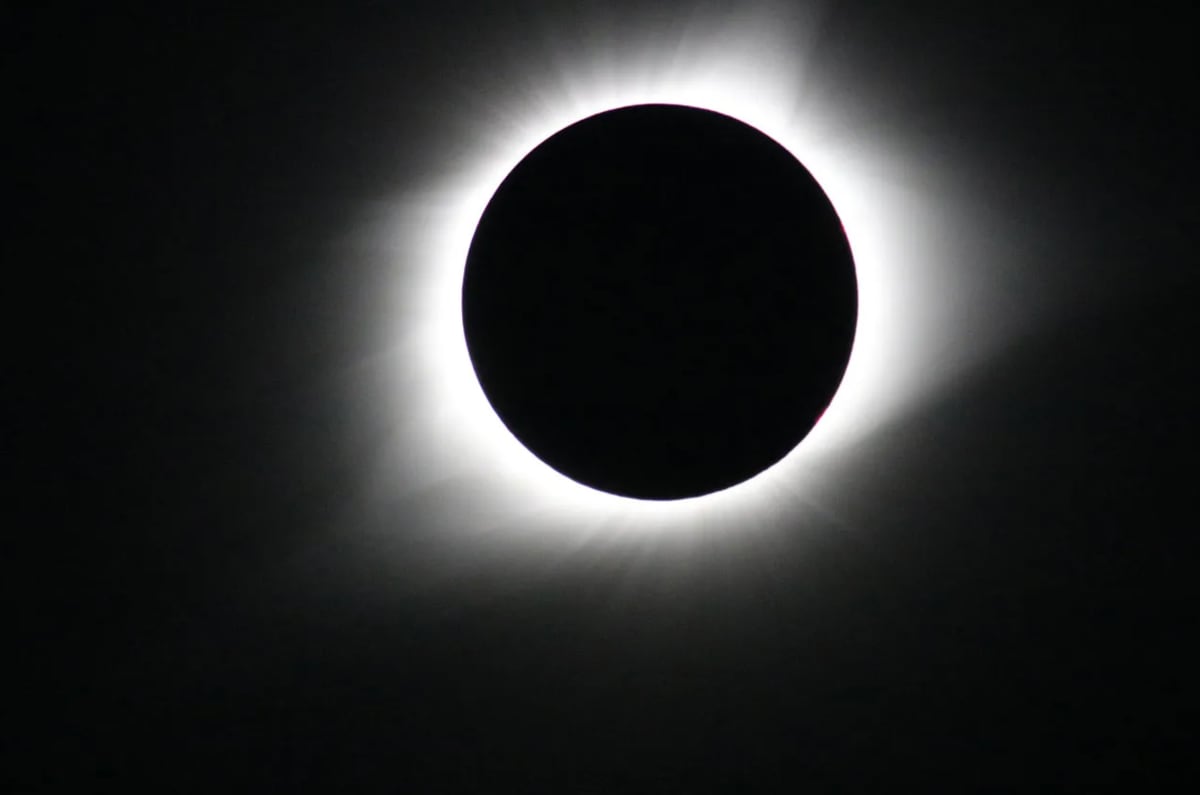
Longest Solar Eclipse of the Century Arrives August 2, 2027
Translated from Spanish, summarized and contextualized by DistantNews.
At a glance
News
Sources not specified
Context piece
- The longest total solar eclipse of the century will occur on August 2, 2027, lasting six minutes and 22 seconds at its peak.
- This event surpasses the duration of previous eclipses, including the one on April 8, 2024.
- Experts advise observers to travel to areas with minimal light pollution and use certified protective equipment, with Luxor, Egypt, identified as an ideal viewing location.
An astronomical event of historic magnitude is set to captivate the world on August 2, 2027, as the longest total solar eclipse of the century unfolds. International astronomical communities are marking their calendars for this rare phenomenon, which NASA data indicates will be a significant milestone in the 21st century.
At its zenith, the eclipse will plunge viewers into total darkness for an impressive six minutes and 22 seconds. This duration significantly exceeds that of previous notable eclipses, including the widely observed event on April 8, 2024, which lasted four minutes and 28 seconds, and the July 11, 1991, eclipse that lasted two minutes and ten seconds.
Experts are urging skygazers to prepare meticulously for the 2027 eclipse. Recommendations include traveling to locations far from urban light pollution and ensuring the use of appropriate technical equipment. Crucially, observers must utilize telescopes with the ISO 12312-2 certification, a device essential for protecting eyesight from direct solar radiation.
The moon's shadow will trace a path across the Earth, beginning in the Atlantic Ocean and traversing North Africa, with countries like Morocco, Tunisia, Libya, and Egypt lying in its primary trajectory. The path will then continue through Saudi Arabia and Yemen before concluding in the Indian Ocean. Luxor, Egypt, is highlighted as a prime viewing spot, where the totality phase could extend to six minutes and 23 seconds.
NASA has confirmed that a partial eclipse will be visible across various European nations, South Asia, and African countries such as Algeria, Sudan, and Somalia. The physical scale of the event is staggering: the lunar shadow will move at approximately 258 kilometers per hour, covering a strip of 15,227 kilometers in length. While the total area under shadow will reach about 2.5 million square kilometers, this represents a small fraction of the Earth's total surface area, underscoring the exclusivity of this celestial spectacle.
DistantNews Editorial
Originally published by La Nación in Spanish. Translated, summarized, and contextualized by our editorial team with added local perspective. Read our editorial standards.
More Stories



From Our Blog

What Gets Lost (and Found) When News Is Translated

The Critical Role of Diaspora Media in Global News

What Travellers Should Know About Countries with Restricted Press

A Digital Nomad's Guide to Following Local News

How the Same Story Looks Different in Different Countries
