

Looting erupts during Santo Domingo Este store fire
Translated from Spanish, summarized and contextualized by DistantNews.
At a glance
News
Sources not specified
Outcome reported
- During a fire at L&R Comercial in Santo Domingo Este, dozens of people looted appliances while firefighters battled the blaze.
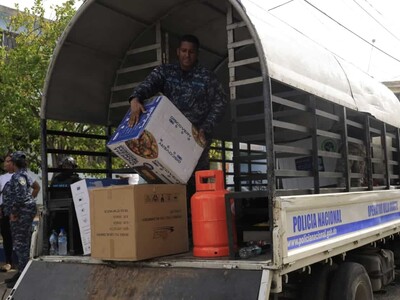
- Police arrested 17 individuals and recovered over 170 items, denying allegations of officer involvement in the looting.
- Experts cite situational anomie and a collective rationalization, where social norms weaken during emergencies, leading individuals to perceive looting as less morally reprehensible.
While firefighters worked to extinguish a blaze at the L&R Comercial store in Santo Domingo Este on August 1st, a secondary crisis unfolded: widespread looting. Dozens of individuals took advantage of the emergency situation to steal appliances like refrigerators, washing machines, and televisions from the burning establishment. The National Police intervened, arresting 17 suspects and recovering more than 170 stolen items, along with a security monitor and a shotgun belonging to the business.
The police have denied any involvement of their agents in the looting, releasing images showing officers receiving and unloading the confiscated merchandise. The incident has reignited discussions about the motivations behind such behavior during emergencies. Sociologists, psychologists, and legal experts suggest a complex interplay of social, emotional, cultural, and legal factors contribute to this phenomenon, though they do not justify it.
Specialists point to "situational anomie," a concept where the breakdown of social norms and surveillance mechanisms during a crisis creates an environment where deviant behavior can occur. Sociologist Joel Arboleda explains that individuals may rationalize their actions by believing the affected business can absorb the losses, that insurance will cover damages, or that widespread participation lessens the moral weight of their actions. Sociologist Alexandra Vilorio adds that structural economic factors can influence perceptions, making such extraordinary events seem like opportunities for those struggling to access basic consumer goods.
Among the arguments that usually appear are the perception that the affected company has enough economic capacity to absorb the losses, the belief that insurance will cover the damages, and the idea that if many people are doing the same thing, the behavior is no longer perceived as incorrect.
DistantNews Editorial
Originally published by Diario Libre in Spanish. Translated, summarized, and contextualized by our editorial team with added local perspective. Read our editorial standards.
More Stories
From Our Blog

What Gets Lost (and Found) When News Is Translated

The Critical Role of Diaspora Media in Global News

What Travellers Should Know About Countries with Restricted Press

A Digital Nomad's Guide to Following Local News

How the Same Story Looks Different in Different Countries
