


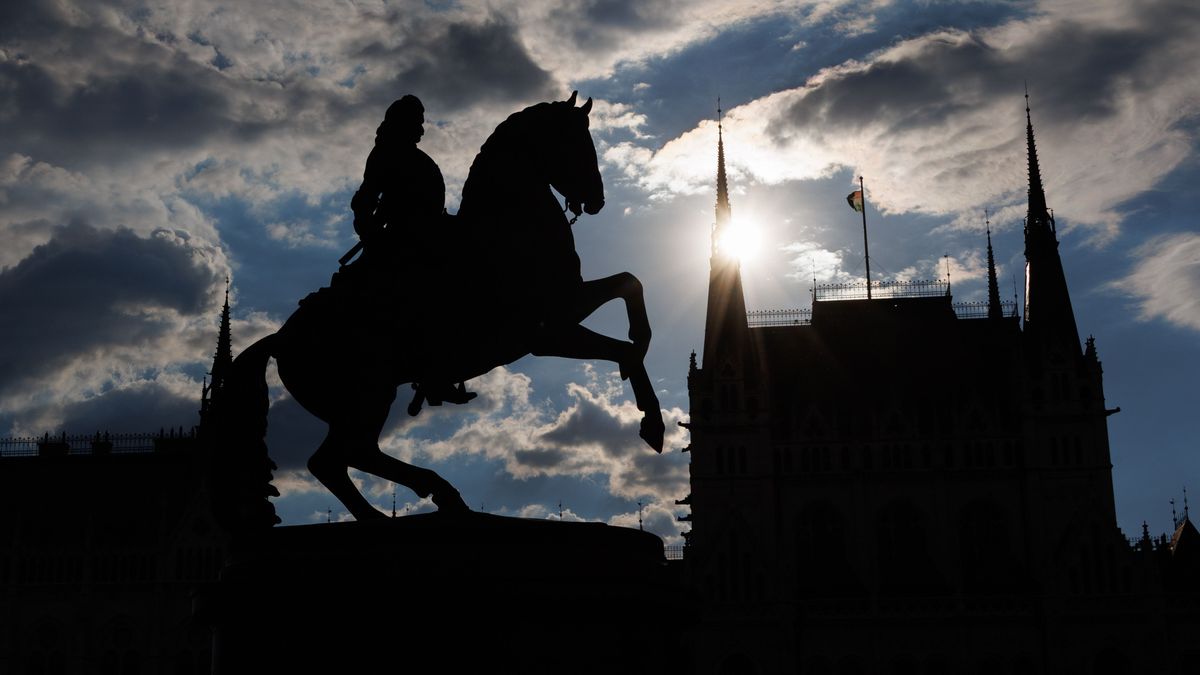
Lost Rákóczi Manuscript Reveals Prince's Secrets and Spiritual Journey
Translated from Hungarian, summarized and contextualized by DistantNews.
At a glance
In-depth
Named sources
Context piece
- A Hungarian honvéd officer discovered a lost manuscript by Prince Rákóczi, revealing secrets about the leader's life and beliefs.
- The manuscript, a confession and self-reflection written between 1716 and 1719, offers insights into Rákóczi's spiritual journey and his understanding of nationhood and liberty.
- Scholars highlight that Rákóczi focused on the metaphysical lessons of his life's events rather than just factual accounts, viewing his path as a spiritual progression towards union with God.
A lost manuscript by Hungarian leader II. Rákóczi Ferenc, discovered by a honvéd officer, is shedding new light on the prince's inner thoughts and political philosophy. Szepes Erika, who translated the "Confessio peccatoris" (Confession of a Sinner) into Hungarian, emphasized the difficulty of translating the original handwritten text. Rákóczi's script was often hard to decipher, with words trailing off at the bottom of pages.
Erika noted that the translation required adapting to old language while ensuring it remained understandable to a modern audience. She believes the confession, written over 300 years ago, offers a profound look into the soul of the freedom fighter and statesman, revealing his deepest secrets and highlighting his greatness.
Rákóczi, a prince of noble lineage and the largest landowner in Hungary, was a pioneering political figure. He understood "patria" to include the land of the serfs and "libertas" to encompass their freedom. His concept of nationhood included not only the nobility but also the common people. In the memoir's introduction, he declared his actions were driven solely by a love of freedom and a desire to liberate his homeland from foreign oppression, not by revenge, ambition for a crown, or a desire to rule.
his actions were driven solely by a love of freedom and a desire to liberate his homeland from foreign oppression, not by revenge, ambition for a crown, or a desire to rule
Classical philologist Takács László, a co-editor of the new Rákóczi edition, explained that the "Confessio peccatoris," written in France and Turkey between 1716 and 1719, is more than just a confessional review of Rákóczi's life. It is also a theological treatise. Takács suggests Rákóczi began writing the life confession in the style of St. Augustine. His depiction of his life suggests he saw his journey as leading toward union with God, akin to the path of medieval mystics: via purificata (purification), via illuminata (enlightenment), and finally via unita (union with God). The "Confessio" begins at this peak, with Rákóczi feeling the presence of the redemptive Jesus within him.
Studies in the fifth volume of the new Rákóczi edition, edited by Mészáros Kálmán, Tóth Ferenc, and Tüskés Gábor, point out that Rákóczi aimed to present the metaphysical lessons of his life's events, not just their factual historical accuracy. The preface emphasizes that he sought to reveal the profound significance of these experiences.
he saw his path as leading toward union with God, akin to the path of medieval mystics: via purificata (purification), via illuminata (enlightenment), and finally via unita (union with God).
DistantNews Editorial
Originally published by Magyar Nemzet in Hungarian. Translated, summarized, and contextualized by our editorial team with added local perspective. Read our editorial standards.
More Stories


From Our Blog

Countries Without a Free Press: What You Need to Know

What Press Freedom Means for the News You Read

What Gets Lost (and Found) When News Is Translated

The Critical Role of Diaspora Media in Global News

What Travellers Should Know About Countries with Restricted Press
