


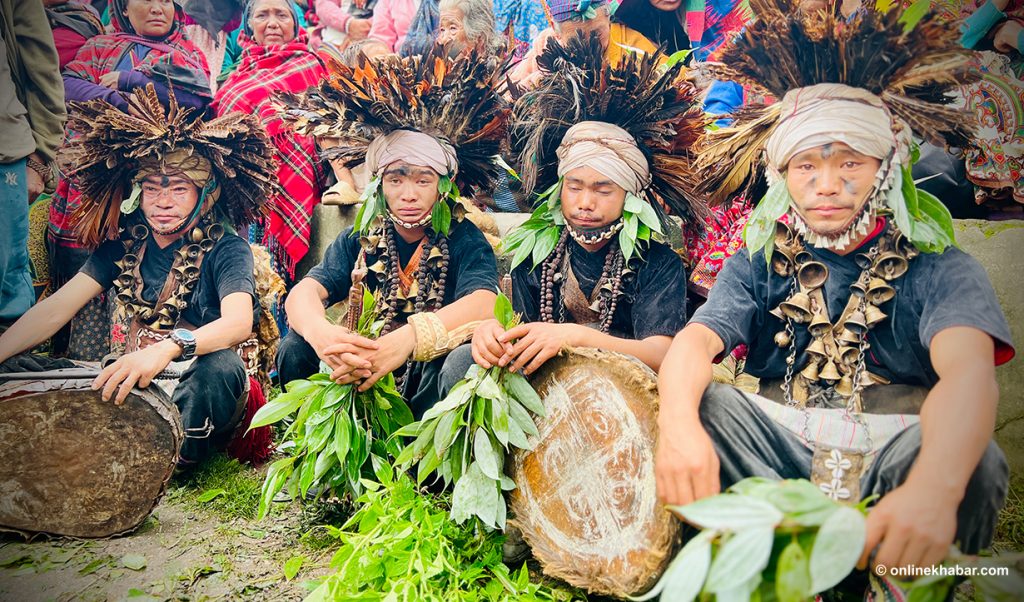
Lugum: A village where the rhythm of the drum and sacred chants still lives (Photos)
Summarized and contextualized by DistantNews.
At a glance
In-depth
Sources not specified
Context piece
- The Himalayan village of Lugum in Rukum East, Nepal, preserves its ancient shamanic traditions.
- Shamans, adorned in traditional attire, perform rituals and dances during the annual Shaman Festival.
- The festival honors ancestors, strengthens community bonds, and passes down cultural heritage, with women participating equally as shamans.
In the remote Himalayan village of Lugum, nestled in Rukum East, Nepal, the ancient rhythm of the dhyangro drum and sacred chants continues to echo, defying the march of modernity. Here, shamanic traditions, which have faded in many parts of Nepal, remain vibrantly alive.
During the annual Shaman Festival, held on the first Tuesday of the Nepali month of Shrawan, shamans, clad in feathered headdresses, bronze bells, and colorful attire, gather in the village center. They dance to the resonant beat of the dhyangro, filling the air with the fragrance of incense. For the people of Lugum, this festival is not primarily a form of healthcare, as modern science does not recognize shamanism as medical treatment. Instead, it serves as a vital expression of their cultural identity, an opportunity to honor ancestors, strengthen social bonds, and keep their heritage alive.
A distinctive feature of Lugum's shamanic practice is the equal footing on which women perform alongside men. Sacred chants and rituals are passed down through generations, often within families, from teacher to disciple. Shamans are revered not just as ritual healers but as custodians of the village's spiritual life, social values, and cultural heritage. The festival also facilitates the passing of knowledge from elder shamans to their disciples, fostering a continuous lineage of spiritual and ritualistic practices.
One of the most striking elements of the festival is the "sisno" ritual, where participants playfully strike each other with stinging nettles. While appearing unusual to outsiders, the local community views this as a cultural rite of purification, believed to cleanse the body, protect against illness, and ward off negative forces. The shamans' elaborate attire itself acts as a living record of their cultural heritage, with each piece carrying historical and spiritual significance.
DistantNews Editorial
Originally published by OnlineKhabar English. Summarized and contextualized by our editorial team with added local perspective. Read our editorial standards.
More Stories


From Our Blog

What Gets Lost (and Found) When News Is Translated

The Critical Role of Diaspora Media in Global News

What Travellers Should Know About Countries with Restricted Press

A Digital Nomad's Guide to Following Local News

How the Same Story Looks Different in Different Countries
