


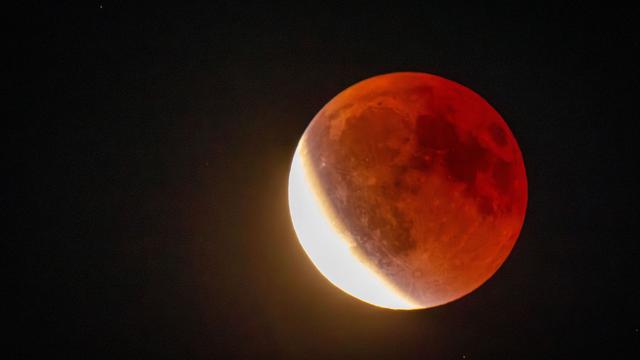
Lunar eclipse: Northern skies may offer limited viewing
Translated from German and summarized by DistantNews. Read the original for the full story.
At a glance
News
From a news agency
New plan
- A total lunar eclipse is set to occur early Friday morning, with the most interesting phase beginning around 4:30 AM.
- Viewing conditions in northern Germany are expected to be poor due to showers and thunderstorms.
- The eclipse will be partially obscured by the horizon and bright morning twilight.
Stargazers in northern Germany hoping to witness a total lunar eclipse early Friday morning face uncertain prospects. The celestial event begins with the moon entering Earth's penumbra at 3:22 AM, but the more noticeable phase, when it enters the umbra, starts around 4:30 AM. The peak of the eclipse is expected at 6:13 AM, though the moon will be very low on the horizon.
She is an event for night owls - and for nightingales.
Unfortunately, the German Weather Service (DWD) forecasts a challenging viewing experience. Showers and thunderstorms are predicted to move across the region from the south during the night. Meteorologist Tobias Schaaf noted that the unpredictable nature of these storms makes accurate cloud forecasting difficult, significantly diminishing the chances of clear skies.
It is a very uncertain story. The chances of being able to see much are generally very low.
Despite the generally poor outlook, there might be slim chances of catching a glimpse of the eclipse in specific areas. The DWD suggests that the eastern border of Lower Saxony, from the Harz mountains up to the Wendland region, could offer the best, albeit still uncertain, viewing opportunities. Coastal areas of Mecklenburg-Vorpommern and Schleswig-Holstein might also experience brief moments of clarity.
The North is influenced by showers and thunderstorms during the night from Thursday to Friday, which spread across the area from the south.
Those venturing out to try their luck will not need to worry about the cold, as temperatures are expected to be mild in the early morning hours. However, the bright morning twilight, beginning around sunrise at 6:29 AM, will further obscure the view, making it nearly impossible to discern the characteristic red "eclipse light" even if the clouds part.
One would perhaps have the best chance on the eastern state border of Lower Saxony. So from the Harz mountains up to the Wendland region.
About this summary
Originally published by Die Zeit in German. Translated, summarized, and contextualized automatically by DistantNews, with a note on how the source frames the story. Not individually reviewed before publishing. How this works.
More Stories



From Our Blog

What Gets Lost (and Found) When News Is Translated

How the Same Story Looks Different in Different Countries

The Critical Role of Diaspora Media in Global News

What Travellers Should Know About Countries with Restricted Press

A Digital Nomad's Guide to Following Local News
