

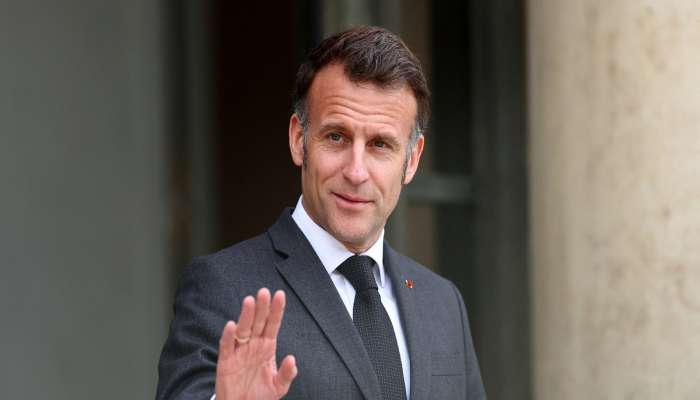
Macron Calls for West Asia Stability, Rejects 'Coercive' Measures Against Iran
Translated from English, summarized and contextualized by DistantNews.
TLDR
- French President Emmanuel Macron called for stability in West Asia, warning of global economic disruption from the ongoing conflict.
- Macron opposed coercive measures against Iran, advocating for systematic, diplomatic negotiations.
- France is coordinating with Britain on military efforts to ensure freedom of navigation, including reopening the Strait of Hormuz.
French President Emmanuel Macron has articulated a clear stance on the escalating tensions in West Asia, emphasizing the urgent need for stability and a return to diplomatic engagement. Speaking ahead of a European Union summit in Cyprus, Macron directly linked the ongoing conflict, particularly the US-Israel war's spillover effects, to unsettling global economic conditions. His call for stability is not merely a plea for peace but a pragmatic recognition of the interconnectedness of regional security and international commerce.
It is in everyone's interest for stability to return as soon as possible and for the world's economies to be reassured.
Macron's remarks, as reported by Al Jazeera and echoed by Iranian state media like Press TV, signal a divergence from purely coercive approaches. He explicitly rejected "economic strangulation" and "targeted blockades" as tools of diplomacy, instead advocating for "systematic" negotiations. This position underscores France's commitment to dialogue, even with nations like Iran, stressing that lasting solutions must be built on mutual understanding rather than pressure.
Dialogue with Iran must be carried out in a systematic manner, not through targeted blockades or similar measures.
From the perspective of Times of Oman, Macron's intervention is significant. While Western media often focuses on the immediate security implications of the conflict, France's emphasis on economic stability and the reopening of vital maritime routes like the Strait of Hormuz resonates deeply in a region reliant on trade. The coordinated military planning between France and the UK, aimed at ensuring freedom of navigation, demonstrates a tangible commitment to safeguarding global economic lifelines. This proactive approach, involving a broad coalition of 49 nations, highlights a unified international desire to de-escalate tensions and prevent further disruption, a message that should be heard clearly across West Asia and beyond.
Last night, I joined the Strait of Hormuz freedom of navigation summit. There were 49 countries that participated. There was a consistent approach. We want to see de-escalation.
DistantNews Editorial
Originally published by Times of Oman in English. Translated, summarized, and contextualized by our editorial team with added local perspective. Read our editorial standards.
More Stories
From Our Blog

What Gets Lost (and Found) When News Is Translated

The Critical Role of Diaspora Media in Global News

What Travellers Should Know About Countries with Restricted Press

A Digital Nomad's Guide to Following Local News

How the Same Story Looks Different in Different Countries
