

Magical girls: From Japanese screens to global empowerment
Translated from Spanish, summarized and contextualized by DistantNews.
At a glance
In-depth
Sources not specified
Context piece
- The "magical girl" genre, originating in Japan, has influenced global animation and holds cultural significance for empowering young girls.
- Early examples like "The Secrets of Akko-chan" (1962) and "Sally the Witch" (1966) established key tropes of ordinary girls gaining extraordinary powers or possessing innate magic.
- These series, popular in Mexico during the 1990s, reflected societal changes in Japan and offered a blend of fantasy and relatable childhood experiences.
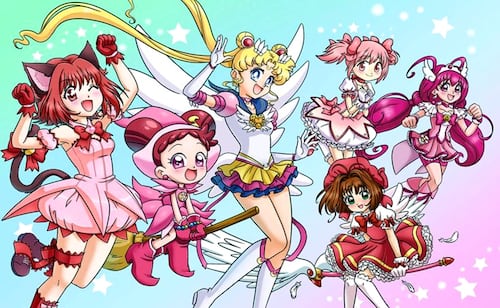
Long before the terms "anime" or "manga" became commonplace, Mexican children were captivated by the transformative power of "magical girls." These heroines, who would utter magic words and change into their battle attire, became a staple of 1990s afternoon television, leaving a lasting impression on a generation.
The "magical girl" genre, which has evolved over six decades, represents a significant cultural force, offering themes of empowerment and freedom to young girls worldwide. What began in 1960s Japan as children's fantasy has blossomed into a global phenomenon, shaping animation across continents.
While often associated with anime, the genre's roots trace back to manga. "The Secrets of Akko-chan," published in 1962, introduced Atsuko "Akko" Kagami, a girl who received a magic mirror enabling her to transform into anyone. Unlike later heroines, Akko used her powers for everyday situations and childhood adventures, subtly referencing Japanese pop culture.
This early iteration established one of the genre's core models: the ordinary girl who suddenly gains extraordinary abilities. The second model emerged in 1966 with "Sally the Witch." Sally, a princess from an enchanted realm, descended to the human world to make friends, introducing the concept of a magical character navigating between two distinct worlds. This premise served as a metaphor for Japan's rapid modernization at the time, with the visiting princess symbolizing a different world's perspective.
A diferencia de las heroínas que vendrían después, Akko no combatía monstruos ni formaba parte de un equipo: usaba sus poderes para resolver situaciones cotidianas, ayudar a otros o vivir aventuras típicas de la niñez.
DistantNews Editorial
Originally published by El Universal in Spanish. Translated, summarized, and contextualized by our editorial team with added local perspective. Read our editorial standards.
More Stories
From Our Blog

What Press Freedom Means for the News You Read

What Gets Lost (and Found) When News Is Translated

The Critical Role of Diaspora Media in Global News

What Travellers Should Know About Countries with Restricted Press

A Digital Nomad's Guide to Following Local News
