

Magnitude 5.5 Earthquake Rattles El Salvador, Honduras, and Nicaragua; No Major Damage Reported
Translated from Spanish, summarized and contextualized by DistantNews.
At a glance
News
Sources not specified
Context piece
- A magnitude 5.5 earthquake struck El Salvador, Honduras, and Nicaragua on Wednesday evening.
- The earthquake's epicenter was located off the coast of Usulután, El Salvador, at a depth of 56.8 km.
- Local authorities in all three countries reported no casualties or significant damage, though the tremor caused fear among residents.
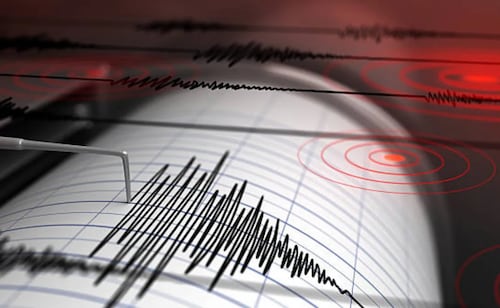
A moderate earthquake with a magnitude of 5.5 shook El Salvador, Honduras, and Nicaragua on Wednesday evening, according to the U.S. Geological Survey (USGS) and local seismological observatories. The tremor occurred at 6:30 PM local time, with its epicenter situated in the Pacific Ocean off the coast of Usulután, El Salvador, approximately 160 km south of the capital. The quake's depth was recorded at 56.8 km.
The Salvadoran Ministry of Environment reported a magnitude of 5.7 for the quake off the coast of Usulután, assuring that there was no tsunami threat to the country. The seismic activity was also felt in neighboring Honduras and Nicaragua. Despite the widespread shaking, civil protection authorities in all three nations confirmed that there were no reports of injuries or damage to infrastructure, although the event did cause alarm among the populace.
This earthquake occurred just two days after a powerful magnitude 7.4 earthquake struck Colombia, which resulted in significant casualties and damage. Central American nations are frequently subjected to seismic events due to the complex tectonic activity in the region, including the convergence of the Caribbean and Cocos plates, as well as local geological faults.
While this particular tremor did not result in any reported damage, it serves as a reminder of the region's vulnerability to seismic activity. The USGS and local observatories continue to monitor seismic conditions in the area.
DistantNews Editorial
Originally published by El Universal in Spanish. Translated, summarized, and contextualized by our editorial team with added local perspective. Read our editorial standards.
More Stories
From Our Blog

What Press Freedom Means for the News You Read

What Gets Lost (and Found) When News Is Translated

The Critical Role of Diaspora Media in Global News

What Travellers Should Know About Countries with Restricted Press

A Digital Nomad's Guide to Following Local News
