



Magnitude 5.7 earthquake strikes East Nusa Tenggara, Indonesia; aftershocks continue
Translated from Indonesian, summarized and contextualized by DistantNews.
At a glance
News
From a news agency
Ongoing story
- A magnitude 5.7 earthquake struck Ruteng, Manggarai Regency, East Nusa Tenggara, Indonesia, on Wednesday night, with no tsunami potential.
- The earthquake is part of a series of aftershocks following a larger 7.7 magnitude quake, with thousands of smaller tremors recorded.
- Authorities urge residents to remain vigilant, avoid damaged buildings, and rely on official BMKG information.
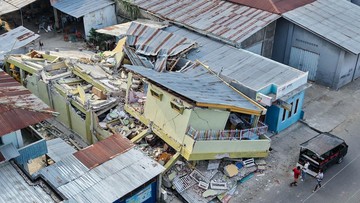
A magnitude 5.7 earthquake jolted East Nusa Tenggara, Indonesia, on Wednesday night, centered on land in Ruteng, Manggarai Regency, at a depth of 10 kilometers. The Meteorology, Climatology, and Geophysics Agency (BMKG) reported the tremor occurred at 23:17 WIB and did not pose a tsunami risk. However, the shaking was significantly felt across several regencies, including Manggarai, West Manggarai, Nagekeo, and East Sumba, with intensities ranging from III to IV MMI.
This latest earthquake is part of an ongoing sequence of aftershocks in the Flores Back-Arc tectonic zone, following a major 7.7 magnitude quake. BMKG has recorded thousands of smaller seismic events, with the largest aftershock measuring 6.2 magnitude. Head of BMKG, Teuku Faisal Fathani, indicated that the dissipation of these aftershocks could take a considerable time, estimating three to four more weeks.
As of Wednesday at 17:00 WIB, BMKG had logged a total of 3,055 aftershocks, ranging in magnitude from 1.1 to 6.2, with 88 of these felt by the public. BMKG continues to monitor seismic activity in real-time and provides updates to affected residents and those in evacuation centers. The agency strongly advises people in Flores and surrounding areas to remain cautious, avoid occupying buildings with structural cracks to prevent collapse from potential aftershocks, and to stay calm by relying only on official information from verified BMKG channels.
Because this was a large earthquake, 7.7 magnitude, its dissipation requires approximately three to four weeks.
DistantNews Editorial
Originally published by Republika in Indonesian. Translated, summarized, and contextualized by our editorial team with added local perspective. Read our editorial standards.
More Stories


From Our Blog

What Gets Lost (and Found) When News Is Translated

The Critical Role of Diaspora Media in Global News

What Travellers Should Know About Countries with Restricted Press

A Digital Nomad's Guide to Following Local News

How the Same Story Looks Different in Different Countries
