


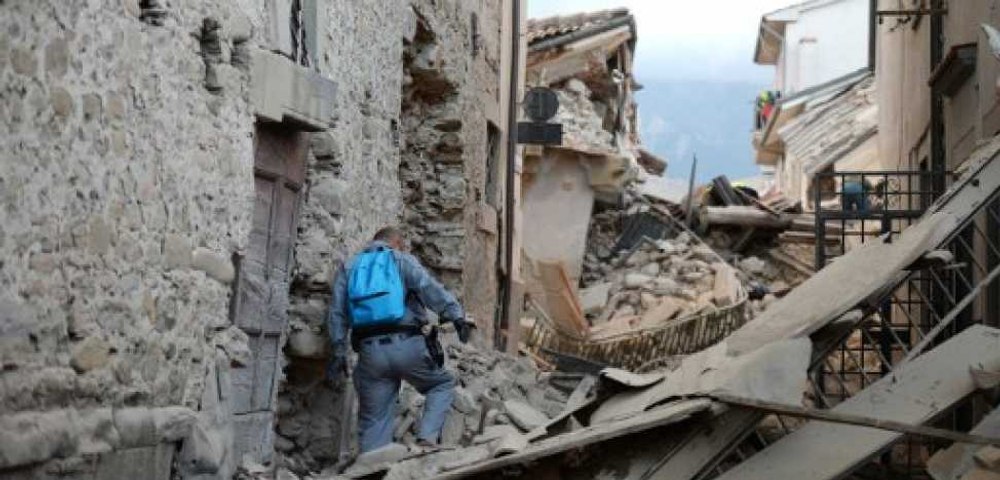
Magnitude 6.2 earthquake strikes southern Italy
Translated from Romanian, summarized and contextualized by DistantNews.
At a glance
News
From a news agency
Outcome reported
- A magnitude 6.2 earthquake struck southern Italy in the Tyrrhenian Sea early Tuesday morning.
- The quake occurred at a depth of approximately 253 kilometers, with its epicenter located between Sicily and the Italian mainland.
- Authorities have reported no casualties or material damage thus far, but the event is noted as one of the strongest seismic events in the region in decades.
A powerful earthquake with a preliminary magnitude exceeding 6 struck southern Italy early Tuesday morning, according to international seismological agencies. The U.S. Geological Survey (USGS) reported a magnitude of 6.2, with the tremor occurring at 00:12 Central European Time in the Tyrrhenian Sea.
The epicenter was located about 18 kilometers southwest of Scarcelli, Italy, situated between Sicily and the Italian peninsula. While exact magnitudes can vary slightly between agencies due to differing methodologies, the German Research Centre for Geosciences (GFZ) recorded a 6.1 magnitude at a depth of approximately 253 kilometers. Romania's National Institute for Earth Physics (INFP) also registered the quake, classifying it as an intermediate-depth earthquake.
The earthquake's effects were felt across several Calabrian towns, with its epicenter located between Sicily and the Italian mainland. Authorities have stated that, as of now, no victims, injuries, or material damage have been reported as a result of the seismic activity.
This event is considered one of the strongest earthquakes to hit the peninsula in recent decades. It is being compared to the devastating 1908 Messina earthquake, a magnitude 7.1 event followed by a tsunami that ravaged Messina and Reggio Calabria, causing an estimated 80,000 deaths and becoming one of Europe's worst natural disasters.
DistantNews Editorial
Originally published by Adevărul in Romanian. Translated, summarized, and contextualized by our editorial team with added local perspective. Read our editorial standards.
More Stories
From Our Blog

What Gets Lost (and Found) When News Is Translated

The Critical Role of Diaspora Media in Global News

What Travellers Should Know About Countries with Restricted Press

A Digital Nomad's Guide to Following Local News

How the Same Story Looks Different in Different Countries
