

Psychiatrist: Up to 30% of residents may show acute trauma symptoms next month after Galati drone attack
Translated from Romanian, summarized and contextualized by DistantNews.
At a glance
Analysis
Sources not specified
Outcome reported
- A Russian drone attack in Galati, Romania, destroyed an apartment and injured two people.
- Psychotherapist Gabriel Diaconu warns that the trauma for the 70 residents is just beginning.
- He explains the three stages of trauma, emphasizing that proximity to danger can cause intense psychological reactions.
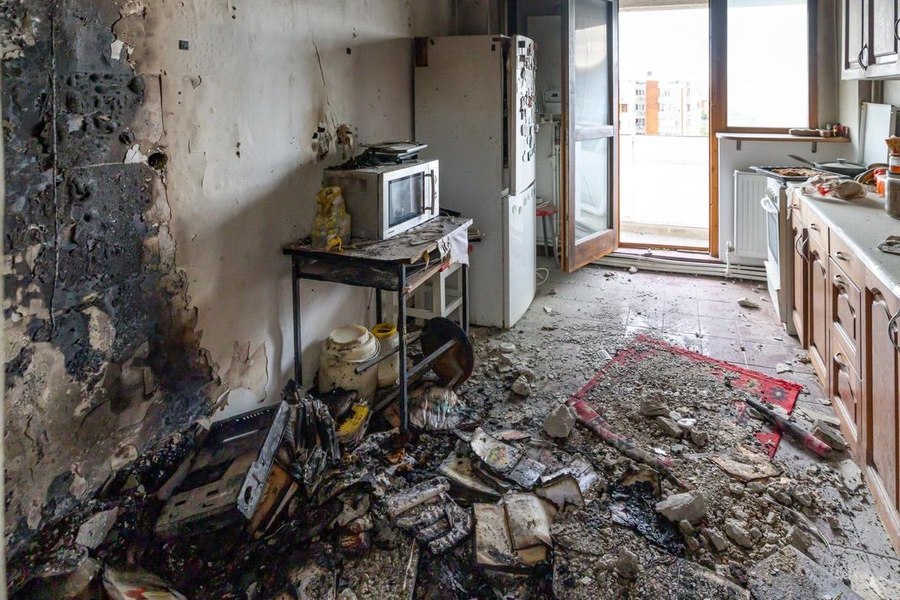
A Russian drone attack on an apartment building in Galati, Romania, on Friday night devastated one apartment and sent two people to the hospital, but profoundly altered the lives of all 70 residents. Psychotherapist Gabriel Diaconu warns that the survivors' true struggle is just beginning, detailing the three devastating stages of trauma.
Diaconu explained that the impact of a military attack extends far beyond medical statistics. The drone strike, which occurred around 2 a.m., destroyed an apartment and injured a 14-year-old adolescent among others. While authorities managed the immediate situation, Diaconu stressed that judging the trauma's extent solely by the number of hospitalizations is a mistake.
Psychologically, the brain processes danger based on proximity to the event, not just physical injuries. Residents who heard the explosion, felt the shock, or evacuated in the middle of the night experienced a violent physiological activation of their survival mechanisms, similar to those directly wounded. Diaconu noted that these individuals might experience even more intense trauma because they lack a clear medical path to process their chaos.
"People tend to have a much more intense anxiety reaction not when something happens directly to them, but when they are very close, when the bullet, so to speak, narrowly misses them," Diaconu stated. He added that the broader community response often dismisses their distress, implying they have no reason to complain because they were physically unharmed. However, Diaconu emphasized that the lives of all 70 residents were deeply and permanently changed.
Diaconu also highlighted that the attack occurring at night, while people were sleeping, is intrinsically linked to the definition of trauma. "It is something that, in psychotraumatology, falls within the intrinsic definition of trauma. It is an abnormal response to a profoundly abnormal situation. People need to understand that it is profoundly abnormal to be sleeping and have your building attacked with military technology," he said. Trauma does not manifest immediately or uniformly; adrenaline and alertness sustain people in the initial hours and days. Symptoms emerge later, as the body and mind attempt to return to normal, with sleep disturbances being a common early sign.
Este ceva ce, în psihotraumatologie, intră în definiția intrinsecă a traumei. Este un răspuns anormal la o situație profund anormală. Oamenii e bine să înțeleagă că e ceva profund anormal să dormi și blocul tău să fie atacat cu tehnică militară.
DistantNews Editorial
Originally published by Adevărul in Romanian. Translated, summarized, and contextualized by our editorial team with added local perspective. Read our editorial standards.
More Stories

From Our Blog

What Gets Lost (and Found) When News Is Translated

The Critical Role of Diaspora Media in Global News

What Travellers Should Know About Countries with Restricted Press

A Digital Nomad's Guide to Following Local News

How the Same Story Looks Different in Different Countries
