


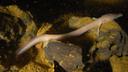
Major Discovery Beneath Croatia’s Krka: Scientists Find Nine Evolutionary Olm Species
Translated from Croatian and summarized by DistantNews. Read the original for the full story.
At a glance
In-depth
Named sources
Context piece
- An international study found that the olm, a cave-dwelling amphibian, comprises nine evolutionarily distinct species rather than one.
- Krka National Park hosts the northernmost known population of the Dalmatian olm, Proteus carrarae, and the only site with continuous long-term monitoring.
- The findings increase the need to protect the species from pollution, changes in water regimes and surface interventions.
For years, scientists treated the olm as a single species. Long-term research in the underground world of Croatia’s Krka National Park has now helped show that the animal actually includes nine distinct evolutionary species.
One of them is the Dalmatian olm, Proteus carrarae, whose populations live in Dalmatia and neighboring Herzegovina. The population in Krka National Park is especially valuable for research because it represents the northernmost known location of the species.
It is also the only site where scientists carry out continuous long-term monitoring of the Dalmatian olm. Years of collected data have provided insight into population numbers, the animal’s ecology and changes in its underground habitat.
The animals may look almost identical, but modern analyses have revealed separate evolutionary lines. They developed independently for millions of years in different underground watersheds across the Dinaric karst.
The discovery adds weight to efforts to protect Krka’s subterranean ecosystem. Pollution, changes in water regimes and interventions on the surface can affect these sensitive habitats. Krka National Park said monitoring and research would continue, allowing scientists to track changes and detect possible threats to the species.
About this summary
Originally published by Večernji List in Croatian. Translated, summarized, and contextualized automatically by DistantNews, with a note on how the source frames the story. Not individually reviewed before publishing. How this works.
More Stories


From Our Blog

What Gets Lost (and Found) When News Is Translated

The Critical Role of Diaspora Media in Global News

What Travellers Should Know About Countries with Restricted Press

A Digital Nomad's Guide to Following Local News

How the Same Story Looks Different in Different Countries
