


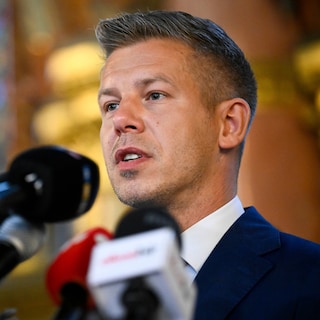
Majority of Fidesz in Hungary Grows to 135 Seats After Final Count
Translated from Dutch, summarized and contextualized by DistantNews.
TLDR
- The ruling Fidesz party in Hungary, led by Viktor Orbán, has secured a larger majority in parliament following the final vote count.
- Fidesz and its junior partner, the Christian Democratic People's Party (KDNP), will now hold 135 seats in the 199-member National Assembly.
- This outcome grants Orbán's government a supermajority, allowing it to enact constitutional changes and push through its legislative agenda.
Hungary's political landscape has solidified further in favor of Prime Minister Viktor Orbán's Fidesz party, which, along with its junior coalition partner, the Christian Democratic People's Party (KDNP), has secured a commanding supermajority in the National Assembly. The final tally from the recent elections confirms that the alliance will occupy 135 of the 199 seats, a decisive victory that empowers the government to pursue its agenda with fewer legislative obstacles.
This electoral triumph is a clear mandate from the Hungarian people, reflecting continued support for Orbán's nationalist and conservative platform. The government has consistently emphasized policies focused on national sovereignty, traditional family values, and a firm stance on immigration. The supermajority achieved means that Fidesz-KDNP can now more easily enact constitutional amendments and pass legislation without needing to seek broad consensus from opposition parties, potentially accelerating the implementation of its key policy objectives.
While international observers often focus on the democratic implications of such concentrated power, the perspective within Hungary often highlights the stability and decisive governance that this mandate provides. Supporters view it as a validation of Orbán's leadership and his vision for Hungary's future, particularly in contrast to what they perceive as the instability or ideological compromises often seen in other European nations.
For the Hungarian people, this outcome signifies a period of predictable governance, allowing the government to press forward with its agenda without the constant threat of parliamentary deadlock. The focus will likely remain on issues such as economic policy, social reforms, and Hungary's role within the European Union, all viewed through the lens of national interest as defined by the ruling party. The enhanced parliamentary power ensures that Orbán's government can continue to shape the nation's direction according to its established priorities.
DistantNews Editorial
Originally published by De Volkskrant in Dutch. Translated, summarized, and contextualized by our editorial team with added local perspective. Read our editorial standards.
More Stories

:format(jpeg):fill(f8f8f8,true)/s3/static.nrc.nl/wp-content/uploads/2025/06/24095735/data132931524-38215c.png)
/s3/static.nrc.nl/wp-content/uploads/2026/04/18220005/Spain-Global-Progressive-Mobilisation-Summit_74188380.jpg)
From Our Blog

What Gets Lost (and Found) When News Is Translated

The Critical Role of Diaspora Media in Global News

What Travellers Should Know About Countries with Restricted Press

A Digital Nomad's Guide to Following Local News

How the Same Story Looks Different in Different Countries
