


Majority of Spaniards unhappy with government’s handling of Ceuta crisis, poll shows
Translated from English and summarized by DistantNews. Read the original for the full story.
At a glance
News
Named sources
Ongoing story
- Iran says it will announce a restricted zone in the Gulf and maps for a new shipping corridor through the Strait of Hormuz.
- Iranian officials said the Strait will remain open only if the United States ends what Tehran calls sabotage, threats, and attacks.
- Renewed US-Iranian strikes have reduced shipping through the waterway, helping push Brent crude above $97 a barrel while sanctions and an oil blockade strain Iran’s economy.
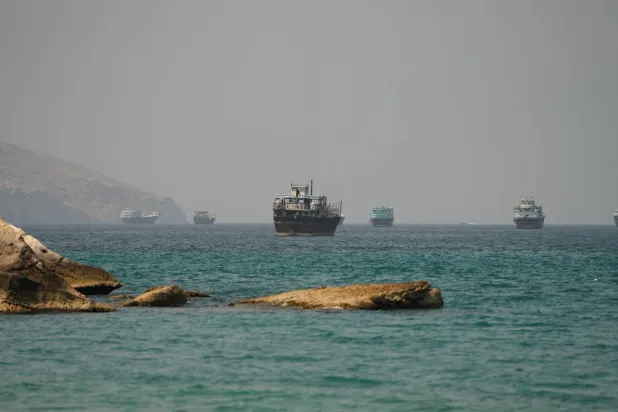
Iran says it will announce a new restricted zone in the Gulf in the coming days, alongside maps for a new shipping corridor through the Strait of Hormuz. The announcement follows a weekend exchange of strikes on shipping that sent oil prices higher.
Mohsen Rezaei, secretary of Iran’s Supreme National Security Council, said the restricted zone would begin where the US blockade of Iran starts and extend into Gulf waters. Any ship entering the zone would be placed on a sanctions list, he said in an interview with state television. He provided few further details.
The maps of a new international corridor which lies in Iranian and Omani waters and in which Iran will have management have been agreed and should be signed in the coming days.
Rezaei also said maps for a new international corridor through Iranian and Omani waters had been agreed and should be signed soon. “The maps of a new international corridor which lies in Iranian and Omani waters and in which Iran will have management have been agreed and should be signed in the coming days,” he said. “We will only commit to the Strait of Hormuz being open when they, the Americans, stop the sabotage, threats and attacks on Iran.”
We will only commit to the Strait of Hormuz being open when they, the Americans, stop the sabotage, threats and attacks on Iran.
The conflict appears to have reached a stalemate six months after US-Israeli strikes on Iran began the war. A preliminary ceasefire accord reached in June has unraveled, diplomatic efforts have made little progress, and tit-for-tat strikes resumed after a pause for much of August.
US Central Command said US forces struck three Iranian oil tankers on Saturday, including one near Kharg Island, Iran’s main oil export hub. The strikes followed attacks by Iran’s Revolutionary Guard Corps on US warships in the region. Tehran has demonstrated that it can still attack US interests in neighboring countries and disrupt oil flows through the Strait, which carried about one-fifth of global oil supplies before the conflict.
Before it is too late.
Shipping data showed an average of 10 commodity ships crossed the Strait each day over the previous 10 days, the lowest level since May. Brent crude rose 0.8% on Monday to above $97 a barrel. Meanwhile, US sanctions and efforts to block Iranian oil exports are placing growing pressure on Iran’s economy. Iranian officials have said they will intensify efforts to address the damage, while Parliament Speaker Mohammad Baqer Qalibaf warned that the “rules of the game have changed” and promised a faster, heavier, and more painful response to attacks on Iran’s interests and security.
From now on, any attack against Iran’s interests and security will receive a faster, heavier and more painful response.
About this summary
Originally published by Asharq Al-Awsat in English. Translated, summarized, and contextualized automatically by DistantNews, with a note on how the source frames the story. Not individually reviewed before publishing. How this works.
More Stories

From Our Blog

News in Translation: What Gets Lost, and How We Keep the Framing

Diaspora Media: How Communities Follow News From Home

Traveling Where the Press Is Not Free: How to Read the News There

The Digital Nomad's Guide to Local News

The Same Story, Different Countries: How Coverage Changes at the Border
