

Makkah Museum Features 18th-Century Quranic Manuscript
Translated from English, summarized and contextualized by DistantNews.
At a glance
In-depth
From a news agency
Context piece
- The Holy Quran Museum in Makkah is exhibiting an 18th-century Quranic manuscript.
- The manuscript showcases intricate Islamic calligraphy, ornamentation, and meticulous scribal detail from the period.
- It offers visitors insight into the history of Quranic manuscripts and Arabic calligraphy.
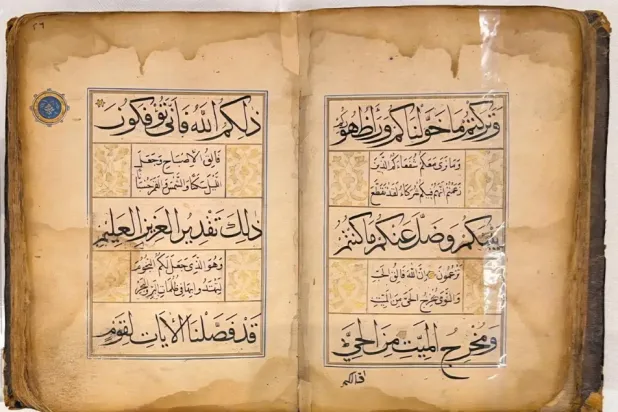
The Holy Quran Museum, located in the Hira Cultural District of Makkah, is currently displaying a significant 18th-century Holy Quran manuscript. This artifact serves as a testament to the profound dedication and artistry involved in the transcription and embellishment of the Quran during that era.
The manuscript is written in black ink and exhibits a blend of styles from various Islamic calligraphic schools, demonstrating the scribe's mastery in integrating their distinct features. Its precise vocalization and diacritical marks highlight the emphasis placed on accuracy in handwritten Qurans. The opening pages are richly adorned with floral motifs and elaborate ornamentation, reflecting the artistic traditions prevalent in the production of Quranic manuscripts.
Visitors to the museum can engage with the historical evolution of handwritten Qurans and the development of Arabic calligraphy. The manuscript provides a tangible connection to the decorative techniques, including gilding, employed in creating these sacred texts across different historical periods, offering a glimpse into the rich cultural and religious heritage.
DistantNews Editorial
Originally published by Asharq Al-Awsat in English. Translated, summarized, and contextualized by our editorial team with added local perspective. Read our editorial standards.
More Stories


From Our Blog

What Gets Lost (and Found) When News Is Translated

The Critical Role of Diaspora Media in Global News

What Travellers Should Know About Countries with Restricted Press

A Digital Nomad's Guide to Following Local News

How the Same Story Looks Different in Different Countries
