


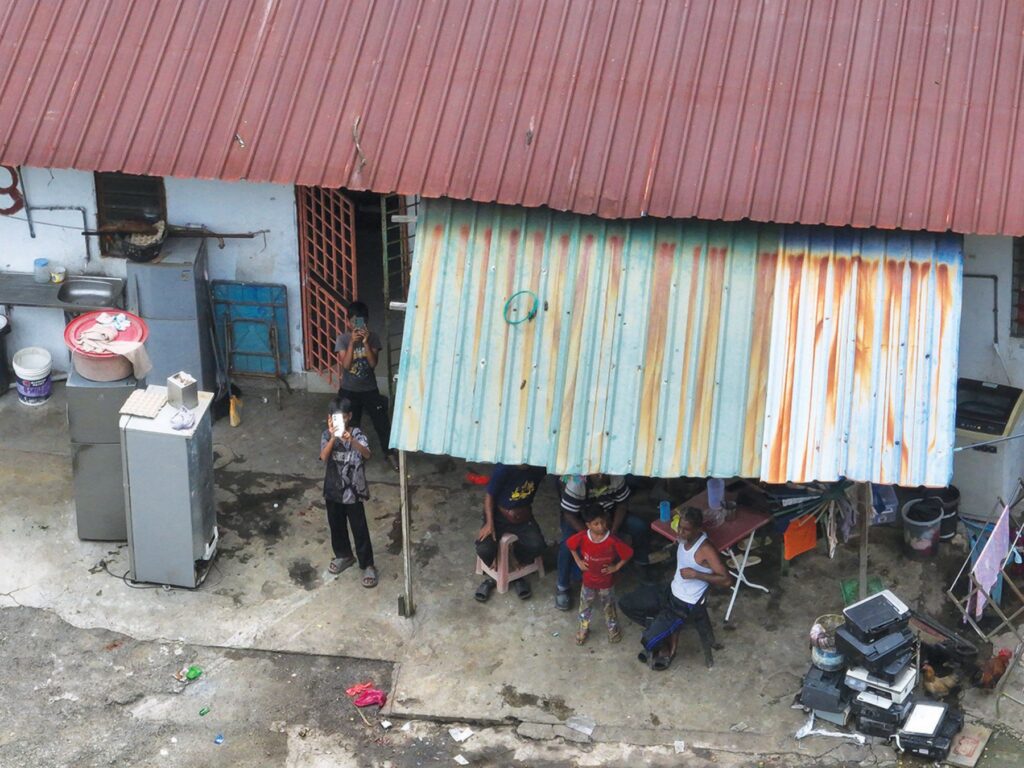
Malaysia Faces Growing Rohingya Crisis, Police Call Settlements a 'Cancer'
Translated from Malay, summarized and contextualized by DistantNews.
At a glance
News
Named sources
Context piece
- Malaysia registers 128,200 Rohingya refugees with UNHCR as of April, part of a larger group of 219,472 UNHCR cardholders from Myanmar.
- The Deputy Inspector-General of Police describes the existence of illegal Rohingya settlements as a "cancer" that is increasingly difficult to control.
- Authorities are seeking a comprehensive solution involving multiple agencies and international cooperation, as current efforts are insufficient to manage the issue.
Malaysia is grappling with a growing Rohingya population, with 128,200 refugees officially registered with the United Nations High Commissioner for Refugees (UNHCR) as of April. These individuals are part of a larger group of 219,472 UNHCR cardholders in Malaysia, the majority of whom, 197,591, are from Myanmar. However, the actual number of Rohingya refugees is believed to be higher, as many remain unregistered with the UNHCR.
Tan Sri Ayob Khan Mydin Pitchay, the Deputy Inspector-General of Police, has characterized the presence of illegal Rohingya settlements as a "cancer" that is becoming increasingly difficult to contain. He noted that this issue is not new and has persisted for a long time. Ayob Khan emphasized that the responsibility for addressing the Rohingya issue cannot fall solely on the Royal Malaysia Police (PDRM), the Malaysian Maritime Enforcement Agency (MMEA), or the Immigration Department.
"The police are the last recipients in this chain. From a security and crime perspective, we will take action if they are involved in any offense," Ayob Khan stated. "However, when they are arrested and punished, questions arise about where they should be sent back to. That is why this issue requires the cooperation of all parties, including the country of origin and other relevant countries."
The police are the last recipients in this chain. From a security and crime perspective, we will take action if they are involved in any offense. However, when they are arrested and punished, questions arise about where they should be sent back to. That is why this issue requires the cooperation of all parties, including the country of origin and other relevant countries.
The issue has resurfaced following the discovery of illegal structures believed to be inhabited by Rohingya in Hulu Langat, which led to the arrest of 42 foreign nationals in an operation on June 9. Regarding a proposal to establish a Rohingya settlement on an island near the Andaman Sea, Ayob questioned the practicalities, asking, "If such a center is established, who will manage it? Who will fund it? After screening, where will they be placed?"
This situation highlights the complex challenges Malaysia faces in managing the Rohingya refugee crisis, demanding a coordinated and multifaceted approach that extends beyond law enforcement to include diplomatic and humanitarian considerations.
If such a center is established, who will manage it? Who will fund it? After screening, where will they be placed?
DistantNews Editorial
Originally published by Utusan Malaysia in Malay. Translated, summarized, and contextualized by our editorial team with added local perspective. Read our editorial standards.
More Stories



From Our Blog

What Gets Lost (and Found) When News Is Translated

The Critical Role of Diaspora Media in Global News

What Travellers Should Know About Countries with Restricted Press

A Digital Nomad's Guide to Following Local News

How the Same Story Looks Different in Different Countries
